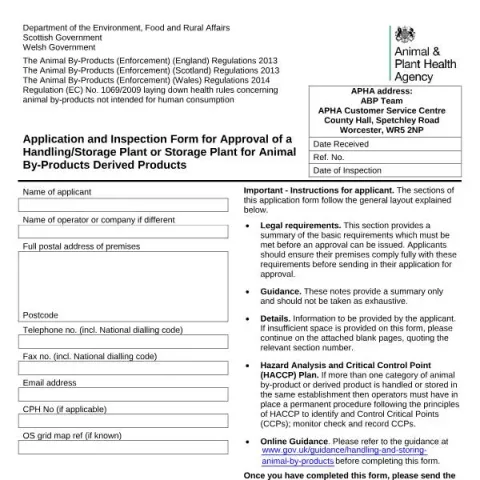
Entering the Complex World of Animal By-Products Processing Authorisation
The handling and storage of animal by-products represents one of the most strictly regulated sectors within the UK's agricultural and food processing landscape. When businesses seek to establish facilities for processing materials ranging from fallen livestock to abattoir waste, they must navigate a comprehensive approval process administered by the Animal and Plant Health Agency. The APHA application form for handling and storage plants serves as the gateway to this highly controlled industry, where public health protection and disease prevention take absolute priority over commercial convenience.
Operating without proper authorisation in this sector carries severe penalties, including prosecution and immediate closure orders. The regulatory framework stems from European legislation transposed into UK law following Brexit, maintaining the strict standards that govern everything from knackery operations processing fallen stock to specialised facilities handling Category 3 materials for pet food manufacture.
Deciphering the Three-Tier Category System That Shapes Your Application
Understanding the categorisation system forms the cornerstone of any successful application. The regulations establish three distinct categories of animal by-products, each carrying different risk profiles and corresponding regulatory requirements that directly influence facility design and operational procedures.
Category 1: Highest Risk Materials Requiring Maximum Security
Category 1 materials encompass the most dangerous substances, including animals suspected of carrying transmissible spongiform encephalopathies (TSE), zoo animals, pets, and materials containing prohibited substances. Facilities handling these materials face the most stringent requirements, including mandatory incineration or co-incineration as the only approved disposal method. The application must demonstrate capability for secure storage, prevention of cross-contamination, and complete traceability from receipt to final destruction.
Category 2: Intermediate Risk with Specific Processing Requirements
Category 2 materials include manure, digestive tract contents, and animals rejected for human consumption due to disease detection. These materials require pressure sterilisation at 133°C for 20 minutes at 3 bar pressure, or alternative approved treatment methods. The application must detail processing capabilities and demonstrate compliance with these precise technical specifications.
Category 3: Lower Risk Materials with Broader Processing Options
Category 3 encompasses materials from animals passed fit for human consumption, including hides, skins, and parts of slaughtered animals not intended for consumption. These materials may be processed into various products including pet food, technical products, and fertilisers, offering greater commercial flexibility but still requiring strict regulatory oversight.
| Category | Risk Level | Typical Materials | Processing Requirements |
|---|---|---|---|
| Category 1 | Highest | TSE suspects, pets, zoo animals | Incineration only |
| Category 2 | Intermediate | Fallen stock, condemned carcasses | Pressure sterilisation 133°C |
| Category 3 | Lower | Abattoir waste, hides, skins | Various approved methods |
Navigating Premises Requirements and Separation Protocols
The physical infrastructure requirements represent perhaps the most complex aspect of the application process. APHA inspectors scrutinise every element of facility design, from basic structural requirements through to sophisticated separation protocols that prevent cross-contamination between different material categories.
Mandatory Structural Elements for All Facilities
Every approved facility must incorporate specific structural features regardless of the categories handled. Covered reception areas protect materials from weather exposure and unauthorised access, whilst impermeable flooring with appropriate drainage systems prevents environmental contamination. Wall surfaces must be washable and constructed from materials resistant to the cleaning chemicals required for decontamination procedures.
The application demands detailed architectural plans showing these features, with particular attention to drainage systems that must prevent any discharge of contaminated water into public sewers or watercourses without appropriate treatment.
Category-Specific Separation Requirements
Where facilities handle multiple categories of material, physical separation becomes critical. Category 1 and 2 materials must be processed in completely separate buildings or, where this proves impractical, in totally segregated sections of the same building with independent access routes, processing equipment, and staff facilities.
The regulations permit Category 3 materials to be handled alongside Category 1 and 2 materials only where the facility operates under the higher category's requirements throughout. This often proves economically disadvantageous, leading most operators to seek separate approvals for different categories.
The Critical Importance of HACCP Integration and Risk Assessment
Beyond basic infrastructure, successful applications must demonstrate comprehensive Hazard Analysis and Critical Control Point (HACCP) systems tailored specifically to animal by-products processing. This requirement extends far beyond the food industry HACCP principles familiar to many applicants, encompassing disease prevention, environmental protection, and worker safety considerations unique to this sector.
Identifying Critical Control Points Specific to Animal By-Products
Critical Control Points in animal by-products facilities typically include temperature monitoring during processing, time controls for storage periods, and verification procedures for material categorisation upon receipt. The application must identify each CCP, establish monitoring procedures, define corrective actions, and demonstrate verification systems that ensure continuous compliance.
Temperature logging becomes particularly crucial for Category 2 processing, where the 133°C requirement must be continuously monitored and recorded. Any deviation requires immediate corrective action and detailed documentation for APHA review during routine inspections.
Risk Assessment Documentation Requirements
The risk assessment component demands identification of all potential hazards throughout the operation, from vehicle movements around the site through to final product dispatch. This includes assessment of disease transmission risks, environmental contamination potential, and occupational health hazards for staff members.
Particular attention must be paid to biosecurity protocols that prevent disease spread between the facility and surrounding livestock operations. This includes vehicle washing facilities, staff changing procedures, and protocols for managing potentially contaminated equipment or clothing.
Understanding Fee Structures and Ongoing Financial Obligations
The financial commitment extends well beyond the initial application fee, with ongoing inspection charges and potential additional costs that vary significantly depending on facility size, categories handled, and operational complexity. Understanding these financial obligations proves essential for business planning and cash flow management.
Application Fees Across UK Jurisdictions
Fee structures differ between England, Scotland, and Wales, reflecting the devolved nature of animal health responsibilities. The application references separate fee regulations for each jurisdiction, with England operating under The Animal By-Products and Pet Passport Fees (England) Regulations 2018, whilst Scotland and Wales maintain their own parallel legislation.
Initial application fees typically range from several hundred to several thousand pounds depending on facility complexity and the categories of materials to be handled. However, these represent only the beginning of financial obligations, with annual inspection fees often exceeding initial application costs.
Ongoing Inspection and Compliance Costs
Regular inspection fees form a significant ongoing expense, calculated based on inspector time, travel costs, and laboratory testing requirements. Facilities handling higher-risk categories face more frequent inspections with correspondingly higher annual costs.
Additional charges may apply for out-of-hours inspections, emergency response visits following compliance failures, and extended inspections required where deficiencies are identified during routine visits. The fee regulations provide detailed calculation methods, but actual costs depend heavily on individual facility compliance records and operational efficiency.
Mastering the Application Submission Process and Documentation Requirements
Successful submission requires meticulous attention to documentation standards and submission procedures that differ significantly from typical business licensing applications. The Animal and Plant Health Agency operates strict protocols designed to ensure complete information capture before formal assessment begins.
Essential Documentation Beyond the Basic Application
The application form represents merely the starting point for documentation requirements. Supporting materials must include detailed site plans showing building layouts, drainage systems, and vehicle access routes. Architectural drawings must demonstrate compliance with structural requirements, whilst process flow diagrams illustrate material handling procedures from receipt through final dispatch or disposal.
Environmental permits or exemptions require separate documentation, as animal by-products processing often triggers Environment Agency oversight. Waste management licences, water discharge consents, and air emission permits may all be required before APHA can grant final approval.
The Importance of Accurate Company Registration Details
The application demands precise company registration information, with particular emphasis on ensuring invoice details match legal trading names exactly. This seemingly administrative detail carries significant importance, as approval certificates and inspection notices must align with Companies House records and VAT registration details.
Government departments and public organisations face different documentation requirements, often needing additional authorisation letters and budget approval documentation. The application specifically enquires about government department status, triggering alternative processing procedures and potentially different fee structures.
Preparing for Inspection and Addressing Common Assessment Challenges
The inspection process represents the most critical phase of application assessment, where theoretical compliance demonstrated through documentation meets practical reality. APHA inspectors bring extensive technical expertise and adopt a methodical approach that examines every aspect of proposed operations against regulatory requirements.
Pre-Inspection Preparation Strategies
Successful applicants typically invest considerable effort in pre-inspection preparation, conducting internal audits against APHA guidance documents and addressing potential deficiencies before formal assessment. This includes testing all equipment under operational conditions, verifying temperature monitoring systems, and ensuring staff understand their roles in demonstration procedures.
Documentation systems receive particular scrutiny, with inspectors examining record-keeping procedures, traceability systems, and staff training records. Mock emergency procedures may be requested to demonstrate preparedness for disease outbreak scenarios or equipment failures that could compromise biosecurity.
Addressing Technical Deficiencies During Assessment
Where inspectors identify deficiencies, the response timeframe and remediation approach significantly influence approval prospects. Minor issues often permit conditional approval with specific timescales for rectification, whilst major structural or procedural deficiencies typically require complete re-inspection following remedial works.
Communication with APHA inspectors during this phase proves crucial, with experienced applicants maintaining detailed correspondence records and seeking clarification on technical requirements where interpretation questions arise. The agency generally adopts a collaborative approach where applicants demonstrate genuine commitment to achieving compliance.
Managing Operational Compliance and Long-Term Regulatory Relationships
Approval represents the beginning rather than the end of regulatory engagement, with ongoing compliance obligations that extend throughout the facility's operational lifetime. Understanding these long-term requirements enables operators to build sustainable businesses whilst maintaining the high standards demanded by animal by-products legislation.
Routine Inspection Cycles and Performance Monitoring
Approved facilities enter regular inspection cycles with frequencies determined by risk assessments based on material categories handled, facility size, and historical compliance performance. High-performing operators may qualify for reduced inspection frequencies, whilst compliance issues trigger increased oversight and associated costs.
Performance monitoring extends beyond physical inspections to include document reviews, stakeholder feedback assessment, and analysis of incident reports. The APHA maintains detailed compliance databases that influence future inspection planning and may impact renewal procedures where approvals require periodic review.
Maintaining Approval Currency Through Regulatory Changes
The regulatory landscape continues evolving, particularly following Brexit transitions and ongoing scientific developments in disease control methodologies. Approved operators must maintain awareness of regulatory changes and implement necessary modifications to maintain compliance currency.
Regular engagement with APHA guidance updates helps operators anticipate required changes and plan implementation timescales effectively. The agency typically provides reasonable transition periods for significant regulatory modifications, but operators bear responsibility for monitoring change notifications and ensuring timely compliance implementation.
Building effective working relationships with APHA inspection teams facilitates smoother ongoing compliance management and helps resolve technical queries efficiently. Experienced operators often establish regular communication patterns that extend beyond formal inspection requirements, creating collaborative partnerships that benefit both regulatory oversight and business operations.
Record-Keeping and Documentation Requirements
Operators of handling and storage facilities must maintain comprehensive records to demonstrate compliance with animal by-product regulations. The Animal and Plant Health Agency requires detailed documentation covering all aspects of your operation, from incoming materials to final dispatch or processing.
Fill in your form directly online
No printing: type your details into the boxes of the official form, tick, then download the PDF ready to send.
- 1Type into the form boxes
- 2Tick in one click
- 3Save and download the PDF
Your record-keeping system must track the origin of all animal by-products entering your facility. This includes maintaining supplier details, transport documentation, and accompanying health certificates where applicable. Each consignment requires individual recording with date of arrival, quantity received, category classification, and any temperature readings upon receipt. The APHA expects these records to be available for inspection at any time during normal business hours.
Temperature monitoring represents a critical aspect of documentation, particularly for Category 1 and Category 2 materials requiring specific storage conditions. Your facility must maintain continuous temperature logs for refrigerated storage areas, with readings recorded at minimum intervals as specified in your approved operational procedures. Any temperature deviations must be logged immediately, along with corrective actions taken and notification to relevant authorities where required.
Processing records must detail all treatment procedures applied to animal by-products within your facility. This encompasses sterilisation parameters, pressure cooking specifications, rendering temperatures, and processing duration. Each batch requires individual documentation proving compliance with approved standards, including pre-treatment preparation, processing conditions achieved, and post-treatment verification testing where applicable.
Dispatch documentation forms another essential component of your record-keeping obligations. Every shipment leaving your facility requires detailed records showing destination, quantity, category classification, and receiving operator details. Transport documentation must accompany all movements, with copies retained at your facility for the prescribed retention period, typically five years from date of dispatch.
The APHA conducts regular audits of record-keeping systems, examining both physical documentation and electronic records where computerised systems are employed. Your records must demonstrate full traceability throughout the handling and storage process, enabling authorities to track any animal by-product from initial receipt through to final disposal or further processing. Incomplete or inaccurate records may result in enforcement action, including suspension of operational approvals.
Staff Training and Competency Requirements
Operating a handling and storage facility for animal by-products requires appropriately trained personnel capable of managing complex regulatory requirements whilst maintaining high standards of biosecurity and public health protection. The Animal and Plant Health Agency expects all staff involved in animal by-product operations to demonstrate competency relevant to their specific roles and responsibilities.
Key personnel, including facility managers and supervisory staff, must possess detailed knowledge of animal by-product legislation, categorisation systems, and approved processing methods. This typically involves completing recognised training programmes covering EU Regulation 1069/2009 and its implementation in Great Britain post-Brexit. Training must address category-specific handling requirements, cross-contamination prevention, and emergency response procedures for potential biosecurity breaches.
Operational staff require training appropriate to their daily duties, whether handling incoming materials, operating processing equipment, or managing storage areas. This includes understanding personal protective equipment requirements, hygiene protocols, and recognition of potential hazards associated with different animal by-product categories. Staff working with Category 1 materials require additional specialised training given the enhanced risks associated with these high-risk materials.
Your training programme must include regular refresher sessions ensuring staff knowledge remains current with evolving regulations and best practices. The APHA recommends annual training updates as a minimum, with additional sessions following any significant regulatory changes or operational modifications at your facility. Training records must be maintained for all personnel, documenting courses completed, competency assessments passed, and dates of next required refresher training.
Specialist roles may require additional qualifications beyond basic animal by-product training. Laboratory personnel conducting testing or analysis need relevant scientific qualifications and understanding of sampling protocols. Transport coordinators require knowledge of ADR regulations where applicable, particularly for Category 1 materials classified as dangerous goods. Maintenance staff working on processing equipment must understand both operational requirements and safety implications of their work.
The facility operator bears responsibility for ensuring ongoing competency of all staff members. This includes establishing clear job descriptions outlining required qualifications, implementing structured induction programmes for new employees, and maintaining training matrices showing current competency status across all operational roles. Regular competency assessments help identify training needs and demonstrate to the APHA that your facility maintains appropriate staffing levels.
Biosecurity Protocols and Contamination Prevention
Robust biosecurity measures form the cornerstone of any approved animal by-product handling facility, protecting both public health and preventing disease transmission within animal populations. The Animal and Plant Health Agency requires comprehensive biosecurity protocols addressing all potential contamination pathways, from vehicle movements to personnel hygiene procedures.
Vehicle biosecurity protocols must address both incoming and outgoing transport movements. Delivery vehicles entering your facility require cleaning and disinfection procedures appropriate to their previous loads and destinations visited. This typically involves wheel washing stations, vehicle underbody spraying, and cab disinfection where drivers enter operational areas. Your facility must maintain approved disinfectants effective against relevant pathogens, with regular testing confirming solution strength and efficacy.
Personnel biosecurity measures extend beyond basic hygiene requirements to encompass comprehensive contamination prevention strategies. Staff entering processing areas require full protective clothing changes, including coveralls, footwear, gloves, and head coverings. Shower facilities may be mandatory depending on your facility's risk assessment and the categories of animal by-products handled. Personal items, including mobile phones and jewellery, typically require restriction or specific decontamination procedures.
Facility design plays a crucial role in maintaining effective biosecurity barriers. Your approved layout must incorporate clear separation between different risk zones, preventing cross-contamination between incoming materials, processing areas, and finished products. This includes physical barriers, controlled access points, and directional flow patterns ensuring materials progress through your facility without backtracking or crossing contamination boundaries.
Pest control programmes require particular attention in animal by-product facilities given the attractive nature of these materials to various pest species. Your integrated pest management system must address rodents, insects, and birds through both preventive measures and active control strategies. Regular monitoring, treatment records, and liaison with professional pest control contractors form essential components of your biosecurity framework.
Waste management within your facility requires careful consideration to prevent contamination risks. This encompasses both animal by-product waste and general operational waste, each requiring appropriate segregation, storage, and disposal methods. Cleaning materials, protective equipment, and maintenance waste may require treatment as contaminated materials depending on their contact with animal by-products during your operations.
Emergency biosecurity procedures must address potential containment breaches, equipment failures, or other incidents threatening your facility's biosecurity integrity. This includes immediate response protocols, notification procedures for relevant authorities, and recovery strategies to restore normal operations. Regular testing of emergency procedures through simulated incidents helps ensure staff readiness and identifies potential improvements to your biosecurity framework.