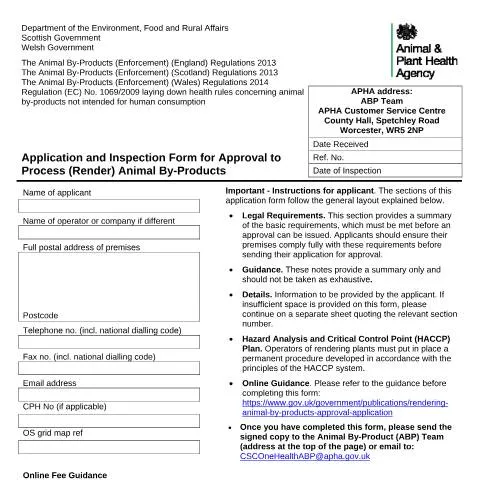
Understanding the Animal By-Product Processing Facility: Approval Application
In the intricate web of agricultural and animal welfare regulations, the significance of the Animal By-Product Processing Facility: Approval Application lies at the intersection of compliance and sustainable practices. This document serves as a gateway for businesses and organizations seeking to process animal by-products, ensuring that they adhere to stringent health and safety standards set by the Animal and Plant Health Agency (APHA). Let's explore the various facets of this essential application in detail.
Who Needs to Engage with This Application?
The stakeholders involved in the approval application process vary widely, each with distinct roles and responsibilities. Understanding these profiles is crucial for navigating the regulatory landscape effectively.
1. Operators of Rendering Facilities
Operators of rendering plants are the primary applicants for this form. These individuals are responsible for transforming animal by-products into usable materials, such as fats and proteins, which are vital for various industries, including animal feed and biofuels.
2. Business Owners
Owners of businesses involved in animal by-product processing must ensure that their facilities comply with applicable regulations. They must be prepared to provide detailed information about their facilities, practices, and intended outputs.
3. Regulatory Agencies
While not submitting the application themselves, regulatory agencies like APHA play a pivotal role in reviewing applications and conducting inspections. Their mandate is to protect public health and animal welfare by ensuring that all operational standards are met.
4. Other Industry Stakeholders
This application process may also involve veterinary officers, environmental health officers, and legal advisors who provide guidance on regulatory compliance. Their expertise is invaluable for ensuring that all aspects of the application are thoroughly addressed.
The Application Journey: From Submission to Approval
The journey through the approval application process is detailed and rigorous, reflecting the seriousness of animal health regulations. Below is a step-by-step outline of this process, highlighting key milestones.
Step 1: Application Preparation
- Gather Required Information: Applicants must collect all necessary data, including facility details, operational plans, and waste management strategies.
- Review Guidance Notes: Familiarize yourself with the guidance provided by APHA. This will clarify what data are required for various sections of the application.
- Complete Hazard Analysis: A critical component is the Hazard Analysis and Critical Control Point (HACCP) plan, which outlines measures to minimize risks in processing procedures.
Step 2: Submission of Application
Once the application is completed, it must be submitted to APHA. This can be done either by post or electronically, ensuring that all sections are filled out accurately to avoid delays.
Step 3: Initial Review by APHA
Upon receipt, APHA will conduct an initial review to ensure the application is complete. Incomplete submissions may lead to extended processing times as additional information will be requested.
Step 4: Inspection of Facilities
After the review, APHA will schedule an inspection of the processing facility. This inspection assesses compliance with health and safety regulations, including the layout of the premises and operational practices.
Step 5: Issuance of Approval
If the facility meets all regulatory requirements, APHA will issue an approval certificate. This certificate is crucial for legal operation and must be displayed prominently in the facility.
Key Documentation and Its Importance
Completing the application requires various documents that substantiate the claims made within the form. Here's a detailed look at the types of documentation you might need:
1. Business Registration Documents
These include certificates of incorporation and proof of ownership, establishing the legitimacy of the business entity.
2. HACCP Plan
The HACCP plan must outline how the facility intends to manage health and safety risks associated with processing animal by-products. This plan is a significant part of the review process.
3. Site Plans and Layouts
A comprehensive site plan showing the layout of the facility is essential. This should detail separate areas for receiving, processing, and storing by-products to prevent cross-contamination.
4. Compliance Documentation
Any additional compliance documentation that demonstrates adherence to local, national, and European regulations should be included. This might encompass waste disposal plans, staff training records, and previous audit results.
Consequences of Non-Compliance
Understanding the repercussions of failing to comply with the application requirements is crucial for operators and business owners. Here are some potential outcomes:
- Legal Penalties: Operating without approval can result in substantial fines and legal action from regulatory authorities.
- Impact on Business Operations: Non-compliance can halt operations, leading to financial losses and potential layoffs.
- Reputational Damage: Being flagged for non-compliance could damage a business's reputation, making it challenging to secure future contracts or partnerships.
Timing is Everything: Key Deadlines in the Approval Process
While the specific timelines may vary based on several factors, including the complexity of the application and APHA's caseload, understanding the general timeline is critical for effective planning.
Application Submission
It is advisable to submit your application well in advance of planned operational start dates, preferably three to six months ahead. This allows adequate time for review and inspection.
Inspection Window
After submission, the inspection typically occurs within 4 to 6 weeks. Coordinating with APHA early on can help ensure that your facility is prepared for this important step.
Approval Timeline
Post-inspection, it may take several weeks to receive the official approval certificate. Keeping in touch with APHA during this phase can provide updates and keep the process moving.
Monitoring Progress: Follow-Up and Communication
Staying informed about the status of your application is vital. Here are ways to monitor progress and follow up effectively:
1. Regular Communication with APHA
Establish a point of contact within APHA to ask questions and request updates. This ensures they are aware of your interest in moving the application forward.
2. Keep Records
Document all interactions with APHA, including submission dates, received correspondence, and inspection schedules. This record-keeping may be beneficial in case of disputes or delays.
3. Prepare for Additional Requirements
Sometimes, APHA may require additional documentation or modifications to your application based on initial findings. Being prompt and cooperative can help facilitate a smoother process.
Differentiating the Application Form from Similar Documents
Understanding what makes the Animal By-Product Processing Facility application unique is critical, especially for those familiar with other regulatory forms.
1. Distinct Purpose
This application specifically targets facilities intending to process animal by-products, unlike other forms focused on broader agricultural practices or livestock management.
2. Unique Regulatory Framework
The regulations governing this application stem from specific legislative frameworks, such as the Animal By-Products (Enforcement) Regulations. Familiarity with these rules is essential for successful compliance.
3. Specificity in Requirements
The detailed nature of the information required, such as HACCP plans and facility layout specifications, sets this application apart from more general agricultural or environmental forms.
The Regulatory Background: Why This Application Exists
The significance of this application cannot be overstated; it operates within a well-defined regulatory framework aimed at safeguarding public health and animal welfare. Below, we explore the historical and legislative context:
1. Legislative Foundation
The application process is rooted in several key regulations, including:
- The Animal By-Products (Enforcement) (England) Regulations 2013
- The Animal By-Products (Enforcement) (Scotland) Regulations 2013
- Regulation (EC) No. 1069/2009
2. Public Health Imperatives
These regulations are designed to mitigate risks associated with the processing of animal by-products, which, if mishandled, can pose health risks to both humans and animals. By adhering to the approval process, operators contribute to a more sustainable and safe agricultural environment.
3. Evolving Standards
As industry practices and consumer expectations evolve, so too do the standards governing animal by-product processing. This application is part of a dynamic regulatory environment that reflects ongoing improvements in safety and welfare practices.
Understanding the Approval Process for Animal By-Product Processing Facilities
The approval process for establishing an animal by-product processing facility in the UK is governed by strict regulations to ensure food safety and animal health. These regulations are rooted in both EU-derived legislation and domestic laws which remain in effect post-Brexit. Understanding the steps involved in the application process can help streamline your efforts and ensure compliance with the necessary requirements.
Eligibility Criteria: Before initiating the application, it is crucial to ensure that your facility meets the eligibility criteria outlined by the Animal and Plant Health Agency (APHA). Some key requirements include:
Fill in your form directly online
No printing: type your details into the boxes of the official form, tick, then download the PDF ready to send.
- 1Type into the form boxes
- 2Tick in one click
- 3Save and download the PDF
- The facility must be designed to process animal by-products in compliance with the Animal By-products Regulations (ABPR). This includes ensuring that the processing methods employed do not pose a risk to human health or the environment.
- Adequate waste management practices must be in place. This involves utilizing methods that prevent contamination and allow for the safe disposal of waste generated during processing.
- The facility should have appropriate biosecurity measures to prevent the spread of animal diseases. This may include controlled access areas, sanitation protocols, and proper training for staff handling animal by-products.
Documentation Required: The application will require a comprehensive set of documents, which typically includes:
- A detailed outline of the proposed facility, including site plans and operational procedures.
- Evidence of compliance with local planning regulations, which may require consultation with your local council's planning department.
- Risk assessments concerning environmental impacts and measures taken to mitigate such risks.
- Proof of necessary insurance coverage, which may include liability insurance for potential damages arising from facility operations.
Submission Process: Once the documentation is prepared, you will need to submit your application to the APHA. It is advisable to use the official forms, such as the ABP Approval Application Form, which can be found on the APHA website. During this stage, ensure that all sections are filled out correctly and that no required documents are missing, as incomplete applications may lead to delays.
Inspection and Approval Timeline: Following submission, an APHA inspector will typically assess the facility to ensure compliance with existing regulations. This inspection process can vary in duration depending on the complexity of the facility and the volume of applications being processed. While there isn’t a fixed timeline, applicants can generally expect a review period of several weeks to a few months.
Post-Approval Requirements: If approved, operators must adhere to ongoing compliance protocols, which may involve regular inspections, record-keeping of processed materials, and reporting any changes to the operational procedures to the APHA. Failure to comply with these requirements can lead to revocation of the approval.
Financial Considerations for Establishing an Animal By-Product Processing Facility
Establishing an animal by-product processing facility involves various financial considerations that potential operators must take into account. While exact costs can vary significantly based on the facility's size and location, understanding these financial implications is crucial for effective budgeting and securing funding.
Initial Capital Investment: The initial investment required to set up an animal by-product processing facility can be substantial. This typically encompasses the cost of land acquisition or leasing, construction, equipment purchases, and installation. Depending on the specifics of your project, initial costs may range from hundreds of thousands to millions of pounds. It is essential to obtain quotes from contractors and suppliers to create an accurate financial plan.
Operational Costs: Once the facility is operational, ongoing costs will include staff salaries, utilities, maintenance, waste disposal, and compliance with environmental regulations. Operators must also consider the costs associated with obtaining necessary permits and licenses, which can incur both direct fees and indirect costs for time and resources spent on compliance activities.
Funding and Financing Options: Several funding options may be available for new facilities, including government grants, loans, and private investments. The UK Government often provides funding for environmentally responsible initiatives, including those that focus on sustainable waste management. Engaging with local business support agencies or funding advisors can help identify potential financial resources.
Return on Investment: Assessing the potential return on investment (ROI) is critical for determining the viability of the facility. This may involve detailed market research to identify demand for processed animal by-products, understanding customer bases, and establishing pricing structures. Additionally, evaluating the environmental impact and societal benefits can enhance the overall appeal of the facility to potential investors.
Insurance and Risk Management: Finally, securing an appropriate insurance policy is vital to protect against various risks associated with operating a processing facility. This may include general liability insurance, product liability insurance, and coverage for environmental risks. Engaging with an insurance broker familiar with the agricultural and processing industries can help ensure that you have adequate protection tailored to your specific circumstances.
Compliance with Environmental Regulations in Animal By-Product Processing
Compliance with environmental regulations is a critical aspect of operating an animal by-product processing facility. The UK has stringent environmental laws designed to protect ecosystems while ensuring safe processing of animal-derived materials. Navigating these regulations requires careful attention to detail at every stage of operation.
Environmental Impact Assessments (EIA): Depending on the scale of your facility, you may be required to conduct an Environmental Impact Assessment before obtaining approval. This assessment evaluates potential environmental effects, including air and water quality impacts, noise pollution, and waste management practices. Engaging with an environmental consultant can help in preparing a comprehensive EIA that meets regulatory standards.
Waste Management Regulations: Proper waste management is fundamental to environmental compliance. Animal by-products must be safely handled, transported, and disposed of according to regulations outlined by the Environment Agency. Operators should develop and implement a waste management plan that details segregation, storage, and disposal methods to minimize environmental impact.
Emissions and Air Quality Monitoring: Facilities must monitor emissions to comply with air quality standards set by the UK government. This includes adhering to limits on particulate matter, volatile organic compounds (VOCs), and other pollutants. Regular air quality assessments and adherence to best practices in operational procedures can help mitigate negative impacts.
Water Usage and Discharge Regulations: Managing water resources responsibly is crucial for compliance. Facilities must be aware of regulations concerning water use and wastewater discharge. This may entail obtaining a permit for discharges into water bodies and implementing treatment processes to ensure that wastewater meets quality standards before release.
Sustainability Practices: Beyond compliance with regulations, many operators are adopting sustainability practices that enhance their operational resilience and appeal to environmentally conscious consumers. This can include implementing energy-efficient technologies, utilizing renewable energy sources, and exploring innovative methods for recycling by-products.
By addressing these financial and environmental considerations comprehensively, prospective operators can ensure a smoother journey through the approval process while fostering a responsible approach to animal by-product processing in the UK.