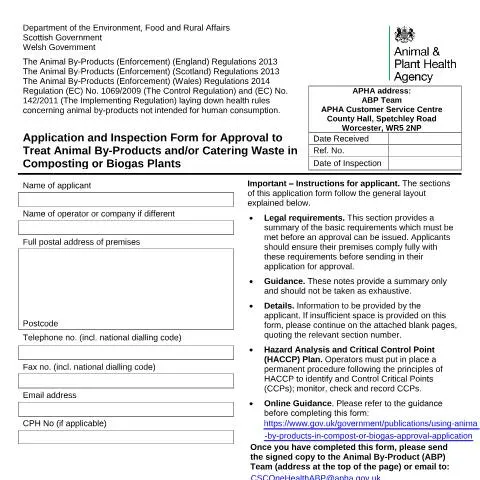
Navigating the Approval Application for Animal By-Products
In the realm of environmental management and waste treatment, understanding the Application and Inspection Form for Approval to Treat Animal By-Products is crucial for businesses engaged in composting or biogas production. This document, issued by the Animal and Plant Health Agency (APHA), serves as a gateway for operators wishing to transform animal by-products into reusable resources while adhering to strict health and safety regulations.
Understanding the Framework of Animal By-Products
The regulations governing animal by-products stem from a need to mitigate potential health risks associated with improper handling. The Animal By-Products (Enforcement) Regulations 2013 and related EU directives categorically define what constitutes an animal by-product and the process required for its treatment.
Animal by-products are classified into three categories, each with specific handling and treatment requirements:
- Category 1: High-risk materials requiring incineration or rendering.
- Category 2: Materials that pose a lesser risk but still need processing.
- Category 3: Generally safe for composting or anaerobic digestion if handled correctly.
Operators aiming to use these by-products in composting or biogas plants must first secure approval to ensure compliance with the necessary health and safety standards.
Deciphering the Document's Sections
The application form is meticulously structured to guide the applicant through the approval process. Key sections of the form include:
- Applicant Information: This section requires detailed information about the applicant, including contact details and the nature of the business.
- Source Material: Applicants must specify the types of animal by-products they wish to handle, including approximate quantities and sources.
- Meat Exclusion Information: If handling meat-excluded catering waste, operators must describe their processes for ensuring meat materials are kept separate.
- Processing Parameters: This section outlines the intended treatment methods for the specified by-products.
Each section demands careful consideration and accurate information to avoid delays in approval.
Application Fees and Financial Considerations
Before submitting the application, it is essential to be aware of applicable fees associated with the approval process. The APHA outlines the following:
- Fees vary based on the type of animal by-product and the jurisdiction (England, Scotland, Wales).
- Ongoing inspection fees may also apply, which are structured according to the regulations of the respective country.
It is advisable to consult the relevant regulations to fully understand the financial implications and ensure all costs are accounted for in the business plan.
Breaking Down the Completion Process
Completing this application form requires a meticulous approach. Here’s a step-by-step guide to aid applicants:
Step 1: Gather Required Documentation
Make sure to collect all necessary documents that support the information you will provide in the application. This may include:
- Proof of compliance with health and safety standards.
- Evidence of HACCP (Hazard Analysis Critical Control Point) implementation.
- Any prior approval documentation related to waste handling.
Step 2: Fill Out the Form
As you fill out the application form, pay particular attention to the following:
- Clearly state the nature of the by-products you wish to compost or digest.
- Provide accurate contact information, ensuring that all billing details match your registered company name.
- Detail any risk management strategies in place concerning the handling of potentially hazardous materials.
Step 3: Submit the Application
Once completed, the application should be sent to the designated APHA office, either via email or post. Ensure to keep a copy for your records.
Following Up on Your Application
After submission, applicants are encouraged to monitor the status of their application. The APHA recommends the following steps:
- Contact the APHA Customer Service Centre to confirm receipt of your application.
- Be prepared to provide any additional information if requested by the APHA.
- Understand that the inspection process may follow after the application is reviewed.
Regular follow-ups can help expedite the approval process and address any issues promptly.
Inspection: What to Expect
Once the application is reviewed, the APHA will typically arrange an inspection of the applicant's premises. Being well-prepared for this inspection is essential:
- Ensure Compliance: Have all necessary records and processes in place to demonstrate compliance with health and safety standards.
- Training and Awareness: Ensure that staff are trained and aware of the processes involved in handling animal by-products.
- Documentation Readiness: Be ready to present your HACCP plan and any other relevant documentation during the inspection.
Post-Approval Obligations
After receiving approval, operators have ongoing responsibilities to ensure compliance:
- Regular audits and inspections may be conducted by APHA to ensure continued adherence to stipulated conditions.
- Operators must maintain accurate records of all animal by-products processed, including their sources and quantities.
- Any changes in operation or handling procedures must be communicated to the APHA immediately.
Failure to comply with these ongoing obligations may result in penalties or revocation of approval.
Conclusion: A Commitment to Best Practices
Securing approval for the treatment of animal by-products is not merely a regulatory requirement; it is a commitment to best practices in waste management and public health safety. By adhering to the guidelines set forth by the APHA, operators can contribute positively to environmental sustainability while ensuring that their business complies with UK regulations.
Understanding the Regulatory Framework for Animal By-Products
In the UK, the use of animal by-products (ABPs) is meticulously regulated to ensure both public health and environmental protection. The Animal and Plant Health Agency (APHA) plays a crucial role in overseeing the rules that govern how these materials can be processed and reused, particularly in composting and biogas production. The legislation primarily stems from the Animal By-Products Regulations 2013, which implements EU Regulation 1069/2009. This framework categorizes animal by-products into different risk levels—Category 1, 2, and 3—depending on their origin and potential health risks.
Category 1 materials, which include those from specified risk animals, are subject to the strictest controls and may not be used in compost or biogas without specific authorization. Category 2 and 3 materials are less hazardous but still require compliance with specific processing standards to ensure safety. Understanding these categories is essential for any operator looking to incorporate ABPs into composting or biogas operations. It is advisable to consult with APHA if there is uncertainty about the categorization of specific materials, as misclassification can lead to significant legal repercussions.
Preparing Your Application: Essential Documentation and Information
When applying for approval to use animal by-products in compost or biogas, the quality and thoroughness of your application can significantly influence the outcome. The application must demonstrate a clear understanding of the regulations and provide robust details on how you intend to handle the ABPs safely. Essential documentation typically includes:
- Site Plan: A detailed layout of the facility where ABPs will be processed, including storage areas, processing equipment, and waste management systems.
- Process Description: A step-by-step account of the procedures you will implement to ensure compliance with health and safety regulations, such as temperature controls, pasteurization methods, and monitoring systems.
- Risk Assessment: An evaluation of potential risks associated with the processing of ABPs, along with proposed measures to mitigate these risks. This assessment should be thorough and comply with the guidelines set out by the Health and Safety Executive (HSE).
- Quality Assurance Protocols: Details regarding how you will ensure the quality and safety of the end products—compost or biogas. This includes sampling strategies, testing protocols, and traceability measures.
- Compliance History: A record of past compliance with local regulations, any previous inspections by regulatory bodies, and how any issues were resolved. This can help build credibility for your application.
It’s important to check the specific requirements laid out by your local APHA office, as additional documentation may be requested based on the nature of your operation. Efficiently organizing your application and providing clear, structured information can greatly increase your chances of attaining approval.
Post-Approval Obligations and Monitoring Compliance
Once you receive approval to utilize animal by-products in your compost or biogas production, it is vital to understand that the responsibility does not end there. Operators must adhere to a series of ongoing obligations to maintain compliance with both health and safety regulations and the conditions of their approval. Key post-approval obligations include:
- Regular Monitoring and Reporting: Operators must conduct routine monitoring of their processes to ensure compliance with the approved methods. This may include regular temperature checks, microbial testing, and chemical analysis of the compost or biogas produced. Reports may need to be submitted to APHA or local authorities at specified intervals.
- Training and Awareness: Ensure that all staff involved in handling ABPs are trained in proper procedures and understand the importance of compliance. Regular refresher courses may be required to keep all employees updated on the latest regulations and best practices.
- Record Keeping: Maintain comprehensive records of all ABP transactions, handling, processing, and disposal. This includes keeping track of the origin, type, and quantity of materials used, along with the final outputs and their destinations. Proper record keeping is critical for traceability and demonstrating compliance during inspections.
- Inspections and Audits: Be prepared for inspections from APHA or environmental agencies to verify compliance. These visits can be unannounced, so maintaining high standards of operation at all times is essential.
Failure to comply with post-approval obligations can lead to severe penalties, including revocation of approval, financial penalties, and potential legal action. Therefore, it’s advisable to establish a compliance management system that includes regular reviews and updates to protocols based on regulatory changes and operational needs.