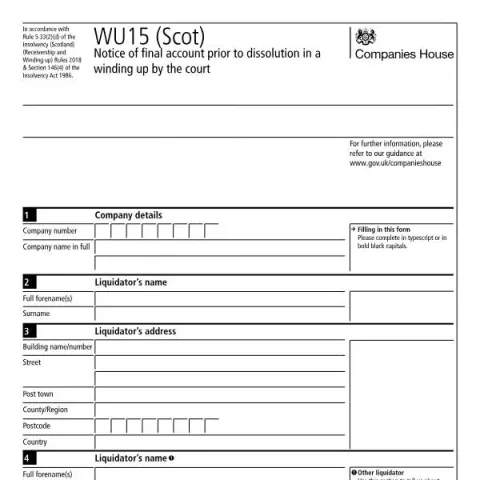
Understanding the WU15 (Scot): A Vital Step in Company Dissolution
When a Scottish company reaches the end of its business journey, the process of dissolution must be carefully managed. The WU15 (Scot) document serves a crucial role in this context, providing official notice of the final accounts prior to a company’s dissolution. This guide digs into the details of this notice, ensuring that liquidators and relevant stakeholders understand its purpose, contents, and procedural intricacies.
Key Components of the WU15 (Scot)
At its core, the WU15 (Scot) is designed to communicate the final financial standing of a company that is being dissolved through court winding up. Below are the primary elements included in the document:
- Company Details: This section requires the full name and company number, ensuring the document is accurately linked to the specific company in question.
- Liquidator Information: Details of the appointed liquidator must be included, consisting of their full name and address.
- Final Account Declaration: The liquidator must attach the final account, which outlines all financial activities leading up to the dissolution.
- Creditor Objections: It’s essential to note whether any creditors have objected to the liquidator's release, as this can affect the dissolution process.
- Signature and Date: The liquidator must sign and date the document, certifying its accuracy and completeness.
Navigating the Procedure: A Step-by-Step Approach
Completing the WU15 (Scot) involves several critical steps that must be followed diligently:
- Gather Company Information: Collect the full name and company number to ensure they match the public register.
- Appoint a Liquidator: Ensure a qualified liquidator is appointed, as they will be responsible for completing the WU15.
- Prepare the Final Account: The liquidator must prepare a detailed account of the company’s finances.
- Check for Creditor Objections: It’s crucial to ascertain if there are any unresolved objections from creditors regarding the liquidation process.
- Complete the WU15: Fill out the WU15 form with precision, ensuring all details are accurate and complete.
- Sign and Submit: The liquidator should sign the document and submit it to Companies House at the specified address.
Common Misinterpretations of the WU15 (Scot)
Understanding the WU15 (Scot) is critical, but various misinterpretations can lead to complications:
- Assuming no final account is needed: Some may mistakenly believe that a final account isn’t necessary if there are no assets. However, the document must still include a declaration of the company’s financial status.
- Overlooking creditor involvement: It's easy to underestimate the importance of creditor objections. Misjudging this aspect could lengthen the dissolution process significantly.
- Inaccurate liquidator details: Failing to provide precise information about the liquidator can lead to rejection of the filing by Companies House.
Interrelation with Other Documents in the Dissolution Process
The WU15 (Scot) does not exist in isolation. It interacts with several other crucial documents during the dissolution process:
| Document | Purpose | Relation to WU15 (Scot) |
|---|---|---|
| Form WU2 | Application for Winding Up | Initiates the process that leads to the requirement for WU15. |
| Liquidator’s Release | Finalizes the role of the liquidator | One part of the WU15 process is confirming whether creditors have objected to this release. |
| Final Meeting Minutes | Summary of final decisions made by creditors | Can provide context for the final account submitted with WU15. |
Situational Importance: Who Should Use the WU15 (Scot)?
The WU15 (Scot) is not a document to be taken lightly; its submission is critical in various situations:
- Liquidators: Primarily targeted at liquidators overseeing the dissolution process.
- Company Directors: Directors of the company need to understand the implications of the final account and support the liquidator.
- Creditors: They may want to keep track of the final financial status and any objections that may need to be raised.
Essential Concepts for Smooth Sailing
To effectively navigate the dissolution process using the WU15 (Scot), a few key concepts must be grasped:
- Insolvency Rules: Familiarity with the Insolvency (Scotland) (Receivership and Winding up) Rules 2018 is crucial for understanding the legal framework surrounding dissolution.
- Dissolution Timeline: Understanding the timeline from liquidation to dissolution is vital, especially regarding creditor notification and final accounts.
- Public Record Implications: The information submitted on the WU15 will become part of the public record, highlighting the need for accuracy and clarity.
Final Thoughts on the WU15 (Scot)
In the complex landscape of corporate dissolutions in Scotland, the WU15 (Scot) stands out as a pivotal document. Its proper completion and submission facilitate a smooth conclusion to the company’s affairs, protecting the interests of all stakeholders involved. Liquidators and company directors must approach this document with diligence and an understanding of the broader legal implications. The nuances of this process can be challenging, but with careful attention to detail, the dissolution can be executed effectively, allowing all parties to move forward without lingering concerns.
Understanding the Importance of Final Accounts in Company Dissolution
Before a Scottish company can be officially dissolved, it is crucial to prepare and present the final accounts. The final accounts provide a comprehensive snapshot of the company’s financial position up to the date of dissolution and are essential for several reasons. Firstly, they serve to ensure transparency and accountability among shareholders and any creditors. By providing a clear financial picture, you can help to mitigate disputes that might arise during the dissolution process.
Additionally, the preparation of final accounts is often a legal requirement under the Companies Act 2006. Failure to submit accurate final accounts may result in complications, such as delays in the dissolution process or even potential financial penalties. This documentation also ensures that the business's tax obligations to HM Revenue and Customs (HMRC) are fulfilled, particularly if the company has outstanding tax matters. If any profits or losses have occurred up until the dissolution, these need to be reported correctly in compliance with tax regulations.
The process of preparing the final accounts typically involves compiling a balance sheet that reflects the company's assets, liabilities, and equity. You should also prepare a profit and loss account, detailing the income and expenses accrued over the financial period. Engaging a qualified accountant or financial advisor with experience in business dissolution can provide valuable insights, ensuring your final accounts meet all necessary requirements and comply with the applicable legal framework.
Step-by-Step Guide to Completing Form WU15 (Scot)
Completing Form WU15 (Scot), which is used to give notice of final accounts prior to the dissolution of a Scottish company, requires careful attention to detail. Below is a step-by-step guide to assist you in filling out this form accurately.
Company Information: Begin by entering the full name of the company as it appears on the Companies House register. Include the company registration number to ensure accurate identification of your business.
Final Accounts Period: Clearly indicate the period covered by the final accounts. This should normally align with the date of cessation of business operations up to the date you submit the WU15 (Scot).
Assets and Liabilities: List all assets owned by the company, including property, equipment, inventory, and any receivables. Correspondingly, detail all liabilities, such as loans, unpaid bills, and other obligations. The difference between these figures will provide a clear view of the company’s net assets.
Shareholder Information: You will need to provide details of the shareholders, including their names and the number of shares they hold. This step is essential for transparency regarding the distribution of any remaining assets post-dissolution.
Declaration and Signature: Once the form is completed, it must be signed by a director or authorised person. This declaration serves to confirm that all information provided is accurate to the best of your knowledge, and it demonstrates compliance with relevant laws.
Submission: After completing the form, submit it to Companies House along with the final accounts documentation. It is advisable to retain copies of the WU15 (Scot) and all accounts for your records.
Fill in your form directly online
No printing: type your details into the boxes of the official form, tick, then download the PDF ready to send.
- 1Type into the form boxes
- 2Tick in one click
- 3Save and download the PDF
By following these steps meticulously, you can help ensure that your submission is complete and reduces the risk of complications during the dissolution process.
Common Pitfalls to Avoid When Dissolving a Company
While the dissolution of a company might seem straightforward, several common pitfalls can complicate the process. Being aware of these can help you navigate the procedure more smoothly.
Incomplete Documentation: One of the most frequent issues arises from submitting incomplete or incorrect information on the WU15 (Scot) form or final accounts. Companies House may reject your application for dissolution if the documents do not meet their requirements. Ensuring that all figures are accurate and comprehensive is essential.
Failure to Notify Creditors: Before proceeding with dissolution, it is vital to notify all creditors of the company's impending closure. This step includes settling any outstanding debts. If creditors are not informed, they may later challenge the dissolution, potentially leading to legal complications.
Ignoring Tax Obligations: It is imperative to address any tax liabilities before dissolving your company. HMRC requires that all tax returns be filed and any tax debts paid in full. Ignoring these obligations can result in fines or personal liability for the directors.
Not Seeking Professional Advice: Many companies underestimate the complexities involved in the dissolution process. Engaging a qualified accountant or legal advisor with experience in company closures can help you navigate the intricacies of the process, ensuring compliance with all applicable laws and regulations.
Assuming a Simple Process: Many business owners assume that once they’ve decided to dissolve their company, the process is automatic. However, it involves several steps, including the preparation of final accounts, notifications to stakeholders, and compliance with legal requirements. Failing to approach this systematically can lead to unnecessary delays.
By being aware of these common pitfalls and taking proactive steps to avoid them, you can facilitate a smoother dissolution process, allowing you to focus on your next venture without lingering issues from the past.