Navigating the Termination of a Provisional Liquidator Appointment: The WU03 (Scot) Notice
The winding-up process of a company in Scotland can often be complex and fraught with intricacies, especially when a provisional liquidator is involved. The WU03 (Scot) notice is a crucial document that marks the termination of a provisional liquidator's appointment. Understanding how to effectively utilize this notice is essential for companies undergoing this process. This article will delve into the specifics of the WU03 (Scot) notice, its key components, the scenarios in which it is necessary, and the surrounding administrative procedures.
Understanding the Role of a Provisional Liquidator
Before diving into the specifics of the WU03 (Scot) notice, it is important to grasp the role of a provisional liquidator. A provisional liquidator is appointed by the court during the early stages of a winding-up process. Their primary responsibilities include:
- Taking control of the company’s assets.
- Ensuring compliance with legal obligations during the winding-up process.
- Preparing reports for the court.
- Protecting the interests of creditors.
However, there may come a time when the appointment of a provisional liquidator needs to be terminated, either due to the completion of specific tasks, the resolution of underlying issues, or changes in the company's circumstances. This is where the WU03 (Scot) notice plays a pivotal role.
What the WU03 (Scot) Notice Contains
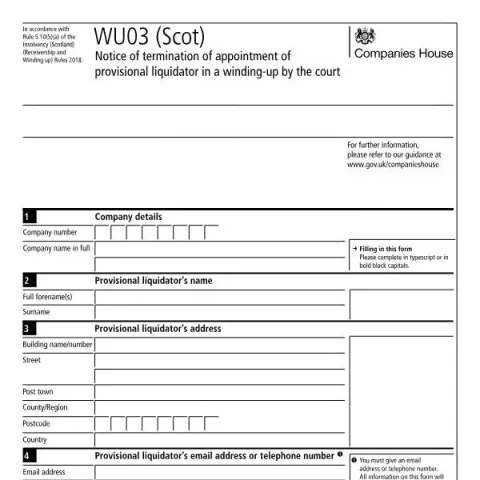
The WU03 (Scot) notice is structured to capture critical information regarding the termination of the provisional liquidator's appointment. It comprises several key sections:
- Company Details: This includes the full name and the company number, which must correspond to the official record held by Companies House.
- Provisional Liquidator’s Information: Their full name, address, and contact details are essential. This will ensure that anyone seeking to verify the termination can quickly find the relevant liquidator.
- Termination Statement: A declaration stating when the appointment was terminated and under what circumstances. This section is essential as it formally records the changes in the company's administration.
- Reason for Termination: It is mandatory to outline why the liquidator's appointment is being terminated, providing transparency in the process.
- Signature and Date: A signature from the provisional liquidator is required, along with the date of termination, to validate the notice.
Each of these components plays a vital role in ensuring a clear and transparent communication with Companies House and other stakeholders involved in the winding-up process.
Who Needs to Use the WU03 (Scot) Notice?
The WU03 (Scot) notice is primarily intended for use by companies that are undergoing a winding-up process in Scotland. More specifically, the following parties will find this document indispensable:
- Directors of the Company: They must ensure that the notice is submitted correctly to facilitate a smooth transition in the winding-up process.
- Provisional Liquidators: They are responsible for notifying the termination of their appointment formally.
- Creditors: Understanding the termination process can provide creditors with insights into the ongoing status of their claims against the company.
In some instances, other stakeholders, such as shareholders or legal advisors, may also need to understand the implications of the WU03 (Scot) notice.
Steps to Effectively Utilize the WU03 (Scot) Notice
Employing the WU03 (Scot) notice effectively involves several critical steps. The following guidelines illustrate how to navigate this process:
- Gather Necessary Information: Before completing the notice, ensure that all relevant information about the company and the provisional liquidator is readily available.
- Complete the Notice: Use typescript or bold black capitals when filling out the notice. Accuracy is paramount—ensure that the company name and number match the public records to avoid rejection.
- Specify the Termination Reason: Clearly articulate the reason for termination. This transparency can help mitigate future queries from Companies House or creditors.
- Sign and Date: Ensure that the provisional liquidator signs and dates the notice, as this validation is crucial for the document's acceptance.
- Submit the Notice: While the WU03 (Scot) can be sent to any Companies House address, it is recommended to use the designated address in Edinburgh for expediency. This can assist in faster processing.
Following these steps meticulously will help ensure that the termination of the provisional liquidator’s appointment is processed smoothly.
Interrelations with Other Documents in the Winding-Up Process
The WU03 (Scot) notice does not exist in isolation; it is part of a larger framework of documents and notices associated with the winding-up process. Understanding these interrelations can provide deeper insight into the administrative context:
| Document | Description | Relation to WU03 (Scot) |
|---|---|---|
| WU01 (Scot) | Notice of appointment of provisional liquidator | Preceding document; initiated the provisional liquidation process. |
| Winding-Up Order | A court order to officially wind up a company | The winding-up order may occur before or after the termination of the provisional liquidator. |
| Final Liquidator’s Report | A report detailing the liquidation outcomes | Often follows the WU03 (Scot), detailing the next steps post-termination. |
Each document plays a specific role in the winding-up process, and understanding their relationships will enhance clarity and compliance during this challenging time.
Common Misinterpretations Surrounding the WU03 (Scot) Notice
When dealing with legal and administrative documents, misunderstandings can arise. Here are some common misinterpretations related to the WU03 (Scot) notice:
- Assumption that a WU03 (Scot) Notice is Optional: Some may believe that submitting this notice is not mandatory. In reality, failing to notify Companies House appropriately can lead to complications in the company's winding-up process.
- Misunderstanding of the 'Reason for Termination': Not providing a clear reason can create ambiguity that may prompt further scrutiny from Companies House.
- Underestimating the Importance of Accuracy: Errors or omissions can lead to the notice being returned, causing delays. All details must be cross-checked against the public record.
Awareness of these potential pitfalls can save companies and provisional liquidators unnecessary hassle during the winding-up process.
Final Thoughts on the WU03 (Scot) Notice
The WU03 (Scot) notice is more than just a document; it is an essential part of the winding-up process of companies in Scotland. It provides a formal mechanism for terminating the appointment of a provisional liquidator and ensures transparency in the handling of the company's affairs. By understanding its contents, the steps for its submission, and the surrounding context, stakeholders can navigate the complexities of insolvency with greater confidence.
Ultimately, meticulous attention to detail and a clear understanding of administrative procedures can greatly aid all parties involved in the winding-up process, facilitating a smoother transition towards resolution.
Understanding the Role of a Provisional Liquidator in Scotland
The role of a provisional liquidator is critical in the context of Scottish companies facing potential insolvency. Appointed by the court, a provisional liquidator steps in to manage the affairs of a company while a winding up process is considered. This provides a temporary solution that aims to protect the company’s assets and ensure that creditors are treated fairly. In Scotland, the appointment process typically involves an application to the court, where the applicant must demonstrate adequate grounds for such an appointment, including concerns about the company’s financial viability and potential asset misappropriation.
Fill in your form directly online
No printing: type your details into the boxes of the official form, tick, then download the PDF ready to send.
- 1Type into the form boxes
- 2Tick in one click
- 3Save and download the PDF
During their tenure, a provisional liquidator has the authority to conduct investigations into the company’s affairs, manage its operations, and take necessary steps to preserve value for creditors. Importantly, they are required to report to the court regularly, detailing their findings and the actions taken. A key aspect of their role is to safeguard the interests of the stakeholders—creditors, employees, and shareholders—while providing a structured environment to address the financial crisis.
If the court decides to terminate the appointment of the provisional liquidator, it is crucial to adhere to specific procedures and legal requirements to ensure compliance with the Companies Act 2006 and other relevant regulations. This may include notifying the liquidator, the court, and all relevant parties about the termination, which should be done through a formal notice of termination.
Steps to Issue a Notice of Termination: Practical Considerations
Issuing a notice of termination for a provisional liquidator requires careful consideration and adherence to established legal principles. The following steps outline the practical approach to effectively carry out this process:
- Preparation of the Notice: The first step involves drafting a formal notice of termination, which should clearly state the reasons for the termination and reference the relevant court order. Ensure that the notice complies with the legal format required under Scots law, maintaining clarity and professionalism.
- Notification of Stakeholders: It’s essential to notify all relevant parties, including the provisional liquidator, creditors, and the court. This ensures that all stakeholders are informed of the decision and can take appropriate action if necessary. Documenting this communication is vital for legal compliance and record-keeping.
- Filing with the Court: The notice of termination must then be filed with the court that appointed the provisional liquidator. This step is crucial to formalize the termination and ensure that it is legally recognized. Be mindful of any specific filing requirements or deadlines that may apply.
- Managing Post-Termination Actions: After the termination notice has been issued and filed, stakeholders should be aware that the provisional liquidator will need to conclude any ongoing activities. This might involve finalizing reports or ensuring that the company's affairs are returned to normal management, if applicable. Communication with the provisional liquidator during this transition is essential to mitigate any disruptions.
Potential Legal Implications and Consequences
Terminating the appointment of a provisional liquidator can have significant legal implications for all parties involved. It is important to understand these consequences to safeguard against any potential disputes or liabilities:
Firstly, if the termination is contested, the court may require a hearing to consider the merits of the termination request. This could lead to additional legal costs and extend the timeline for resolving the company’s insolvency issues. In such cases, stakeholders may need to present evidence supporting the termination decision and justify the grounds for removing the provisional liquidator.
Secondly, parties who feel aggrieved by the termination may seek to challenge the decision, either through the court or by lodging complaints with the appropriate regulatory body. This could result in further legal proceedings, which can complicate and delay the winding-up process, negatively impacting creditors and other stakeholders.
Lastly, ensuring that the termination is executed in line with legal requirements is paramount, as any failure to do so could expose the company or its directors to claims of wrongful trading or mismanagement. It is advisable to consult with legal professionals experienced in corporate insolvency to navigate these complexities and secure favorable outcomes.