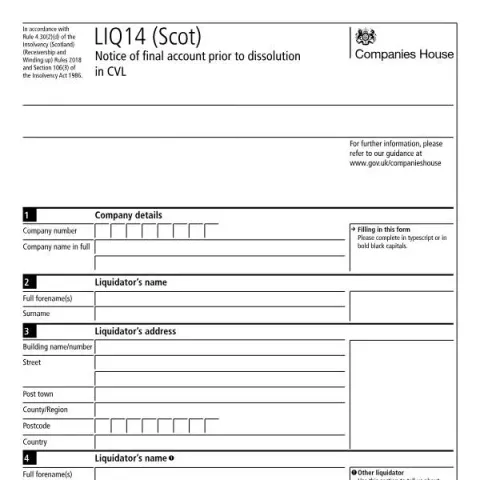
Understanding the LIQ14 (Scot) Form: A Key Step in the Liquidation Process
When a Scottish company undergoes a process known as Creditors' Voluntary Liquidation (CVL), the completion and submission of the LIQ14 (Scot) form becomes a crucial milestone. This document acts as the final account notice prior to the dissolution of the company and is the liquidator’s formal communication to Companies House, ensuring that all financial matters are settled before the company ceases to exist. Understanding the significance of this form is essential, particularly for directors and liquidators navigating this complex landscape.
Deadline Essentials: Timing Your Submission
The timeline surrounding the LIQ14 (Scot) form is critical. The form must be submitted to Companies House as part of the liquidation process. Here are some key dates to keep in mind:
- Final Account Preparation: The final account should be prepared after the liquidator has settled all outstanding debts and obligations of the company.
- Submission Deadline: There is no set deadline for submitting the LIQ14 (Scot) form, but it should be done promptly following the completion of the final account to avoid any complications.
- Dissolution Timeline: Once the form is submitted, and the final account is accepted, the company can proceed to dissolution, which typically occurs within three months.
Steps After Submission
After submitting the LIQ14 (Scot) form, Companies House will process your submission. If approved, the company will be dissolved officially, and this will be reflected in the public record. Companies House aims to complete this process efficiently, but it is advisable for liquidators to monitor the status to ensure a smooth conclusion.
Preparing Your Final Account: Document Checklist
One of the most important components when filling out the LIQ14 (Scot) form is the preparation of the final account. This account provides a snapshot of the company's financial status at the time of liquidation. Here are the essential documents you should gather:
- Final Accounts: A detailed report showing all financial transactions up to the date of liquidation.
- Creditors' Statement: A comprehensive list of all known creditors and the amounts owed to them.
- Asset Valuation: Documentation that outlines the valuation of the company’s assets.
- Liquidator's Report: A report summarizing the liquidator's activities, decisions, and the rationale for the dissolution.
It is crucial that these documents are accurate and complete, as they will be scrutinized during the submission process. Missing or incorrect information can lead to delays or rejections.
Filing Options: Where and How to Submit
The LIQ14 (Scot) form can be submitted through various channels, each with its unique considerations:
- Online Submission: While Companies House has made extensive online services available, as of this writing, the LIQ14 (Scot) form must be filed in paper format. Check the Companies House website for the latest updates on online filing.
- Postal Submission: If submitting by post, ensure to send the form to:
The Registrar of Companies, Companies House, Fourth floor, Edinburgh Quay 2, 139 Fountainbridge, Edinburgh, Scotland, EH3 9FF.
- In-Person Submission: Depending on processing times and urgency, some businesses may prefer to submit in person. Check if this is feasible with your local Companies House office.
Regardless of the method, always retain a copy of the submitted form and related documents for your own records.
Differences Between LIQ14 (Scot) and Other Forms
It is essential to differentiate the LIQ14 (Scot) form from other similar documents. The LIQ14 (Scot) form is specifically tailored for companies in Scotland undergoing CVL. Key differences include:
| Form | Purpose | Region |
|---|---|---|
| LIQ14 (Scot) | Final account prior to dissolution in CVL | Scotland |
| LIQ12 | Notice of final meeting of creditors | Scotland |
| Form H | Notice of final account | England and Wales |
| Form 4.25 | Statement of affairs | UK |
Understanding these distinctions helps ensure that liquidators are using the correct documentation for their specific circumstances.
Exploring the Liquidation Process: The Role of the LIQ14 (Scot) Form
The LIQ14 (Scot) form is a critical step within the broader framework of the liquidation process. It signifies that the liquidator has completed their responsibilities regarding the company’s financial affairs. Here’s how it fits into the overall process:
- Appointment of Liquidator: The process begins with the appointment of a liquidator by the company’s directors.
- Asset Realisation: Liquidators are charged with realizing the company’s remaining assets.
- Settlement of Debts: All outstanding debts to creditors must be settled or appropriately accounted for.
- Completion of Final Account: The liquidator prepares a final account that outlines all transactions, concluding their responsibilities.
- Submission of LIQ14 (Scot): This form is submitted to signal the end of the liquidation process.
- Dissolution of Company: Upon acceptance, the company is officially dissolved.
This form ensures transparency and compliance with the legal requirements set out in the Insolvency (Scotland) (Receivership and Winding Up) Rules 2018 and the Insolvency Act 1986.
Dissecting the LIQ14 (Scot) Form: Navigating Its Specific Sections
The LIQ14 (Scot) form is comprised of several sections, each with its purpose and importance. Understanding these sections will help liquidators complete the form correctly:
Section 1: Company Details
This section requires the full name and company number of the business undergoing liquidation. Accurate information here is vital as it links the form to the company's public record.
Section 2: Liquidator’s Information
The form requires disclosure of the liquidator's name and address. This contact information facilitates communication between Companies House and the liquidator, especially if any queries arise during processing.
Section 3: Statement on Creditors' Objections
Here, liquidators need to indicate if any creditors have objected to their release from liquidation duties. This is an important piece of information, as it may affect the finalization of the account.
Section 4: Final Account Submission
In this section, the liquidator confirms that a copy of the final account is attached. It is essential that this document is included, as it provides the necessary context for the financial details presented.
Section 5: Signature and Date
The liquidator must sign and date the form, demonstrating authenticity and accountability. This act represents the liquidator's confirmation that all information provided is true and accurate to the best of their knowledge.
Tracking Your Submission: Following Up with Companies House
Once the LIQ14 (Scot) form has been submitted, maintaining oversight of the process is vital. Here’s how to effectively track your submission:
- Confirmation of Receipt: While Companies House typically processes submissions promptly, it’s wise to request confirmation of receipt if you submit your form by post.
- Follow-Up Queries: If you encounter any delays or issues, don’t hesitate to contact Companies House directly through their official channels.
- Public Record Monitoring: After submission, the public record will eventually reflect the dissolution of the company. Regularly check for updates.
Being proactive in these steps can help ensure a smooth finalization of the liquidation process.
Fill in your form directly online
No printing: type your details into the boxes of the official form, tick, then download the PDF ready to send.
- 1Type into the form boxes
- 2Tick in one click
- 3Save and download the PDF
Understanding the Final Account Process in CVL for Scottish Companies
Before a Scottish company enters the process of dissolution under a Creditors Voluntary Liquidation (CVL), it is essential to understand the requirement for final accounts. The final accounts serve as a financial snapshot of the company's position just before it formally ceases trading. These accounts must be prepared accurately to reflect the company's assets, liabilities, and overall financial health.
In the context of a CVL, the final accounts generally include a balance sheet and a profit and loss account. The balance sheet indicates all the assets the company holds and all the liabilities it owes, while the profit and loss account summarises the company’s income and expenses over a specified period, typically the final accounting period ending on the date of liquidation. The appointed liquidator will rely heavily on these documents to assess the company's financial position and determine the distribution of assets among creditors.
Additionally, the preparation of the final accounts must comply with the legal requirements set out under the Companies Act 2006. It’s prudent for directors to engage a qualified accountant familiar with the intricacies of insolvency and liquidation processes to prepare these accounts accurately. Failure to do so may result in issues during the liquidation process, including potential legal ramifications if deemed that the directors were negligent in their duties.
Common Challenges During Final Account Preparation for CVL
The preparation of final accounts during a Creditors Voluntary Liquidation can present several challenges, particularly for directors who may not be familiar with the complexities involved in accounting under insolvency conditions. One of the primary challenges is the accurate valuation of company assets. Directors must ensure that all assets are listed and valued correctly, which may involve obtaining third-party valuations for tangible assets such as property, machinery, or inventory.
Another challenge often faced is the assessment of outstanding liabilities. It is crucial to ensure that all debts owed to creditors are accounted for and correctly classified. Disputes may arise concerning the amounts owed, leading to complexities in resolving claims against the company.
Furthermore, directors must also consider the implications of any transactions leading up to the liquidation. The liquidator will scrutinise transactions that occurred prior to the CVL for potential preferences or undervalued transactions that could be reversed. This scrutiny forms part of the liquidator's duty to ensure fair treatment of all creditors. Directors should be prepared to justify any significant transactions conducted shortly before the liquidation date.
Legal Obligations and Consequences for Directors in the CVL Process
Directors of Scottish companies facing dissolution through a CVL carry specific legal responsibilities, particularly concerning the final accounts. Under the Companies Act 2006, directors must ensure that the financial statements are not misleading and that they present a true and fair view of the company's financial position. This duty extends to ensuring that the final accounts are free from material misstatements, whether caused by negligence or intentional actions.
Failure to fulfil these obligations can lead to serious consequences, including potential disqualification from serving as a director in the future. In cases where misconduct or negligence is evident, the directors may also face personal liability for company debts if it is determined that they acted improperly or dishonestly. Additionally, the liquidator has the authority to investigate the conduct of directors during the insolvency proceedings, which may result in further legal action against them.
To mitigate these risks, directors should maintain thorough records and documentation throughout the CVL process. Engaging with a licensed insolvency practitioner to assist in the liquidation can also provide directors with guidance and support, ensuring compliance with all legal requirements and protecting their interests throughout the process.