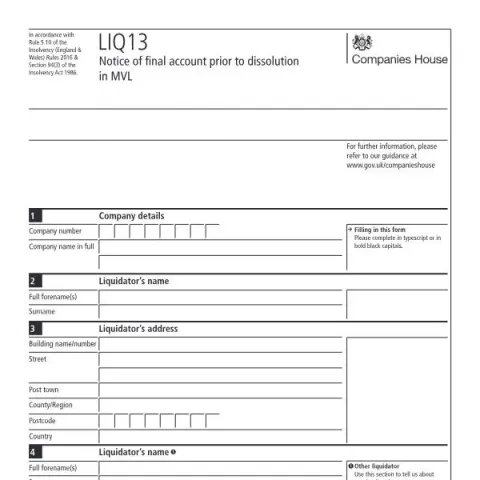
Understanding the LIQ13 Document: A Key Step in the MVL Process
The LIQ13 form, officially titled "Notice of final account prior to dissolution in MVL," plays a pivotal role in the process of winding up a company voluntarily under the Members' Voluntary Liquidation (MVL) procedure. This document allows liquidators to formally notify relevant parties about the completion of the company's winding up process, thus bringing the company one step closer to dissolution.
The MVL Process: Context and Importance
Before delving into the specifics of the LIQ13, it is essential to grasp the context of the Members' Voluntary Liquidation. MVL is an option for solvent companies wishing to cease operations. Typically, it is considered when the shareholders agree that the company should be dissolved but seek a structured way to manage the liquidation of assets and liabilities.
Key Features of MVL
- Solvency Requirement: The company must be solvent, meaning it can pay its debts in full within 12 months.
- Approval from Shareholders: Liquidation requires a resolution passed by the shareholders.
- Appointment of a Liquidator: A licensed insolvency practitioner is appointed to oversee the process, ensuring that it follows legal and regulatory frameworks.
The LIQ13 is crucial in this process as it serves to inform all stakeholders, including Companies House, of the final account of the company preceding its dissolution.
Who Needs to Use the LIQ13 Document?
The LIQ13 notice is intended for liquidators handling the winding up of solvent companies. It is particularly relevant in the following situations:
- Shareholders Resolved to Liquidate: When shareholders have unanimously opted for liquidation and appointed a liquidator.
- Completion of Liquidation Activities: After the liquidator has settled all company debts and prepared the final accounts.
- Seeking Formal Dissolution: Once all processes are finalized and the company is ready to be officially dissolved.
Understanding who must submit the LIQ13 helps ensure that liquidators and shareholders fulfil their obligations, avoiding delays in the dissolution process.
Step-by-Step Approach to Submitting the LIQ13
Filing the LIQ13 is a procedural undertaking that involves several key steps. Here's how to navigate this critical document submission:
- Preparation of Final Accounts: The liquidator must first prepare the final accounts of the winding up, providing a clear financial overview of how the company’s assets were managed and distributed.
- Compiling Required Information: Ensure that you have all necessary details, including:
- Company name in full
- Company number
- Details of the liquidator(s)
- Signature and date of the liquidator
- Filing the LIQ13: Submit the LIQ13 to Companies House. Any Companies House address will suffice, but it is recommended to send it to: The Registrar of Companies, Companies House, Crown Way, Cardiff, Wales, CF14 3UZ.
- Include Supporting Documentation: Attach a copy of the final accounts delivered to the members, as required under Section 94(2) of the Insolvency Act 1986.
Completing these steps accurately will facilitate a smooth process toward dissolution, ensuring compliance with relevant laws.
Common Procedural Queries Regarding LIQ13
As with any administrative document, queries often arise. Here are some common concerns regarding the LIQ13:
1. What is the Timeline for Submission?
While there is no strict deadline for submitting the LIQ13 after the final accounts have been prepared, it is advisable to do so promptly to avoid unnecessary complications in the dissolution process. Aligning the submission with other winding-up activities is recommended.
2. Are There Fees Associated with Filing the LIQ13?
Submitting the LIQ13 form itself incurs no fees, as Companies House provides this service free of charge. However, additional charges may arise if other services are utilized during the liquidation process.
3. What Happens After Submission?
Once the LIQ13 is submitted, Companies House will process the notice. Provided the information is complete and accurate, the company will be listed for dissolution, pending any objections from creditors or other interested parties.
Navigating Potential Misinterpretations of the LIQ13
In the realm of administrative procedures, misinterpretations can lead to significant delays. Here are a few common misunderstandings surrounding the LIQ13:
- Confusion Over Solvency: Some may mistakenly believe that a company does not need to be solvent to utilize MVL. Clarifying that solvent status is non-negotiable is crucial.
- Assuming Incomplete Submissions are Acceptable: Failing to attach the final accounts or providing incorrect company information can result in rejection of the LIQ13. Meticulous attention to detail is required.
- Neglecting Notification to Shareholders: Liquidators must ensure that all stakeholders are informed of the winding-up process and the final accounts. This transparency is mandatory to comply with legal requirements.
Impact of the LIQ13 on Stakeholders
The submission of the LIQ13 has significant implications not just for the liquidator but for various stakeholders:
Fill in your form directly online
No printing: type your details into the boxes of the official form, tick, then download the PDF ready to send.
- 1Type into the form boxes
- 2Tick in one click
- 3Save and download the PDF
For Liquidators
Liquidators are tasked with navigating a complex legal landscape. The LIQ13 is a vital tool that confirms compliance with the Insolvency Act and signifies the completion of their duties. It also serves as a record that can be referenced in case of future disputes.
For Shareholders
Shareholders benefit from clarity and transparency regarding the winding-up process. The LIQ13 provides them with assurance that the company's financial affairs have been settled appropriately.
For Creditors
The LIQ13 serves as a formal notification to creditors that the winding-up process is complete. This is crucial for creditors who may have claims against the company, as it outlines the timeline and ensures that their interests are considered in the dissolution.
Final Considerations: Ensuring Compliance and Transparency
Filing the LIQ13 is an essential step in completing the Members' Voluntary Liquidation process. Liquidators must ensure compliance with all aspects of the Insolvency Act and other relevant regulations. This not only facilitates a smoother dissolution but also upholds the integrity of the liquidator and the company involved.
Best Practices for Liquidators
- Maintain Accurate Records: Keeping detailed records of all transactions and communications during the winding-up process is essential for accountability.
- Communicate Effectively: Ensure that all stakeholders, especially shareholders and creditors, are kept informed throughout the liquidation process.
- Consult with Professionals: Engaging with legal and financial experts can help navigate the complexities of the MVL and ensure compliance with all legal requirements.
The LIQ13 document is more than just a procedural form; it represents the culmination of careful planning and adherence to legal standards. By understanding its significance and ensuring meticulous completion, liquidators can facilitate a successful transition towards dissolution.