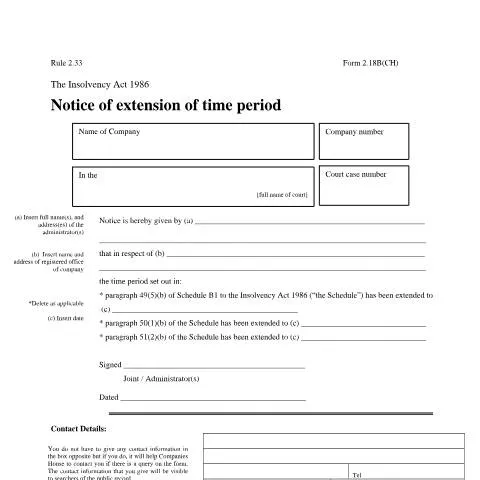
Navigating Business Timelines: Understanding the Extension of Time Period Notice
Within the landscape of corporate governance, time management is crucial, especially in scenarios that involve insolvency. Companies facing financial distress may require extensions on statutory deadlines critical to the administration process. This need is addressed through the Notice of Extension of Time Period, identified by the code 2.18B(CH), which acts as a formal means for administrators to notify Companies House about such extensions. In this guide, we delve into the intricacies of this notice, exploring its applications, procedural requirements, and the implications for businesses.
Why Administrators Need to Extend Time Periods
In various situations, administrators overseeing an insolvent company may find it challenging to meet specific deadlines set by the Insolvency Act 1986. These time-sensitive obligations include submitting reports, making decisions regarding the company’s future, or filing particular documents with the court. The necessity for an extension might arise due to:
- Complexity of the Case: The intricacy of financial issues may require more time to analyze before making informed decisions.
- Engagement with Creditors: Administrators might need additional time to consult creditors and stakeholders to develop a viable rescue plan.
- Legal Proceedings: Ongoing litigation or negotiations can prolong the required timelines.
In these instances, the Notice of Extension of Time Period serves as a formal mechanism to extend deadlines, ensuring compliance with regulations while protecting the interests of both the company and its creditors.
Decoding the Notice: Key Elements
Understanding the components of the Notice of Extension of Time Period is vital for administrators. Each section of the notice plays a critical role in communicating the necessary information to Companies House and stakeholders. Here’s what administrators must include:
| Section | Description |
|---|---|
| Company Details | Full name of the company and its registered address. |
| Insolvency Details | Court case number and names/addresses of the appointed administrators. |
| Time Period Extension | Specific paragraphs of the Insolvency Act that require an extension and the new deadlines. |
| Signature and Date | Signature of the administrator(s) and the date of the notice. |
This structure ensures that all required information is presented clearly and concisely, minimising the risk of processing delays by Companies House.
Step-by-Step Process: Submitting the Notice
The submission of the Notice of Extension of Time Period is a straightforward yet pivotal process. Here’s a step-by-step guide to ensure all necessary actions are followed accurately:
- Preparation: Gather all relevant information, including company details, the specific extensions needed, and the reasons for the extension.
- Drafting the Notice: Complete the notice form with the required information, ensuring clarity and accuracy.
- Signature: The notice must be signed by the administrator(s) to verify the authenticity of the submission.
- Submission: Send the completed notice to Companies House at the designated address. Ensure to include a cover letter, if appropriate.
- Record Keeping: Keep a copy of the submitted notice along with any correspondence for future reference and compliance purposes.
Following these steps meticulously helps maintain transparency and adherence to legal obligations within the complex environment of insolvency.
Understanding the Legal Framework: How the Insolvency Act Shapes the Notice
The Insolvency Act 1986 provides the legal foundation for the administration process in the UK, including guidelines for timing and reporting. The sections relevant to the Notice of Extension of Time Period are particularly significant:
- Paragraph 49(5)(b): Details the requirement for administrators to report on a company's progress, which can be extended under specific circumstances.
- Paragraph 50(1)(b): Specifies timelines regarding the filing of proposals for the company’s future which may be extended.
- Paragraph 51(2)(b): Covers deadlines related to creditor meetings and notifications.
By recognizing these regulations, administrators can ensure their extensions are legally grounded and justified, which is essential for maintaining credibility with creditors and the court.
Common Pitfalls: Ensuring Compliance and Accuracy
While the process of submitting the Notice of Extension of Time Period is straightforward, there are several common pitfalls that administrators should be vigilant about to avoid potential complications:
- Incomplete Information: Failing to provide all required details can lead to delays or rejection of the notice.
- Late Submission: Notices must be submitted within a reasonable timeframe; late submissions may complicate matters further.
- Lack of Communication: Failing to communicate with creditors about the extension can lead to distrust and complications in negotiations.
Awareness of these issues is crucial for administrators to navigate the complexities of insolvency effectively.
Real-Life Scenarios: When to Use the Notice
Consider the case of a medium-sized manufacturing company facing severe financial distress. Upon appointing administrators, they realize that significant creditor consultations are necessary to devise a sustainable recovery plan. The initial deadlines under the Insolvency Act seem unmanageable due to the complexity of negotiations. Here, the Notice of Extension of Time Period becomes an invaluable tool for the administrators to legally extend deadlines, ensuring that all parties involved have adequate time to make informed decisions.
Alternatively, imagine a tech startup that has entered administration. The administrators discover pertinent legal claims falling under the company’s assets, requiring further investigation. By utilizing the notice, they can extend the time to file necessary reports to the court, safeguarding the interests of the creditors and potentially maximizing asset recovery.
What Happens After Submission: The Role of Companies House
Once the Notice of Extension of Time Period is submitted to Companies House, it enters the public record. This transparency is essential as it not only informs creditors but also maintains the integrity of the insolvency process.
Companies House plays a pivotal role in:
- Processing the Notice: They will review the submitted notice for compliance with the legal requirements set out in the Insolvency Act.
- Updating Records: Upon acceptance, they update their records, ensuring that all stakeholders have access to the latest information.
- Responding to Queries: Should there be any issues or queries regarding the notice, Companies House will reach out to the administrator for clarification.
Maintaining open lines of communication with Companies House is crucial for a smooth administrative process.
The Importance of Timely Communication with Stakeholders
Effective communication during the insolvency process cannot be overstated. Administrators should ensure that all stakeholders, including creditors, employees, and suppliers, are kept informed about the extension of time periods and any other relevant developments. This fosters trust and can significantly impact the overall outcome of the administration process.
Key practices include:
- Regular Updates: Keeping all stakeholders informed via emails or meetings enhances transparency.
- Available Resources: Providing access to documentation related to the notice and its implications helps clarify the situation.
- Open Dialogue: Encouraging questions and discussions can alleviate concerns and build confidence in the administration process.
By prioritizing communication, administrators can navigate the hurdles of insolvency more effectively, potentially leading to a favorable outcome for all parties involved.
The Future of Business Management: Lessons from the Extension Notice
Utilizing the Notice of Extension of Time Period can serve as a learning opportunity for companies and administrators. By understanding the need for extensions and the implications of time management within the context of insolvency, businesses can better prepare for unforeseen circumstances and develop resilience strategies.
In the face of financial uncertainty, embracing proactive measures—like securing legal knowledge, maintaining transparent communication, and fostering strong relationships with creditors—can significantly alter the trajectory of a company's recovery or restructuring efforts.
As the business landscape evolves, particularly in the wake of economic challenges, the ability to navigate insolvency with clarity and effectiveness will remain a vital skill for administrators and stakeholders alike.
Understanding Extensions: Types and Eligibility
In the context of UK administrative processes, particularly when communicating with HMRC, understanding the types of extensions available and the eligibility criteria for each is vital. Extensions can generally be categorized into statutory extensions, discretionary extensions, and those requested for exceptional circumstances.
Statutory extensions are predetermined by law and often apply to certain types of filings or tax returns. For instance, if you are unable to submit your Self Assessment tax return by the set deadline (31 January), you may qualify for an automatic extension under specific conditions. These conditions often relate to disability, bereavement, or other extenuating circumstances that directly hinder your capacity to file on time, which HMRC thoroughly reviews.
Discretionary extensions may be requested when you foresee potential delays but do not fit within the statutory criteria. Factors that HMRC might consider when granting these extensions include your history of compliance, communication with tax authorities, and any mitigating circumstances surrounding your inability to file on time.
Finally, extensions granted under exceptional circumstances involve cases where an unforeseen event — such as a natural disaster or serious illness — has significantly impacted your ability to meet statutory obligations. In these cases, timely and thorough documentation is essential, as HMRC requires clear evidence to substantiate your claim for an extension. It’s important to detail how the event has affected your filing capabilities and any steps you’ve taken to mitigate the impact.
Fill in your form directly online
No printing: type your details into the boxes of the official form, tick, then download the PDF ready to send.
- 1Type into the form boxes
- 2Tick in one click
- 3Save and download the PDF
The Process of Requesting an Extension: Step-by-Step Guide
Requesting an extension of time to meet your obligations can seem daunting, but breaking down the process into clear, manageable steps can simplify the task. Below is a comprehensive guide on how to effectively file for an extension in the UK.
Step 1: Determine Your Eligibility — Before submitting a request, assess whether you meet the eligibility criteria outlined by HMRC. Review your circumstances against the types of extensions mentioned in the previous section. Gather any relevant documentation that supports your case, such as medical certificates, or correspondence related to personal circumstances.
Step 2: Prepare Your Request — Craft a formal letter or notice addressing HMRC. Be sure to include your full name, National Insurance number, and any relevant reference numbers to streamline communication. Clearly outline the reasons for your request, attaching any supporting documents to substantiate your claim. Maintain a professional tone, as HMRC staff will review your request for validity.
Step 3: Submit Your Request — Submit your extension request via the appropriate channel. Depending on the nature of your obligation (for instance, Self Assessment tax returns), you might be able to submit your request online through your HMRC account. Alternatively, a postal submission may be required. Ensure that you keep copies of your request for your records.
Step 4: Follow Up — After submission, it's crucial to follow up on your request. If you have not received an acknowledgement or response within a reasonable time frame, consider contacting HMRC directly. Be prepared to provide reference numbers and details about your submission. This step ensures that your request has been processed and received.
Step 5: Await the Decision — HMRC will review your request and issue a decision. It is advisable to await this decision before proceeding with any filings to avoid complications. If approved, ensure that you adhere to the new timelines specified in the extension, as failure to comply could result in penalties.
Common Pitfalls to Avoid When Requesting an Extension
While the process of requesting an extension might seem straightforward, there are several common pitfalls that individuals and businesses often encounter. Being aware of these can help you navigate the process more effectively and enhance the likelihood of your request being approved.
Lack of Documentation — One of the most frequent mistakes is failing to provide adequate documentation to support your request. HMRC requires clear evidence of your circumstances, so ensure that you gather all relevant documents before submission. This could include medical records, proof of business disruption, or any other pertinent information.
Missing Deadlines — It’s crucial to submit your extension request well before the official deadline. Requesting an extension close to the due date may raise red flags and make it difficult for HMRC to grant your request. Aim to submit your request as early as possible, allowing HMRC ample time to process it.
Failure to Communicate — If your situation evolves after your initial request, or if HMRC requests further information, it’s important to maintain open lines of communication. Respond promptly to any queries and keep HMRC informed about any changes in your circumstances that may affect your ability to comply with extended deadlines.
Ignoring HMRC’s Response — Upon receiving a decision, whether positive or negative, pay close attention to HMRC’s feedback. If granted an extension, adhere strictly to the new deadlines. If your request is denied, consider the reasons provided and seek clarification if necessary. Avoiding HMRC’s response could lead to further complications or penalties.
By steering clear of these common pitfalls, you can improve your chances of successfully obtaining an extension and ensure compliance with UK administrative obligations.