Navigating the Procedures of Automatic End of Administration
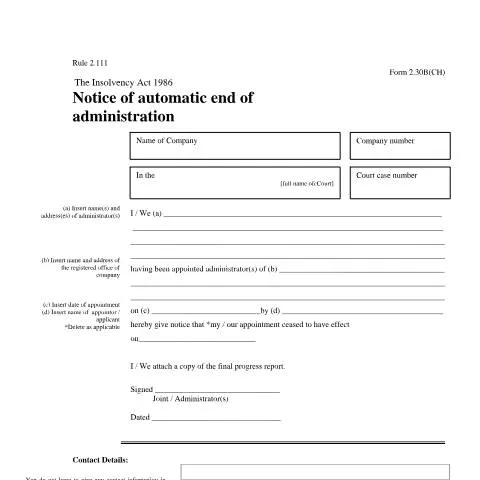
The process of administration is a critical aspect of the corporate recovery framework in the UK, specifically under the Insolvency Act 1986. Understanding the nuances of the Give notice of the automatic end of administration (2.30B(CH)) is essential for administrators and stakeholders involved in a company's financial recovery. This guide delves into the specifics of this notice, exploring its purpose, the procedural context, and the implications of its issuance.
Understanding the Context: When Does Administration End?
Administration serves as a lifeline for companies facing financial distress. However, the appointment of an administrator doesn’t last indefinitely. There are several scenarios that could lead to the automatic cessation of administration, including:
- The company has been successfully restructured.
- Creditors have approved a liquidation plan.
- The administrator has fulfilled their duties and no longer needs to act.
Once these conditions are met, administrators must formally notify Companies House using the 2.30B(CH) notice. This step is crucial as it marks the legal end of the administrator’s authority to act on behalf of the company and confirms the conclusion of the administration process.
Key Components of the 2.30B(CH) Notice: What to Include
Mandatory Information
When preparing the 2.30B(CH) notice, specific details must be accurately documented:
- Name of the Company: Clearly state the full legal name of the entity.
- Company Number: This unique identifier must be provided for reference.
- Court Case Number: Include the reference number from the court overseeing the administration.
- Details of the Administrator(s): Provide names and addresses of those who were appointed.
- Date of Appointment: Specify when the administrators were initially appointed.
- Name of Appointor/Applicant: Indicate who appointed the administrator(s).
Each of these elements is essential not only for clarity but also for legal compliance. Missing any information could result in delays or rejections of the notice.
Final Progress Report: An Essential Attachment
Alongside the 2.30B(CH) notice, it is mandatory to attach a final progress report. This document outlines the actions taken during the administration process and is vital for transparency. Key aspects to cover in this report include:
- The objectives outlined at the beginning of the administration.
- Details on the financial recovery efforts undertaken.
- A summary of the distribution of assets, if applicable.
This report not only provides accountability but also informs all stakeholders—creditors, employees, and shareholders—about how their interests were managed throughout the administration.
Consequences of Not Filing the Notice
Neglecting to file the 2.30B(CH) notice can lead to several complications:
- Legal Liability: Administrators may face scrutiny for failing to comply with their obligations.
- Impact on Creditors: Creditors may be left in a state of uncertainty regarding the status of their claims against the company.
- Reputation Damage: The company's reputation could suffer, impacting future business dealings.
Thus, timely and accurate filing of the notice is not just a procedural formality but a critical step in upholding the integrity of the administration process.
Common Misinterpretations: Clarifying the Purpose of the Notice
The wording and intent of the 2.30B(CH) notice may lead to misunderstandings among stakeholders. Here are common misinterpretations clarified:
- It is not a Closure Document: The 2.30B(CH) notice signifies the end of the administration but does not equate to the company’s closure.
- Not for Bankruptcy Announcements: This notice is specific to administration and should not be confused with notices related to bankruptcy proceedings.
Recognizing these distinctions is vital for all parties involved to maintain clarity on the company’s status and the implications of the administration’s end.
The Broader Framework: Interactions with Other Documentation
The 2.30B(CH) notice does not exist in isolation; it interacts with other critical documentation within the insolvency framework. Understanding these relationships can enhance compliance and streamline processes:
| Document | Purpose/Relation |
|---|---|
| Notice of Appointment of Administrator (2.4B(CH)) | Initiates the administration process; forms the basis for subsequent filings. |
| Progress Reports | Regular updates during administration, culminating in the final report required with the 2.30B(CH). |
| Notice of Meetings of Creditors | Documents decisions made by creditors during the administration, influencing the closure process. |
This interconnectedness highlights the importance of maintaining accurate records throughout the administration process, ensuring that all documentation aligns with the legal framework.
Best Practices for Administrators When Filing the Notice
For administrators tasked with submitting the 2.30B(CH) notice, adhering to best practices can facilitate a smoother process:
- Verify All Information: Double-check the accuracy of all details before submission to avoid errors.
- Timeliness is Key: File the notice as soon as the administration ceases to prevent complications.
- Maintain Transparency: Keep stakeholders informed throughout the process, especially when filing the notice.
- Seek Professional Advice: Consider consulting with legal experts to navigate complex situations or uncertainties.
Implementing these practices can enhance the effectiveness of the administration closure process, ensuring compliance and fostering trust among stakeholders.
A Conclusive Note: The Importance of the 2.30B(CH) Notice
The Give notice of the automatic end of administration (2.30B(CH)) stands as a vital component in the lifecycle of a company navigating insolvency. By thoroughly understanding its requirements, implications, and interrelations with other documents, administrators can effectively manage the end of administration, uphold their legal obligations, and contribute positively to the company’s recovery narrative. This notice is not merely a formality; it is a significant step towards restoring normalcy in the business's operations and ensuring that all stakeholders are adequately informed.
Understanding the Automatic End of Administration Process
The automatic end of administration process under the UK insolvency regime, specifically referenced in section 2.30B(CH), is a crucial concept for businesses facing insolvency or financial distress. Once a company enters administration, the goal is often to rescue it as a going concern. However, if this objective cannot be achieved, the administration may come to an automatic end, triggering significant legal and financial implications.
This section aims to clarify the circumstances under which the automatic end of administration occurs, the roles of administrators, and the rights of creditors in this context. An administrator's primary responsibility is to manage the affairs of the company during the administration period, but if they are unable to turn the situation around, a return to creditors becomes inevitable.
It’s important to note that the automatic end of administration is not immediate. The administrator must formally notice that the administration has ended, which is typically done through filing the relevant paperwork with Companies House. This notice informs creditors and other interested parties about the transition back to ordinary business practice or further insolvency proceedings.
When the administration ends automatically, the company typically exits administration after a specified period—usually after 12 months unless extended. However, this period could be shorter if the administrator determines that continuing the administration is no longer appropriate. Thus, the administrator plays a crucial role in evaluating the company's viability and deciding the best course of action.
Moreover, once administration ends automatically, the creditors regain control over the company’s assets. They may initiate further actions, including liquidation processes, if the company's debts remain unresolved. Thus, awareness of the automatic end of administration is vital for all stakeholders involved.
Implications for Creditors Following Automatic End of Administration
The implications for creditors once the administration process ends are profound. After the automatic termination, creditors may find themselves in a position to recover outstanding debts through various means. Depending on the nature of their claims and the assets available, creditors should be prepared to take assertive actions to protect their interests.
Fill in your form directly online
No printing: type your details into the boxes of the official form, tick, then download the PDF ready to send.
- 1Type into the form boxes
- 2Tick in one click
- 3Save and download the PDF
In the aftermath of the automatic end of administration, creditors regain the right to initiate winding-up proceedings if they believe the company cannot fulfil its obligations. This can lead to a liquidation process where assets are sold off to pay outstanding debts. A creditor must be aware of their standing, such as whether they hold a secured or unsecured position, as this will directly affect their recovery prospects.
Furthermore, creditors should keep abreast of any communications from the former administrators regarding the status of the company and any potential asset recoveries. Often, there might be a period of uncertainty as the company transitions out of administration, which can offer a window for creditors to assert their claims.
Additionally, creditors must be prepared for the potential legal complexities that can arise following the end of administration. For instance, disputes over the company's remaining assets can lead to lengthy legal battles, particularly if multiple creditors vie for limited resources. Therefore, it is advisable for creditors to consult with legal or financial professionals to navigate these challenges effectively.
Future Steps and Considerations After Administration Ends
Following the automatic end of administration, it is pivotal for the company and its stakeholders to develop a clear plan of action to address the new circumstances. The end of administration signifies not only challenges but also opportunities for restructuring and re-establishing operations. Here are several considerations for companies and their stakeholders:
1. Assessing Financial Health: Assess the company’s current financial situation in light of its debts and obligations. Understanding cash flow, outstanding payments, and asset value will guide decision-making processes.
2. Engaging with Stakeholders: Open communication with creditors, suppliers, and employees is essential to foster cooperation and transparency. This helps build trust and can pave the way for negotiations or restructuring agreements.
3. Consideration of Restructuring Options: Depending on the assessment of the company's viability, stakeholders may explore various restructuring options. This could include entering a Company Voluntary Arrangement (CVA) or negotiating payment plans with creditors to prevent further insolvency issues.
4. Legal Compliance and Reporting: Ensure compliance with relevant regulations and legal obligations. The company must file necessary documents with Companies House, including resolutions or reports detailing the end of administration and subsequent decisions. Non-compliance can lead to further legal troubles.
5. Future Planning and Risk Management: Implement strategic business planning to mitigate future risks. This may involve reassessing business models, supply chains, or market positioning to ensure long-term sustainability.
By taking these steps, companies can navigate the aftermath of the automatic end of administration more effectively, laying the groundwork for recovery and future growth.