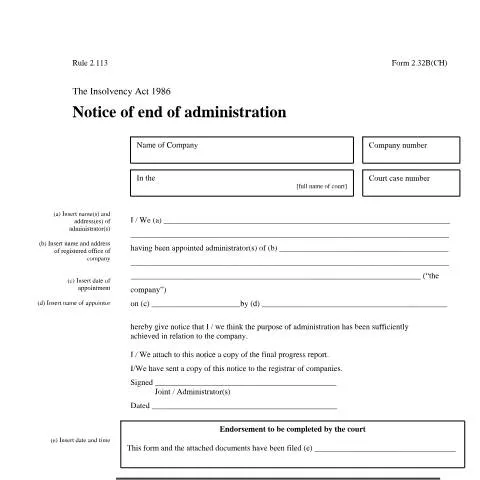
Understanding the Notice of End of Administration
The Notice of End of Administration is a crucial document within the realm of corporate insolvency in the UK, specifically governed by the Insolvency Act 1986. This notice serves as a formal declaration that the objectives of the administration process for a company have been sufficiently achieved. It is primarily relevant for administrators who have been appointed to manage a company during insolvency, ensuring that all parties involved understand the status and next steps for the business.
Who Needs This Notice and When?
Understanding when to issue the Notice of End of Administration is essential for administrators. This document is particularly relevant in the following scenarios:
- The company has successfully reorganised its affairs, allowing it to continue trading.
- Creditors have been repaid in accordance with the administration plan.
- The administrator has determined that the administration was successful in achieving its objectives.
In essence, this notice signifies the transition from administration back to normal business operations or, alternatively, the next steps toward liquidation if the administration did not yield a viable outcome.
Navigating the Process: Step by Step
Issuing a Notice of End of Administration involves several key steps. Below, you'll find a structured approach to ensure compliance:
- Confirm Objectives Achieved: Ensure that the aims of the administration have been met. This includes reviewing all relevant documentation.
- Prepare the Final Progress Report: This report should detail the actions taken during the administration and highlight the outcomes achieved.
- Complete the Notice: Fill out the Notice of End of Administration (Form 2.32B(CH)) accurately, including your name, the company's details, and the court case number.
- File with Companies House: Submit the signed notice along with the final progress report to Companies House. This is crucial for public record purposes.
- Notify the Court: Ensure that the court which appointed you as administrator is also informed of the end of administration.
Each step must be followed diligently to maintain compliance with legal obligations and ensure that the company’s status is accurately represented.
Key Terminology and Concepts
Several terms and concepts are pivotal when dealing with this notice:
- Administrator: A licensed insolvency practitioner appointed to manage the affairs of a company in administration.
- Administration: A legal process aimed at rescuing a company or achieving a better outcome for creditors than immediate liquidation.
- Final Progress Report: A document summarizing the administration process, detailing actions taken, and outcomes achieved.
- Registrar of Companies: The official body where company information, including notices and filings, is kept.
Understanding these terms is crucial to navigating the administration process effectively.
Common Misinterpretations and Pitfalls
Administrators may encounter various misunderstandings regarding the Notice of End of Administration. Awareness of these potential pitfalls can aid in avoiding costly errors:
- Assuming Automatic Transition: Many might presume that filing the notice alone will automatically transition the company out of administration. However, it is critical to ensure all objectives are met beforehand.
- Inadequate Reporting: Failing to provide a comprehensive Final Progress Report can lead to questions from creditors or the court.
- Neglecting Notifications: Some administrators forget to notify the court, which can result in legal complications or delays in concluding the administration.
Being vigilant about these errors can help streamline the transition process and maintain the integrity of the administration.
Scope and Limitations of the Notice
While the Notice of End of Administration is critical, it does not cover every aspect of a company’s compliance requirements. Understanding its limitations is essential:
- Does Not Prevent Future Insolvency: Issuing this notice does not guarantee that the company will not face further financial difficulties.
- Geographical Relevance: The notice is applicable only in the UK and may not suffice in jurisdictions with different insolvency laws.
- Not a Guarantee of Creditor Satisfaction: It acknowledges the completion of administration but does not ensure all creditors have been fully satisfied.
Recognising these boundaries helps administrators manage expectations and plan for future engagements with creditors and stakeholders.
Practical Considerations for Filing
When preparing to file the Notice of End of Administration, consider the following practical aspects:
- Timeliness: File the notice promptly to prevent any lapses in administrative procedures. The quicker the notice is filed, the sooner the company can move forward.
- Documentation Accuracy: Double-check all entries, particularly the company number and court details, to avoid rejections or requests for amendments.
- Contact Information: While not mandatory, providing contact details can facilitate communication if any issues arise during processing.
Attention to these details can significantly enhance the efficiency of the administrative closure process.
Conclusion: The Importance of Compliance
The Notice of End of Administration processes the closure of a significant chapter in a company's journey. It ensures compliance with UK insolvency regulations and provides a transparent record for all stakeholders involved. Therefore, understanding its contents, purpose, and the implications of filing is paramount for any administrator.
Fill in your form directly online
No printing: type your details into the boxes of the official form, tick, then download the PDF ready to send.
- 1Type into the form boxes
- 2Tick in one click
- 3Save and download the PDF
Adhering to these guidelines not only ensures a smooth transition out of administration but also contributes to the overall integrity of the business landscape, fostering trust among creditors, shareholders, and the broader public.
Understanding the Process of Ending Administration
Ending administration is a significant phase in the insolvency process that aims to return the company to a state of normal trading or to facilitate its winding up. To give notice of the end of administration, a formal process must be followed, ensuring compliance with the laws set out in the Insolvency Act 1986. This process is crucial to inform creditors and stakeholders about the status of the company and to clarify the next steps. The notification must be completed within a specific timeframe and relief must be sought in accordance with the relevant legal provisions.
The procedure begins with the administrator preparing a report summarising the administration’s outcome. This report should include key financial details, creditor outcomes, and specific recommendations regarding the company's future. Once prepared, the administrator must notify all relevant parties, including creditors, employees, and shareholders. This communication serves not only as a formality but as a means to maintain transparency and uphold the interests of all involved parties.
Key Considerations When Giving Notice
There are several important considerations to keep in mind when giving notice of the end of administration:
- Timeframe for Notification: The administrator is required to give notice within a defined time period after the end of the administration. Typically, this is within 14 days, but it may vary depending on specific circumstances surrounding the company.
- Formal Requirements: The notice must adhere to specific formatting guidelines, which include addressing the notice to the correct parties, including the date, and ensuring it is signed by the administrator. Failure to comply with these requirements can result in legal complications.
- Public Register: The notice must also be filed with the relevant authorities, such as Companies House, where it becomes part of the public record. This contributes to the transparency of the insolvency process and provides assurance to stakeholders regarding the company’s status.
- Potential Objections: It's essential to be aware of the possibility of objections from creditors or other stakeholders. If a creditor feels that the administration has not been concluded satisfactorily, they may challenge the administrator's report, which can lead to further legal proceedings and affect the company's future.
Impact on Creditors and Stakeholders
The end of administration has substantial implications for creditors and stakeholders. Once the notice is given, creditors must understand their rights and the expected outcomes:
- Distribution of Assets: The notice should outline how any remaining assets will be distributed among creditors. This is often done on a pro-rata basis, depending on the classes of creditors and their secured or unsecured status.
- Future Trading: Stakeholders should be aware of how the company's operational status will change post-administration. The notice should clarify whether the company will continue to trade or will be undergoing a winding-up process.
- Legal Rights: It is vital for creditors to be informed of their legal rights following the end of administration. This includes potential claims to recover debts or actions they can take if they believe their interests are not being adequately represented.