Understanding the Context: Administration in the UK Business Landscape
The administration process is a vital procedure designed to rescue failing companies, providing them with temporary protection while they undergo restructuring or liquidation. This process is governed by the Insolvency Act 1986, and it enables companies to reorganize their affairs while protecting them from creditors. When the courts order an end to this administration period, it is crucial to formally notify Companies House, the official government register of UK companies.
Navigating Document 2.33B: What You Need to Know
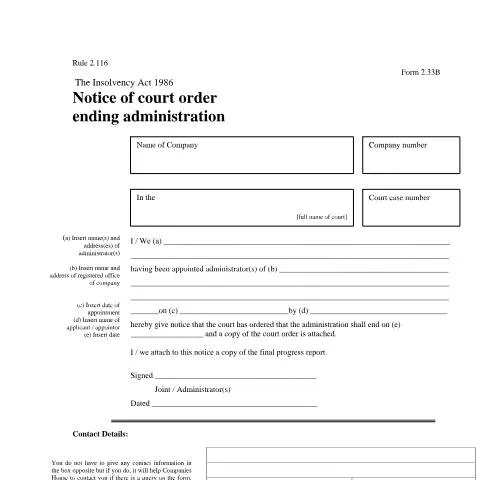
The document known as Give notice of court ending administration (2.33B) serves a specific purpose in this context. It is essential for administrators to understand the content and the purpose of this document, as it marks a significant transition in the administration process.
What Does Document 2.33B Include?
Document 2.33B includes several critical sections:
- Company Information: The document requires the name and company number of the business undergoing administration.
- Administrator Details: The names and addresses of the appointed administrators must be stated.
- Court Information: The court that issued the cessation of administration, along with the date of the court order and the case number, must be specified.
- Final Reporting: A copy of the final progress report is required to be attached to this notice.
Why is Notice 2.33B Important?
Issuing Notice 2.33B serves several important functions in the administration process:
- Legal Compliance: It fulfills a legal obligation under the Insolvency Act 1986, ensuring that all stakeholders are informed of the current status of the company.
- Transparency: This notice promotes transparency within the business community and provides information to creditors and shareholders about the company's recovery efforts.
- Prevention of Misunderstandings: By formally notifying Companies House, the risk of misunderstandings regarding the company's status is minimized.
Key Considerations When Preparing Notice 2.33B
There are several important considerations that administrators must keep in mind when preparing this document:
- Correct Information: Ensure that all details, including names, dates, and court information, are accurate. Any discrepancies could result in delays or legal complications.
- Attachment of Required Documents: The final progress report must be attached; failing to do so could render the notice incomplete.
- Timeliness: Submit the notice promptly to avoid potential penalties or complications regarding the cessation of administration.
Interconnectedness with Other Administrative Documents
Document 2.33B is not an isolated piece of paperwork; it interacts with other critical documents throughout the administration process:
- Insolvency Progress Report (Form 2.38): This document is often submitted alongside Notice 2.33B and provides essential updates on the company's financial health and administration activities.
- Notice of Appointment (Form 2.1): Before issuing Notice 2.33B, administrators must have submitted this document at the commencement of the administration process.
- Final Liquidation Reports: If the administration does not lead to a successful restructuring, subsequent documents regarding liquidation processes will be necessary.
Common Pitfalls in Using Document 2.33B
While administering the requirements laid out in Notice 2.33B, common pitfalls can hinder effective communication with Companies House:
1. Incomplete Information
Providing incomplete details can lead to significant delays. For example, if the court date or company number is missing, the notice will not be processed appropriately.
2. Failure to Attach Required Documents
The lack of the final progress report is a frequent mistake. This attachment is essential for validating the end of the administration period.
3. Ignoring the Timetable
It is vital to understand the timeline for submitting this notice following the court's decision to end administration. Delays can have unintended legal consequences.
Stakeholders and Their Roles in the Notification Process
Understanding the roles of various stakeholders is critical in effectively managing the administration process:
- Administrators: They are primarily responsible for preparing and submitting Notice 2.33B, ensuring all information is accurate and complete.
- Creditors: They rely on timely notifications to understand the status of their claims against the company.
- Companies House: This government agency processes the notice and updates the public record, ensuring transparency.
Practical Steps to Follow After Submitting Document 2.33B
After submitting Notice 2.33B, several steps are advisable:
- Await Confirmation: Companies House will confirm receipt of the notice, which should be retained for records.
- Monitor the Company’s Status: Stay vigilant about any changes to the company’s registration and ensure that all follow-up actions are taken as necessary.
- Communicate with Stakeholders: Keep all relevant parties, including creditors and employees, informed about any developments following the submission of Notice 2.33B.
Conclusion: The Path Forward After Administration
Issuing Notice 2.33B is a critical step for companies concluding their administration processes. By understanding the document's requirements, ensuring compliance, and maintaining open lines of communication with all stakeholders, administrators can effectively navigate this complex landscape. The transition out of administration is not merely an end; it represents the beginning of a new chapter for the company, which may involve further restructuring or even a return to profitability.
Understanding the Legal Framework for Ending Administration
When giving notice of court proceedings to end an administration, it's essential to understand the legal framework that governs this process. The Insolvency Act 1986 plays a crucial role in outlining the procedures involved. This law ensures that both creditors and debtors are aware of their rights and responsibilities during the administration process. Familiarity with this framework can help you navigate the complexities of the situation more effectively.
Under this Act, administrators are tasked with managing the affairs of the insolvent company and must act in the best interest of all creditors. Upon reaching a point where administration is no longer necessary, the administrators can apply to the court for an ending of the administration. However, they must provide substantial evidence justifying this request, emphasizing the benefit to creditors and the viability of the company moving forward.
The court will assess whether the company’s financial situation has improved or whether the administration has fulfilled its purpose. This assessment often involves evaluating the potential for a company voluntary arrangement (CVA) or the likelihood of returning to solvency. Thus, gathering and presenting comprehensive financial records and other relevant documentation is vital for supporting your notice.
Fill in your form directly online
No printing: type your details into the boxes of the official form, tick, then download the PDF ready to send.
- 1Type into the form boxes
- 2Tick in one click
- 3Save and download the PDF
Key Considerations When Preparing Your Notice
Before drafting your notice for the court about ending administration, several key considerations will aid in ensuring that your notice is effective and compliant with the legal requirements. First, you should clearly specify the reasons for the request. These reasons may include successful debt restructuring, the recovery of assets, or a significant improvement in cash flow.
Additionally, it is critical to consult with legal advisors or insolvency practitioners to understand the implications of ending the administration. Each case is unique; hence, tailored legal guidance can help you avoid potential pitfalls. For instance, the proposed ending of the administration may have repercussions on ongoing contracts, employee rights, and tax obligations, which must be cautiously managed.
Moreover, transparency is vital. Your notice should not only inform the court but also communicate with creditors. It’s advisable to provide a detailed explanation of the current financial status of the company and the steps taken during administration. This clarity helps establish trust and can ease negotiations, should any disputes arise during or after the process.
Post-Administration Steps and Responsibilities
After successfully obtaining a court order to end the administration, several significant steps and responsibilities arise. The transition from administration back to normal operations requires careful planning to ensure a smooth process. One of the first steps involves notifying all relevant stakeholders, including creditors, employees, and service providers, about the change in the company’s status.
It's also essential to update the Companies House with the latest information regarding the company's status and any changes in directorship or company structure. This is vital for maintaining compliance with the Companies Act 2006, which requires companies to keep their public records accurate and up to date.
Additionally, as the company resumes operations, there is a need to evaluate and possibly restructure internal processes. This evaluation may involve reviewing existing contracts, renegotiating terms with suppliers, and redefining business strategies to ensure long-term viability. Engaging with business advisors during this phase can provide valuable insights and aid in aligning the company towards sustainable growth.
Lastly, it’s important to remain vigilant regarding ongoing obligations, such as filing tax returns and ensuring that the company adheres to all statutory requirements. Maintaining regular communication with HMRC, especially concerning matters related to income tax and National Insurance, is crucial to avoid any punitive measures that could jeopardize the recovery.