Navigating the Deemed Approval of Proposals: Understanding Form F2.18
When you find yourself needing to navigate the complexities of insolvency procedures under the Insolvency Act 1986, the Notice of Deemed Approval of Proposals (F2.18) plays a critical role. It's more than just a document; it's a pivotal step in the administration of a company facing financial difficulties. This guide aims to unpack the nuances surrounding this notice, clarifying what it entails, its applications, and how to integrate it effectively within the insolvency framework.
Decoding the Components of F2.18
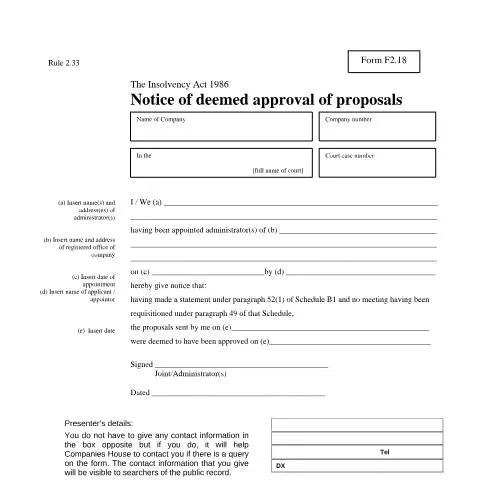
The content of Form F2.18 is structured to serve a specific purpose within the insolvency process. This notice signifies that the proposals made by an administrator have been deemed approved under specific conditions. Understanding its components is essential:
- Company Details: The form requires the name and registration number of the company involved, ensuring identification within the official records.
- Court Information: Details regarding the court case are included, providing a legal context to the notice.
- Administrator’s Statement: The administrator must declare their appointment and the date it occurred, which establishes authority in the situation.
- Approval Notification: A critical section where the notification of deemed approval is recorded, indicating that no meeting was requisitioned under paragraph 49, thus confirming the acceptance of the proposals submitted.
What Happens When No Meeting Is Requested?
In many cases, administrators submit proposals for consideration, but if no stakeholders demand a meeting, the proposals automatically receive approval. This provision reflects the need for efficiency in the administration process while also taking into account the interests of creditors and stakeholders.
Connecting the Dots: F2.18 and the Broader Insolvency Landscape
Form F2.18 does not exist in isolation. It interacts closely with various other documents and procedures within the insolvency framework. Understanding these connections is paramount:
- Administration Proposals: Before reaching the F2.18 stage, administrators must draft and deliver proposals under the guidance of paragraph 52(1) of Schedule B1.
- Meeting Requests: If a meeting is requisitioned under paragraph 49, the dynamics change significantly, and the approval process shifts to a more traditional voting structure.
- Documentation to Submit: Completing and submitting the F2.18 notice involves ensuring that all other relevant forms and documents are in order to prevent delays.
The Importance of Accurate Information
Each component of the F2.18 requires precise information. Misrepresentation or inaccuracies can lead to unnecessary complications. Stakeholders rely heavily on the information presented in this notice to make informed decisions about future actions regarding the company’s financial restructuring.
Target Audience: Who Needs to Be Aware of F2.18?
The audience for the F2.18 notice extends beyond just the administrators. Several key stakeholders should be well-versed in its implications:
- Company Administrators: They must ensure compliance with the necessary legal requirements as they navigate the insolvency process.
- Creditors: Understanding the implications of deemed approval helps creditors assess their positions and decide on potential actions following the notice.
- Legal Advisors: Professionals guiding companies through insolvency must have a solid grasp of the content and implications of the F2.18 notice.
When is the F2.18 Notice Indispensable?
The F2.18 becomes essential in various scenarios, including:
- When an administrator seeks to expedite the approval of restructuring proposals without the need for lengthy meetings.
- In cases where creditor meetings are impractical due to time constraints or an uncontested nature of the proposals.
Avoiding Common Misinterpretations
As with any administrative document, there are common pitfalls and misconceptions surrounding Form F2.18. Recognizing these can help in preventing costly mistakes:
- Assuming All Proposals Will Be Approved: While deemed approval is a significant advantage, it is not a guarantee of successful implementation.
- Overlooking Other Obligations: Just because a proposal is deemed approved does not absolve the administrator from adhering to other legal obligations.
Compliance with the Data Protection Act
Given the sensitive nature of the information involved, compliance with the Data Protection Act 2018 and UK GDPR is crucial when handling the notice. Administrators must ensure that any personal data included in the F2.18 is processed in accordance with legal standards. This involves ensuring that only necessary information is shared and properly securing it against unauthorized access.
Practical Steps for Using F2.18 in Real Cases
For administrators looking to utilize the F2.18 notice effectively, following a practical approach can lead to smoother administration:
- Review the Proposals: Ensure that all proposals submitted previously adhere to the necessary legal standards for approval.
- Prepare the F2.18 Notice: Fill out the form accurately, providing all required information, including details of the court and the company.
- Submit to Companies House: Send the notice to the Registrar of Companies at the specified address, ensuring it’s done promptly.
- Monitor Responses: Keep an eye out for any queries or challenges from stakeholders, ensuring that you address them swiftly.
The Role of Communication with Stakeholders
Effective communication remains key throughout this process. Keeping creditors and other stakeholders informed about the progress of proposals can help mitigate misunderstandings and foster cooperation.
Table of Key Dates and Events in the Process
| Date/Event | Description |
|---|---|
| Appointment of Administrator | When the administrator is officially appointed to handle the company’s affairs. |
| Submission of Proposals | The date when proposed restructuring plans are submitted to creditors. |
| No Meeting Requested | After the proposal submission, if no meeting is requested, the F2.18 becomes applicable. |
| Deemed Approval Date | The date on which the proposals are deemed approved as stated in the F2.18 notice. |
Closing Thoughts: The Future of Your Proposals
The F2.18 notice not only communicates the approval of proposals but serves as a stepping stone toward the potential revival of a company facing insolvency. Administrators must leverage this notice effectively, ensuring that all procedural and legal obligations are met. By doing so, they can pave the way for successful restructuring efforts and ultimately enhance the prospects for the company's future.
Understanding the Framework of Deemed Approval in the UK
The concept of deemed approval is intricately linked to planning proposals and local governance in the UK. This mechanism allows certain proposals to be automatically approved if local planning authorities fail to respond within a specified timeframe. Understanding the nuances of this process is essential for anyone considering a planning application.
Deemed approval is particularly relevant in the context of the Town and Country Planning (Development Management Procedure) (England) Order 2015. Under this framework, if a local planning authority does not make a decision on an application within the prescribed 8-week period (or 13 weeks for major applications), the applicant can serve notice of deemed approval. This notice effectively informs the local authority that the proposal is now considered approved by default.
This approach encourages local planning authorities to make timely decisions while also providing applicants with a pathway to move forward with their projects. However, it's crucial to understand that this does not negate the need for compliant applications; all proposals must still meet relevant policies and regulations. Failure to comply could result in enforcement actions later on, even if deemed approval is granted.
Key Considerations for Applicants Seeking Deemed Approval
When navigating the deemed approval process, several key considerations should be taken into account to ensure a successful outcome:
- Compliance with Planning Policies: While deemed approval simplifies the approval process, it does not remove the necessity to adhere to existing planning policies. Before submitting your application, review local and national planning frameworks to ensure compatibility.
- Notification of Decision: Once you serve the notice of deemed approval (using the appropriate form, typically an F2.18 or similar), the local authority must acknowledge receipt. Ensure you document all communications to avoid future disputes. This acknowledgment can be critical in cases where there might be resistance or challenges to the project.
- Potential Challenges: After deemed approval, local authorities may still raise objections or concerns. Be prepared to address any issues raised by the community or planning authorities. Engaging with local stakeholders early in the process can mitigate objections later.
Furthermore, a comprehensive understanding of the impact of deemed approval on subsequent enforcement actions is vital. Should your project be contested after the deemed approval has been granted, appropriate legal representation may be necessary to navigate appeals and potential modifications to proposals.
Common Pitfalls to Avoid When Using the Deemed Approval Process
While deemed approval can be a straightforward process, applicants often encounter pitfalls that can derail their projects. Awareness of these common issues can save significant time and resources:
- Insufficient Information Submission: One of the most frequent mistakes is submitting an application that lacks necessary documentation or detail. Ensure your application is thorough, providing all required plans, assessments, and supporting information that meet the standards defined by the local authority.
- Underestimating Timeframes: Applicants occasionally misjudge the 8-week or 13-week timeframe for a response. Keep track of submission dates and follow up with the planning authority if responses are delayed.
- Ignoring Local Consultation Requirements: Even with deemed approval, some proposals may still require community consultation. Ignoring these requirements can lead to backlash and potential revocation of the approval. Engaging with the community can often lead to beneficial modifications of the proposal that suit both the developer and local residents.
In addition to these pitfalls, applicants must also recognize that the planning landscape is subject to changes in legislation and local authority practices. Staying abreast of developments in planning law and local planning policies can be pivotal in successfully navigating the deemed approval process.