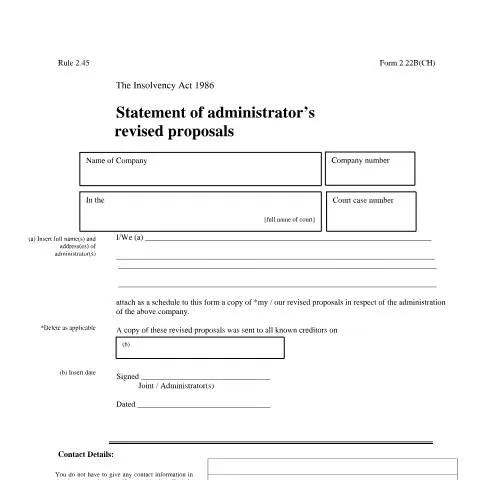
Understanding the Significance of the Administrator's Revised Proposals
When a company faces financial distress, the role of an administrator becomes crucial. The notice of administrator's revised proposals, denoted by the code 2.22B(CH), is a pivotal document in the administrator's toolkit. This notice is filed with Companies House under the guidelines set out in the Insolvency Act 1986. It serves as an official communication to creditors regarding the administrator's updated strategies for managing the company’s affairs. Understanding this document is essential for both administrators and creditors alike.
Who Needs to Pay Attention to This Document?
The 2.22B(CH) notice is primarily relevant to:
- Administrators: Individuals tasked with overseeing a company's financial recovery.
- Creditors: Entities owed money by the company, who must be informed of any changes in the administrator’s proposals.
- Company Directors: Those in leadership positions must understand the implications of the revised proposals on their company's future.
- Legal and Financial Advisors: Professionals advising companies in distress need to be aware of the procedural nuances involved.
Each of these groups has specific stakes in the content of the proposals, which detail how the administrator plans to address the company's financial challenges. Failure to address these revisions could result in misunderstandings or improper responses from creditors and stakeholders.
Decoding the Key Components of the Proposals
The administrator’s revised proposals typically contain several vital sections that clarify the path forward for the company. Below are some of the essential elements:
- Company Information: Basic details including the company number and name.
- Administrator’s Details: Full names and addresses of the appointed administrators, ensuring transparency.
- Attachment of Revised Proposals: This section references the detailed plan attached, which outlines the strategies for debt management, asset disposal, and any proposed changes to business operations.
- Creditor Communication: Confirmation that a copy of the revised proposals has been circulated to all known creditors, which is crucial for maintaining open lines of communication.
- Signature Section: The document requires signatures from the administrators, validating the proposals and confirming their commitment to the outlined strategies.
These components ensure all parties are informed about the administrator's approach and the legal standing of the proposals being made.
Navigating the Process: Step-by-Step Guide
Utilising the 2.22B(CH) notice involves several procedural steps. Here’s how administrators can effectively navigate the process:
- Preparation of Revised Proposals: Administrators must carefully draft the revised proposals to reflect the latest strategies for managing the company’s finances.
- Document Assembly: Alongside the proposals, the administrator should ensure all necessary supporting documentation is prepared for submission.
- Notification of Creditors: It’s crucial to send copies of the proposals to all known creditors to keep them informed and engaged in the process. This helps prevent any potential disputes later on.
- Filing with Companies House: The completed 2.22B(CH) notice must be submitted to Companies House. The address is: Companies House, Crown Way, Cardiff, CF14 3UZ.
- Record Maintenance: Administrators should keep detailed records of all communications and filings related to the revised proposals to ensure transparency and compliance with legal obligations.
This structured approach not only aids in compliance with the Insolvency Act but also fosters trust among creditors and other stakeholders.
Essential Terminology: Understanding the Jargon
To navigate the complexities of the revised proposals, it’s beneficial to grasp some key terms:
- Administration: A legal process that helps companies in financial distress to recover while protecting creditors' interests.
- Creditor: An individual or institution that has extended credit or loaned money to the company.
- Insolvency Practitioner: A licensed professional qualified to act as an administrator or liquidator, ensuring compliance with relevant laws.
- Proposal: A formal plan put forward by the administrator, outlining how the company intends to manage its debts.
- Subject to Approval: Indicates that the proposed actions must be accepted by a vote from creditors.
Understanding these terms is crucial for effective communication and decision-making throughout the administration process.
Addressing Common Procedural Questions
As administrators navigate the submission of the 2.22B(CH) notice, they may encounter several procedural inquiries. Here are some clarifications on common concerns:
- What happens if creditors do not receive the proposals? It is essential that all known creditors are notified. If documentation is not properly circulated, this could lead to challenges regarding the validity of the proposals.
- How long do I have to submit the notice? There is a legal timeframe specified by the Insolvency Act. The proposals must be submitted promptly after they have been formulated and circulated to creditors.
- What if the proposals are rejected by creditors? If the revised proposals do not receive majority support from creditors, the administrator may need to reconsider the strategies and potentially seek alternative solutions.
By addressing these questions ahead of time, administrators can better prepare for the challenges that may arise during the process.
Limitations and What’s Not Covered
While the 2.22B(CH) notice serves as a significant tool for administrators, it has its limitations. Understanding what is not covered can help set realistic expectations:
- Financial Guarantees: The notice does not guarantee that the proposals will resolve the company’s financial issues or that creditors will accept them.
- All-encompassing Solution: It may not address every issue a company faces, especially if there are underlying operational inefficiencies.
- Legal Representation: The notice should not replace the need for legal counsel. Administrators are advised to seek legal advice, especially when facing complex creditor scenarios.
Being aware of these limitations can help administrators manage expectations amongst stakeholders and align strategies accordingly.
The Importance of Transparency and Communication
Transparency in the administration process is crucial. The revised proposals outline not just the administrator's intentions but also the rationale behind them. This communication strategy can foster trust among creditors and improve collaboration. Here are some strategies for maintaining transparency:
- Regular Updates: Keep creditors informed of any changes to the proposals or the administration process.
- Open Channels for Feedback: Allow creditors to voice concerns or suggestions regarding the proposals to facilitate dialogue.
- Clarity in Communication: Use clear language when discussing proposals to avoid misunderstandings and ensure all parties comprehend the implications.
Effective communication can mitigate potential conflicts and lead to smoother negotiations, ultimately benefiting all stakeholders involved.
Fill in your form directly online
No printing: type your details into the boxes of the official form, tick, then download the PDF ready to send.
- 1Type into the form boxes
- 2Tick in one click
- 3Save and download the PDF
Understanding the Revised Proposals Framework
In the context of UK insolvency law, specifically under the Companies Act 2006, administrators have a legal obligation to present revised proposals when an initial proposal has not been accepted by creditors. This scenario often arises when the financial situation of the company is more complex than initially anticipated. The revised proposals serve as a crucial document to ensure that all stakeholders are kept informed about the company's restructuring efforts and to foster trust among creditors. It is essential for administrators to clearly articulate the reasons for the revisions, the anticipated outcomes, and how these changes will impact the creditors' standing.
The revised proposals must encompass detailed financial forecasts, expected outcomes of the administration, and a comprehensive plan for the company's future operations. It is also beneficial for the administrators to include risk assessments that outline potential pitfalls and the strategies in place to mitigate them. Transparency in this process is paramount; hence, unauthorized disclosures or misrepresentations should be avoided, with full compliance to the Data Protection Act 2018 and UK GDPR ensuring that any sensitive information about the company or its creditors is adequately protected.
Key Steps for Notifying Creditors of Revised Proposals
Effectively notifying creditors of revised proposals is an essential step in the administration process. To ensure compliance and facilitate clear communication, administrators should follow a structured approach:
- Preparation of Notification: The notification should clearly outline the revised proposals along with a comprehensive explanation for the changes. It should detail how these proposals will affect the creditors, including any potential implications for their claims.
- Delivery Method: Notifications can be sent via postal service or electronically. It is crucial to confirm that all contact information for creditors is up-to-date to avoid miscommunication. The Delivery of Documents to Creditors Regulations 2009 mandates that administrators maintain accurate records of correspondence.
- Inclusion of a Response Deadline: Providing a clear deadline for responses from creditors is vital. This deadline should align with the statutory timelines as prescribed under the Insolvency Act 1986. Typically, a minimum of 14 days is provided for creditors to review and respond to the proposals.
- Follow-up Communications: After the initial notification, administrators should be prepared to engage in follow-up communications to answer any queries from creditors. This accessibility can help alleviate concerns and foster better relationships.
Impact of Stakeholder Feedback on Revised Proposals
The feedback received from stakeholders plays a significant role in shaping the final outcome of the revised proposals. Administrators must actively solicit input from creditors, as their consent is often necessary for any proposed changes to take effect. Additionally, understanding the perspectives of creditors can lead to a more collaborative approach during the administration process.
Creditors may express concerns regarding the proposed terms, repayment schedules, or the overall viability of the business. Administrators should take this feedback seriously and demonstrate a willingness to make further revisions if necessary. Engaging with stakeholders not only helps to refine the proposals but also enhances the overall transparency of the process, which can improve the likelihood of creditor buy-in.
Moreover, if significant changes to the proposal are made in response to stakeholder feedback, it is the responsibility of the administrator to communicate these changes promptly. This ensures that all parties remain informed and can make decisions based on the most current information. Ultimately, the goal is to create a sustainable plan that addresses the needs of all stakeholders while navigating the complexities of the insolvency framework.