When Heavy Goods Vehicles Can Bypass Speed Limiter Requirements
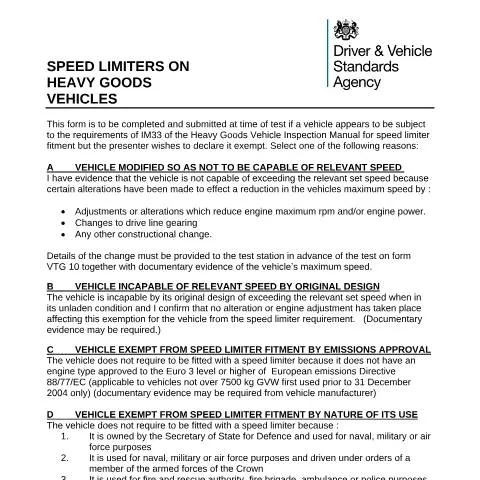
The universal requirement for HGVs to carry speed limiters faces legitimate exceptions that many operators are unaware of. The DVSA form 74, titled "Declare an HGV does not need a speed limiter," serves as the official gateway for claiming these exemptions during mandatory vehicle testing. Rather than automatically failing an MOT test when speed limiting equipment appears absent, this declaration process allows operators to formally establish their vehicle's exempt status through one of four recognised categories.
Understanding when and how to invoke these exemptions can prevent costly delays, unnecessary retrofitting expenses, and compliance headaches. The stakes are particularly high given that making a false declaration constitutes an offence, while failing to properly claim a legitimate exemption can result in test failure and operational disruption.
The Four Pathways to Speed Limiter Exemption
The DVSA recognises four distinct circumstances under which an HGV may operate without speed limiting equipment, each requiring specific evidence and justification.
Category A: Modified Vehicles with Reduced Capability
This exemption applies when deliberate mechanical alterations have rendered the vehicle incapable of exceeding the relevant speed threshold. The modifications must be permanent and demonstrable, falling into three recognised approaches:
- Engine power restrictions: Adjustments to maximum rpm settings or power output limitations
- Drive line modifications: Gear ratio changes that mechanically prevent higher speeds
- Constructional alterations: Any other permanent modification affecting maximum velocity
Crucially, operators must provide advance notice to the test station using form VTG 10, accompanied by documentary evidence of the vehicle's modified maximum speed. This isn't a declaration made on the day of testing—it requires pre-planning and technical documentation.
Category B: Original Design Limitations
Some vehicles are inherently incapable of exceeding speed limiter thresholds due to their original manufacturer specifications. This exemption demands that no subsequent alterations or engine adjustments have occurred that might affect the vehicle's natural speed limitation.
The key distinction here involves the vehicle's unladen condition—the assessment focuses on the vehicle's capability when empty, not its performance under maximum load. Documentary evidence may be required, typically involving manufacturer specifications or technical data sheets confirming the vehicle's design limitations.
Category C: Emissions Approval Exemptions
This category addresses vehicles that predate certain emissions standards, specifically those lacking engine type approval to Euro 3 level or higher under European emissions Directive 88/77/EC. The exemption applies exclusively to vehicles not exceeding 7,500kg GVW that were first used prior to 31 December 2004.
The exemption reflects the practical reality that older vehicles may lack the electronic systems necessary for modern speed limiting technology. Manufacturer documentation confirming the emissions approval level may be required to substantiate this claim.
Category D: Operational Use Exemptions
The broadest exemption category encompasses vehicles whose operational roles justify speed limiter exemption. Four specific use cases qualify:
| Use Case | Requirements | Key Considerations |
|---|---|---|
| Ministry of Defence vehicles | Owned by Secretary of State for Defence, used for naval, military or air force purposes | Direct government ownership required |
| Armed forces operations | Used for military purposes under orders of Crown armed forces member | Covers contractor vehicles under military direction |
| Emergency services | Fire and rescue, ambulance, or police purposes | Operational necessity for unrestricted speed capability |
| Limited road use | Maximum six miles per calendar week between keeper's occupied land areas | Precise mileage tracking essential for compliance |
Timing and Test Station Procedures
The declaration process occurs at the time of test when a vehicle appears subject to speed limiter requirements under IM33 of the Heavy Goods Vehicle Inspection Manual but the presenter believes it qualifies for exemption. This timing is critical—the form cannot be submitted retrospectively after a test failure.
For Category A exemptions involving modified vehicles, advance preparation proves essential. The required VTG 10 form and supporting documentation must reach the test station before the scheduled test date. This advance notice allows testing personnel to review the technical evidence and prepare for the exemption assessment.
The testing station's role involves verifying that the declared exemption aligns with the vehicle's actual condition and documentation. Testing personnel retain discretion to request additional evidence for any exemption category, particularly where claims appear inconsistent with the vehicle's apparent specification or condition.
Documentation Requirements and Evidence Standards
Each exemption category demands specific supporting evidence, with documentary requirements varying significantly based on the claimed exemption ground.
Technical Modification Evidence
Category A declarations require comprehensive technical documentation demonstrating the modification's effect on maximum speed capability. Acceptable evidence includes:
- Engineering reports detailing mechanical alterations
- Dynamometer test results confirming reduced maximum speed
- Manufacturer certificates for engine power limitations
- Technical drawings showing drive line modifications
Manufacturer Documentation
Categories B and C often rely on manufacturer-supplied documentation. For original design limitations, this might include technical specification sheets or engineering data confirming natural speed restrictions. Emissions exemptions typically require manufacturer confirmation of the engine's approval level under relevant European directives.
Operational Use Verification
Category D exemptions may require operational documentation demonstrating the vehicle's qualifying use pattern. For limited road use claims, detailed mileage logs become essential evidence. Emergency service exemptions might require confirmation of the vehicle's designated role from the relevant authority.
Legal Framework and Compliance Obligations
The speed limiter requirements stem from European regulations implemented through UK legislation, creating binding obligations for most HGV operations. The exemption process provides legitimate relief from these requirements while maintaining the regulatory framework's integrity through formal declaration procedures.
The warning accompanying the declaration form—"It is an offence to make a declaration knowing it to be untrue"—carries significant legal weight. False declarations can result in prosecution, with potential consequences including fines, vehicle prohibition, and operator licence implications.
Beyond immediate legal risks, incorrect exemption claims can trigger broader compliance reviews. The Traffic Commissioner may scrutinise operator conduct where false declarations emerge, potentially affecting operator licence continuity and reputation within the industry.
Data Protection and Information Handling
The form includes explicit data protection provisions reflecting the UK GDPR and Data Protection Act 2018 requirements. Personal information provided serves DVSA's statutory functions exclusively, with disclosure to other organisations occurring only where legally required or permitted.
The DVSA's Information Charter, available through the gov.uk/dvsa website, provides comprehensive details about information handling practices. Operators concerned about data usage can reference this charter for detailed explanations of retention periods, sharing arrangements, and individual rights regarding personal information.
Strategic Considerations for Fleet Operators
Fleet operators managing mixed vehicle types should develop systematic approaches to exemption identification and documentation. Regular fleet audits can identify vehicles potentially qualifying for exemptions, avoiding unnecessary speed limiter installations and associated costs.
For vehicles approaching test dates, advance review of exemption eligibility prevents last-minute complications. Category A exemptions requiring advance VTG 10 submission demand particular attention to scheduling, ensuring sufficient lead time for documentation review and test station preparation.
Operators should maintain comprehensive records supporting exemption claims, particularly for Category D limited road use declarations. Detailed mileage logs, preferably with GPS verification, provide robust evidence for six-mile weekly limitations. These records prove invaluable during compliance checks or dispute resolution processes.
The exemption landscape may evolve with changing regulations, particularly regarding emissions standards and electronic systems integration. Staying informed about regulatory developments ensures continued compliance and optimal exemption strategy implementation across diverse fleet compositions.
Documentation Requirements and Record Keeping Obligations
When declaring that your HGV does not require a speed limiter, maintaining comprehensive documentation becomes paramount to your ongoing compliance obligations. The Driver and Vehicle Standards Agency expects operators to retain specific records that substantiate their declaration, particularly when vehicles may appear to fall within speed limiter categories but qualify for exemptions.
Your documentation portfolio should include the original vehicle registration certificate (V5C) clearly showing the vehicle's date of first registration, gross vehicle weight, and body type classification. For vehicles with complex conversion histories, you'll need to retain certificates from approved vehicle examiners that verify the vehicle's current specification and intended use. Emergency service vehicles require official letters from the relevant authority confirming their operational status and deployment requirements.
Specialist vehicle operators must maintain technical specifications from manufacturers or conversion companies that detail the vehicle's purpose-built features. Recovery vehicles need documentation proving their lifting capacity and recovery equipment specifications, while mobile cranes require certification of their crane capacity and operational parameters. These technical documents become crucial during roadside inspections or compliance audits.
The DVSA recommends creating a compliance file for each exempt vehicle, containing photocopies of all relevant certificates, correspondence with regulatory bodies, and any technical assessments. This file should accompany the vehicle during operations or be readily accessible to drivers who can direct enforcement officers to the documentation's location. Digital copies stored securely can supplement physical documents, but original certificates should remain available for inspection.
Record retention periods align with standard commercial vehicle compliance requirements, typically spanning six years from the date of declaration. However, for vehicles with ongoing exemption status, maintaining records throughout the vehicle's operational life provides the strongest protection against compliance challenges. Annual reviews of documentation ensure certificates remain current and any changes to vehicle specification or use are properly recorded and declared.
Enforcement Scenarios and Roadside Inspection Procedures
Understanding how enforcement operates regarding speed limiter exemptions helps operators prepare for roadside encounters and ensures drivers can respond appropriately to official inquiries. DVSA enforcement officers and police traffic units regularly conduct checks on commercial vehicles, and the absence of a speed limiter on what appears to be a qualifying HGV will invariably prompt closer scrutiny.
During roadside inspections, enforcement officers typically begin by examining the vehicle's external appearance and checking registration details against DVLA records. Officers may use portable diagnostic equipment to verify whether speed limiting systems are active, though they're trained to recognise vehicles that may legitimately operate without limiters. The key to smooth interactions lies in having proper documentation immediately available and drivers who understand their vehicle's exempt status.
Officers may request to see specific evidence depending on the claimed exemption type. Emergency service vehicles should carry official identification and deployment documentation, while specialist vehicles need technical specifications readily accessible. Recovery vehicles might face questions about their operational scope and equipment capabilities, requiring drivers to demonstrate knowledge of their vehicle's specific exemption criteria.
Fixed penalty notices can be issued for speed limiter offences, but these are typically held pending investigation when exemption claims are made with supporting documentation. However, vehicles operating without proper exemption documentation face immediate penalties and potential prohibition from continued operation until compliance is demonstrated. The financial and operational impact of such enforcement action underscores the importance of maintaining proper records.
Training drivers on exemption procedures proves invaluable during enforcement encounters. Drivers should understand their vehicle's specific exemption category, know where documentation is stored, and be able to explain the vehicle's operational requirements clearly and concisely. This preparation often prevents minor inspections from escalating into lengthy investigations or unnecessary penalties.
Technical Modifications and Ongoing Compliance Monitoring
Vehicles initially exempt from speed limiter requirements may lose their exemption status through technical modifications, changes in operational use, or updated regulatory interpretations. Understanding these potential compliance shifts helps operators maintain proper legal status and avoid inadvertent violations that could result in significant penalties or operational restrictions.
Modifications to vehicle weight, body configuration, or intended use can trigger reassessment of exemption eligibility. A recovery vehicle converted to general haulage use loses its recovery exemption and must comply with standard speed limiter requirements. Similarly, emergency service vehicles transferred to civilian operators require speed limiter installation unless they qualify for alternative exemptions based on their new operational role.
Engine modifications or electronic system upgrades may affect existing speed limiting equipment or create opportunities to install compliant systems where previously impractical. Operators should consult with approved vehicle technicians before authorising significant technical work to understand potential compliance implications. The DVSA provides guidance on modification reporting requirements, particularly for vehicles with type approval implications.
Regular compliance audits help identify potential issues before they become enforcement problems. Annual vehicle inspections should include verification of exemption status, review of operational use against declared purposes, and assessment of any technical changes that might affect speed limiter requirements. Professional transport compliance consultants can provide valuable expertise for operators with complex fleets or unusual vehicle configurations.
Technology developments continue to influence speed limiter requirements and exemption interpretations. Electronic logging systems, telematics platforms, and advanced driver assistance systems may provide alternative compliance pathways or create new exemption categories. Staying informed about regulatory developments ensures operators can adapt their compliance strategies and potentially benefit from updated exemption provisions that better reflect modern operational realities.
The interaction between speed limiter exemptions and other regulatory requirements, such as drivers' hours rules, operator licensing conditions, and vehicle testing requirements, creates complex compliance landscapes that require ongoing attention. Professional advice becomes particularly valuable when managing fleets with mixed exemption statuses or when considering significant operational changes that might affect regulatory obligations across multiple areas of commercial vehicle law.