Understanding the Appeal Process for HGV and Trailer MOT Decisions in the UK
If your heavy goods vehicle (HGV) or trailer has failed an MOT test or if your application for a first test or a change of plated details has been refused, you have the right to challenge this decision. The Driver and Vehicle Standards Agency (DVSA) provides a formal process to appeal such decisions, ensuring that operators and owners can seek a review if they believe the outcome was unjustified. This guide explains the key steps involved in appealing an HGV or trailer MOT decision, the relevant legal framework, and practical considerations for submitting your appeal.
The Scope of the Appeal
The appeal process applies to decisions related to:
- Failure of an annual MOT test certificate for an HGV or trailer
- Refusal of an application for a first test
- Refusal or change of plated details in accordance with the Road Traffic Act 1988 (section 50)
It is important to note that the process is specifically designed for cases where the vehicle owner or operator disputes the outcome of the DVSA's inspection or administrative decision.
The Formal Appeal Procedure
Filing the Notice of Appeal
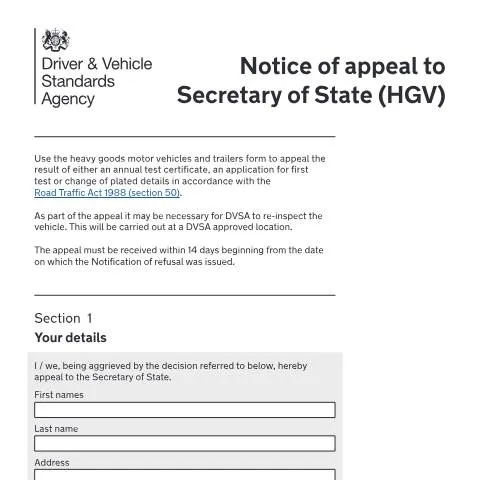
The primary document for initiating an appeal is the 'Heavy Goods Motor Vehicles and Trailers Form' (DVSA 665 / VTG17). This form must be completed accurately and submitted within 14 days of receiving the notification of refusal or failure. The deadline is strict, and late submissions may not be considered.
When filling out the form, you will need to provide:
- Your personal details, including name, address, contact number, and email
- Details of the vehicle, such as registration number, chassis or serial number
- The specific test or application being contested, e.g., first examination, periodic test, or change of plated details
- The reason(s) for the appeal, referencing the specific items listed on the initial notification of refusal
Supporting Documentation and Re-Inspection
It may be necessary for the DVSA to re-inspect the vehicle at an approved location. If repairs or modifications have been made since the vehicle failed the test, these should be detailed in the appeal form. Providing evidence, such as repair receipts or photographs, can support your case.
Payment of Fees
The appeal process involves a fee, the amount of which is specified in the current DVSA fee schedule. Payment can be made via cheque, pre-funded account, or credit/debit card. The form includes a section to specify the payment method, and instructions are provided for each option.
Submitting the Appeal
The completed form, along with payment and supporting documents, should be sent to the following address or email:
- Post: HGV Section, Technical Officers, DVSA, The Ellipse, Padley Road, Swansea, SA1 8AN
- Email: [email protected]
It is advisable to keep copies of all submitted documents and correspondence for your records.
The Outcome and Next Steps
Once the DVSA reviews your appeal, they may decide to uphold the original decision or overturn it. If a re-inspection is required, arrangements will be made at an approved location. Should the appeal be unsuccessful, you have the option to seek further legal advice or escalate the matter through other channels, depending on the circumstances.
Legal and Data Protection Considerations
The appeal process is governed by relevant legal frameworks, including the Road Traffic Act 1988 and data protection laws such as the UK GDPR and Data Protection Act 2018. Personal data collected during the appeal is used solely for the purpose of processing your case and may be shared with authorized bodies if necessary, for example, in criminal investigations or fraud prevention.
Conclusion
Challenging an HGV or trailer MOT decision through the DVSA's formal appeal process provides a structured avenue for vehicle owners and operators to seek a review of disputed outcomes. Understanding the procedural requirements, deadlines, and supporting documentation can improve the likelihood of a successful appeal. Always ensure that your submissions are complete, accurate, and submitted within the specified timeframes to safeguard your rights and interests.