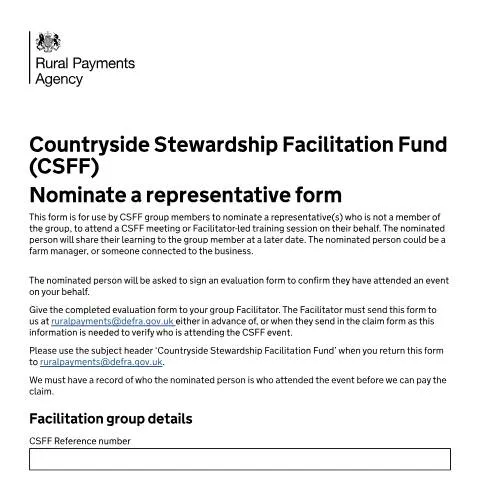
Understanding the Role of the Countryside Stewardship Facilitation Fund Nomination Process
The Countryside Stewardship Facilitation Fund (CSFF) is an initiative aimed at supporting groups in England to collaborate on environmental enhancements in rural areas. Within this framework, the "Nominate a Representative" form is a vital administrative document enabling CSFF group members to delegate responsibilities effectively. Delegating attendance at meetings or training sessions ensures that members can benefit from collective learning, even when they cannot attend in person. This process underscores the importance of community engagement and the sharing of best practices.
Who Needs This Form and Why?
The necessity of this form primarily arises for members of a CSFF group who are unable to attend designated events. The representative nominated could be anyone connected to the business, such as a farm manager or another stakeholder invested in the agricultural practices and environmental stewardship of the area. Understanding who might require this form helps clarify its relevance:
- Farm Managers: Often busy, farm managers may need to delegate attendance to ensure they are informed of developments in facilitation techniques.
- Business Associates: Individuals connected to the primary business who can relay information effectively can be nominated.
- Training Leaders: Those responsible for implementing initiatives may also benefit from attending on behalf of their group.
Filling Out the Form: Key Sections to Complete
Correctly completing the "Nominate a Representative" form is critical for ensuring that all information is accurately captured. Each section has specific details that must be filled out:
1. Facilitation Group Details
- CSFF Reference Number: This is essential for identification purposes.
- Group Member’s Name: Include the full name of the individual nominating the representative.
- Single Business Identifier (SBI): This number links to the business’s official records.
2. Nominated Person’s Information
The details of the individual taking up the representation are crucial. Ensure to include:
- Full Name: As it appears on official documents.
- Job Role: Title within the organization.
- Contact Information: Address, telephone number, and email address of the representative.
- Time Period for Representation: Specify the duration during which the representative will act on behalf of the member.
Where and How to Submit the Nomination Form
The submission process for the nomination form is straightforward but must be followed precisely to ensure compliance. Options for submission include:
- Email Submission: The completed form must be sent to [email protected], with the subject line “Countryside Stewardship Facilitation Fund.” This method is preferred for its speed and convenience.
- In-Person Submission: If attending a meeting or event, handing the form to the group facilitator can also be arranged. It is essential to ensure the facilitator understands they must send it along with the claim form.
Information Sharing and Data Protection
Data management is a crucial aspect of the nomination process. The information provided in the form is subject to regulations outlined in the Data Protection Act 2018 and the UK GDPR. The Rural Payments Agency (RPA) is committed to ensuring that personal data is processed fairly and securely. Users are encouraged to review the Personal Information Charter on GOV.UK to understand how their data will be used and protected.
After Submission: Next Steps and Responsibilities
Once the form is submitted, several steps follow to ensure the nominated representative can effectively participate:
- Confirmation of Attendance: Representatives must sign an evaluation form at the event. This form confirms their attendance and must be returned to the group facilitator.
- Sharing Knowledge: It is the responsibility of the representative to relay the information gathered back to the group member who nominated them. Engaging in this two-way communication is essential for the success of the group’s initiatives.
- Verification Process: The RPA requires documentation that confirms who attended the events for auditing purposes. This must be completed before any claims can be processed.
What Happens in Case of Refusal or Errors?
Instances may arise where the use of the nomination form is rejected or where errors occur in submission. It is pivotal to be prepared for such situations:
1. Understanding Reasons for Refusal
- Incomplete information in the form can lead to immediate rejection.
- Failure to comply with data protection measures may also result in issues.
2. Steps to Rectify Issues
- Review Requirements: Ensure all sections are filled accurately prior to submission.
- Contact Support: If a submission is rejected, reach out to the RPA through their official channels to clarify concerns and resolve issues.
A Chronological Guide to Utilizing the Nomination Process
Understanding the sequence of steps can help clarify the timeline from initiation to completion:
- Identify Need: Determine if you, as a CSFF member, are unable to attend a meeting or event.
- Select a Representative: Choose an appropriate individual from your network who can attend on your behalf.
- Complete the Form: Carefully fill out the nomination form with accurate details.
- Submit the Form: Choose your preferred method of submission and ensure it reaches the RPA.
- Attend the Event: The nominated representative attends the meeting or training session.
- Sign Evaluation Form: They must confirm their attendance formally through an evaluation form.
- Pass Information Back: The representative shares insights and information with the group member.
- Verification by RPA: The RPA processes claims based on submitted forms and attendance verification.
Implications for Members: Rights and Obligations
Engagement in the CSFF process brings various rights and responsibilities for members:
- Right to Representation: Members have the right to nominate someone they trust to represent them, ensuring continuity in their participation.
- Obligation to Inform: There is a duty to relay any important information gained from meetings back to the CSFF group.
- Accountability for Claims: Members are ultimately responsible for ensuring claims are based on accurate and verified attendance records.
The "Nominate a Representative" form serves as an essential tool in fostering collaboration and continuous improvement within the CSFF framework. By taking the time to understand, complete, and submit this form, group members can effectively navigate the complexities of rural stewardship and contribute to the overarching goal of sustainable farming practices in England.
Understanding the Countryside Stewardship Facilitation Fund
The Countryside Stewardship Facilitation Fund (CSFF) is an integral part of the UK government's commitment to supporting sustainable land management practices. This fund aims to enhance the natural environment through the promotion of collaborative approaches among farmers and land managers. Understanding the nuances of this fund is essential for those looking to make the most of the opportunities it offers.
The CSFF provides financial assistance to groups of farmers and land managers, enabling them to work together on projects that benefit biodiversity and ecosystem services. This could include enhancing habitats, managing water resources, or improving soil health. By pooling resources and knowledge, participants can implement more effective conservation strategies than they might achieve individually.
Groups can apply for funding to cover a variety of activities, such as education and training sessions, collaboration on land management practices, or developing plans that address specific local environmental challenges. The ultimate goal is to create a more resilient countryside that benefits wildlife, enhances natural resources, and contributes to the sustainability of rural communities.
Applicants should note that collaboration is key. The CSFF encourages the formation of facilitation groups that represent a diversity of stakeholders, including farmers, conservationists, and local communities. It is essential to demonstrate how these groups will empower each other and share knowledge effectively, reflecting the fund's broader objectives of cooperation and shared stewardship.
Eligibility Criteria for Nominate a Representative Form
When nominating a representative for the Countryside Stewardship Facilitation Fund, it's critical to ensure that potential nominees meet the eligibility criteria established by the relevant authorities. This section delves into the specifics of who can be nominated and what qualifications they must possess to effectively represent their group.
Firstly, nominees should be actively involved in agricultural or land management practices within the countryside. This can include farmers, landowners, and even representatives from local environmental groups. Each nominee must have a proven track record of engagement with the local community and an understanding of the challenges and opportunities within the rural landscape.
Additionally, a nominee should demonstrate leadership qualities. This entails not only the ability to guide discussions within the group but also the capacity to liaise effectively with external stakeholders, such as government agencies and local authorities. Strong communication skills are paramount, as the representative will be the primary point of contact for the group, tasked with conveying collective interests and negotiating on behalf of the members.
Another essential aspect of eligibility is a commitment to the principles of sustainability and environmental stewardship. The nominee should be able to articulate how their group’s activities align with the goals of the CSFF and the broader objectives of enhancing biodiversity and the natural environment. This alignment is crucial, as it will form the basis of the group’s proposals for funding and collaborative projects.
Lastly, it’s beneficial if the representative has experience in project management or the ability to coordinate various activities and stakeholders effectively. Given that the CSFF often involves multiple projects or initiatives running concurrently, having a representative with organizational skills will aid in maintaining momentum and ensuring successful outcomes.
Steps to Submit the Nominate a Representative Form
Submitting the "Nominate a Representative" form for the Countryside Stewardship Facilitation Fund is a structured process that requires attention to detail and adherence to specific guidelines. Here’s a step-by-step guide to ensure your submission is successful.
1. Gather Required Information: Before filling out the form, collect all necessary information about the nominee. This includes their full name, contact details, and a brief biography highlighting their relevant experience and qualifications. It’s also helpful to have information about the group they will represent, including its objectives and any existing projects.
2. Complete the Form: The form itself will typically require basic details such as the nominee’s personal information and a section that elaborates on their suitability for the role. Be thorough when describing the nominee’s qualifications and their potential contributions to the facilitation group. Providing concrete examples of past involvement in relevant projects can bolster your nomination significantly.
3. Group Consensus: It’s essential to ensure that the nomination is supported by the majority of the group members. This usually involves a meeting or discussion where all stakeholders can voice their support for the nominee. Documenting this consensus may be helpful if the funding body requests confirmation of group backing.
4. Submit the Form: Once the form is completed and consensus is achieved, submit it through the designated channel, which may be an online portal or physical submission to the relevant authority. Ensure you adhere to any deadlines, as submissions outside the specified timeline may not be considered.
5. Follow Up: After submission, it's prudent to follow up with the funding authority to confirm that your application has been received and is being processed. This can help you address any potential issues early in the review process.
6. Prepare for Further Communication: Be prepared for additional queries or requests for further information from the funding authority. They may wish to clarify aspects of the nomination or seek additional documentation, so maintaining open lines of communication is vital.