Understanding the Countryside Stewardship Facilitation Fund Activity Evaluation Form
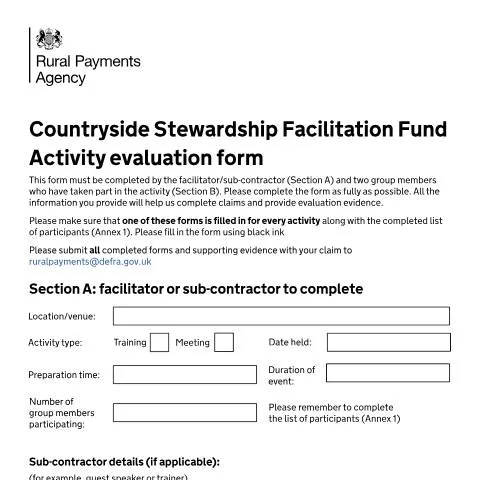
The Countryside Stewardship (CS) Facilitation Fund Activity Evaluation form is an essential document for any facilitator or sub-contractor who wishes to evaluate and report activities conducted under the Rural Payments Agency's (RPA) stewardship programme. By completing this form, you not only fulfill a bureaucratic requirement but also contribute to the broader objectives of environmental stewardship and community engagement within rural landscapes.
The Role of the Countryside Stewardship Programme
Launched as part of the UK government's commitment to promote sustainable farming practices, the Countryside Stewardship programme empowers farmers and land managers to enhance biodiversity, improve ecosystems, and promote sustainable land use. Within this framework, the Facilitation Fund provides support for collaborative projects, enabling groups to develop innovative approaches to environmental management.
Why the Activity Evaluation Form Matters
This form plays a crucial role in assessing the impacts of the funded activities. It gathers qualitative and quantitative data that informs the evaluation of the programme's success and helps justify continued funding. Each completed form contributes to the larger dataset that the RPA uses to evaluate the effectiveness of the Countryside Stewardship initiatives. Therefore, attention to detail and accuracy in filling out this evaluation form can significantly influence future funding opportunities for projects.
Who Is Required to Complete the Form?
The responsibility for completing the Activity Evaluation Form falls on the facilitator or sub-contractor involved in the activity. Additionally, two group members who participated in the activity must also provide their input. This multi-source approach ensures that diverse perspectives are captured, giving a comprehensive overview of the session's outcomes.
The Facilitator's Role
The facilitator or sub-contractor is tasked with detailing the logistics of the activity, including:
- Location or venue of the event
- Type of activity conducted (e.g., training, meetings)
- Date the activity took place
- Preparation time and duration of the event
- Number of group members who participated
The facilitator must also provide information about any sub-contractors involved, including their contact details, ensuring transparency and accountability in the process.
Participation Details from Group Members
To provide a well-rounded evaluation, two group members need to fill out their experiences regarding the benefits they gained from the activity. This section serves as evidence that the event took place and was beneficial, making it vital for the integrity of the evaluation process. Participants must sign and date this section, indicating their agreement to potentially be contacted for further confirmation of their experiences.
Steps to Complete the Activity Evaluation Form
Completing the Activity Evaluation Form involves several key steps:
- Gather Information: Prior to filling out the form, the facilitator should collect all relevant details about the activity, including participant lists and outcomes.
- Fill Out Section A: The facilitator or sub-contractor should begin by completing Section A with accurate information about the event.
- Engage Participating Members: Encourage the two group members to reflect on their experience and complete Section B. This is where personal insights and group benefits should be articulated.
- Complete Annex 1: Ensure that there is a comprehensive list of all participants. This list is crucial for processing claims and verifying the activity.
- Review for Accuracy: Double-check each section for completeness and accuracy. Any missing information can delay processing or jeopardize funding claims.
Channels for Submission
The completed Activity Evaluation Form, alongside the list of participants, must be submitted to the RPA via email at [email protected]. It is recommended that all submissions be made in black ink for clarity, and all supporting documents should be attached to facilitate a thorough review.
Submission Deadlines
While specific deadlines may vary by funding round, it is typically required that claims, including completed evaluation forms, be submitted promptly after the activity. Missing the submission deadline may result in forfeiting the funding associated with the project.
Tracking and Following Up on Your Evaluation Submission
Once your Activity Evaluation Form has been submitted, it is important to keep track of its status. While the RPA will process forms and claims in due course, facilitators can take proactive steps to ensure their submission is being processed.
How to Verify Submission Status
To check on the status of your evaluation submission, consider the following:
- Keep a Record: Maintain a copy of the submitted form and any correspondence with the RPA.
- Contact RPA: If you have not received confirmation of your submission within a few weeks, do not hesitate to reach out to the RPA for an update.
- Feedback Mechanism: Be prepared to provide additional information or clarification if requested by the RPA. They may contact the group members for further confirmation of benefits received.
Exploring the Implications of Inaccurate Information
Accuracy in filling out the Activity Evaluation Form cannot be overstated. Inaccurate or incomplete information can lead to several negative consequences:
- Delayed Payments: Any discrepancies can lead to longer processing times for claims, affecting project timelines.
- Funding Rejection: Significant inaccuracies might result in the rejection of claims altogether, jeopardizing the financial viability of projects.
- Reputational Risk: Working with the RPA and failing to provide accurate information can affect future funding opportunities and the credibility of the facilitator or group.
Historical Context and Legal Framework
The Countryside Stewardship programme is rooted in a broader legislative context aimed at promoting sustainable practices within rural communities. The policies governing the RPA and its funding initiatives align with environmental and agricultural regulations that emphasize the importance of biodiversity, conservation, and community engagement.
Data Protection Considerations
It is vital for facilitators to be aware of the Data Protection Act 2018 and UK GDPR when handling personal data throughout the evaluation process. This includes:
- Ensuring participants are informed about how their data will be used and stored.
- Obtaining consent from group members before submitting their personal information as part of the evaluation.
- Implementing measures to secure personal data against unauthorized access.
Final Thoughts on the Importance of Evaluation in Countryside Stewardship
The Activity Evaluation Form may seem like just another bureaucratic requirement, but it is a crucial tool in fostering accountability and transparency in rural development initiatives. By providing thoughtful and comprehensive evaluations, facilitators, sub-contractors, and group members contribute not only to the success of their specific projects but also to the overarching goals of the Countryside Stewardship programme.
Ultimately, a commitment to thorough documentation and evaluation can lead to enhanced funding opportunities, innovative rural practices, and a more sustainable future for the countryside. Embracing this form as a vital part of the process ensures that every effort made towards stewardship is recognized and supported by funding agencies.
Understanding the Countryside Stewardship (CS) Facilitation Fund
The Countryside Stewardship (CS) Facilitation Fund is a significant programme aimed at supporting collaborative efforts among local farmers and land managers to enhance the management and conservation of the countryside. This initiative, managed by Natural England, enables groups of farmers to work together to implement environmentally sustainable land management practices. One of the core components of the programme is the Activity Evaluation form, which plays a crucial role in assessing the effectiveness and impact of the funded activities.
Criteria for Filling Out the Activity Evaluation Form
When completing the Activity Evaluation form, it is essential to consider the specific criteria set by Natural England. Firstly, the evaluation should reflect the objectives outlined in the initial application for the CS Facilitation Fund. Each activity undertaken should be assessed in terms of its contribution to biodiversity, soil health, water quality, and landscape character. Secondly, it is crucial to provide measurable outcomes. This includes quantitative data such as the number of farmers involved, the area of land managed, and any changes in wildlife populations observed due to the activities funded by the CS Facilitation Fund.
Additionally, qualitative assessments are valuable. Farmers and participants should provide testimonials or case studies that highlight the social and economic benefits of collaborative working. This information can enhance the narrative of the evaluation and demonstrate the programme's broader impact on community engagement and rural development.
Common Challenges and Solutions in the Evaluation Process
While the process of filling out the Activity Evaluation form may seem straightforward, there are common challenges that participants often encounter. One significant hurdle is the collection of sufficient data. Participants may not already have protocols in place to measure the impacts of their activities effectively. To overcome this, it is advisable to establish a data collection plan at the outset of the project. This can include regular monitoring of environmental indicators and conducting surveys among group members to capture qualitative feedback.
Another challenge can be the complexity of the form itself. Participants may find certain sections vague or difficult to interpret. For instance, articulating the long-term outcomes of activities can be particularly challenging. To mitigate this, stakeholders are encouraged to seek clarification from Natural England representatives or engage with peer groups who have previously completed the evaluation process. Leveraging shared experiences can simplify the evaluation tasks and enhance the quality of the submissions.
Moreover, time constraints can be a significant factor, especially for farmers who are already managing busy schedules. It is essential to allocate sufficient time for the evaluation process, ideally integrating it into regular group meetings or workshops focused on reflection and learning. By doing so, participants can collaboratively discuss their findings, ensuring a more comprehensive and thoughtful submission.