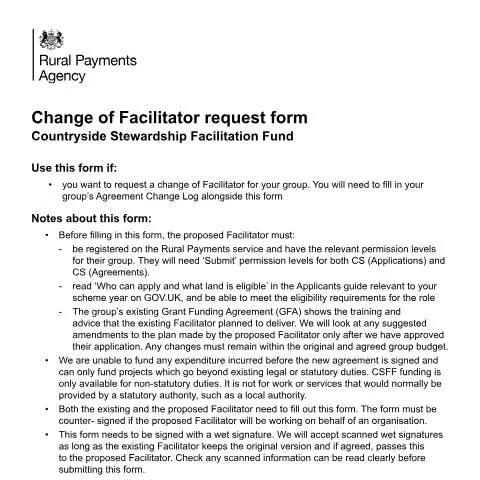
Navigating the Change of Facilitator Landscape in Countryside Stewardship
In the realm of rural management and agricultural stewardship, ensuring a smooth transition of facilitators can significantly impact the success of collaborative projects. The Countryside Stewardship Facilitation Fund: Change of Facilitator form serves as a pivotal document for groups seeking to make such a change. For many involved in the stewardship program, understanding the nuances of this process can mean the difference between continued funding and a rocky transition.
Understanding the Role of the Change of Facilitator Form
The Change of Facilitator form is not just a piece of paperwork; it is a crucial instrument that facilitates the continuity of support for countryside stewardship projects. When an existing facilitator is no longer able to fulfill their role, whether due to personal reasons, a change in focus, or other commitments, having a structured approach to appoint a new facilitator becomes imperative.
Who Should Submit This Form? This form should be completed when a group desires to request a change of facilitator for its stewardship project. Both the current and proposed facilitators must participate in filling out the form, ensuring clarity and transparency throughout the process.
Key Considerations for Both Facilitators
- Current Facilitator's Role: They initiate the form, detailing their existing responsibilities and confirming their final working day.
- Proposed Facilitator's Role: They must meet specific eligibility requirements and demonstrate capacity to fulfill the facilitator’s obligations.
This collaborative approach ensures that the transition is smooth and maintains the integrity of the ongoing stewardship projects.
Essential Steps for Filling Out the Change of Facilitator Form
Completing the Change of Facilitator form involves several essential steps, and attention to detail is crucial to ensure a successful transition.
Preparing to Complete the Form
Before filling out the form, both facilitators need to ensure the proposed facilitator is registered on the Rural Payments service. They must have appropriate permission levels to manage both applications and agreements under the Countryside Stewardship scheme.
- Eligibility Check: Review the eligibility requirements in the Applicants Guide for the relevant scheme year.
- Grant Funding Agreement Review: The existing facilitator should assess the current Grant Funding Agreement (GFA) to provide insights into the planned training and advice.
Filling Out the Form
The form consists of multiple sections for both existing and proposed facilitators. Each section must be filled accurately, and both facilitators should ensure that all required information is complete before submission.
| Section | Responsibility | Details Required |
|---|---|---|
| Section 1 | Existing Facilitator | Provide personal and organisational details, confirm agreement to leave role, and details of the transition. |
| Section 2 | Proposed Facilitator | Personal details, confirmation of previous facilitation experience, and current affiliation. |
It is essential for the existing facilitator to check the form’s accuracy after the proposed facilitator has filled in their section.
Deadlines and Timelines: What to Watch For
Understanding the timeline involved in the Change of Facilitator process can prevent unnecessary delays and ensure that transitions occur seamlessly.
Important Dates to Remember
- The existing facilitator must indicate their last working day. They are required to submit all claims and supporting information within 10 working days of this date.
- The submission of the Change of Facilitator form should happen before the existing facilitator officially leaves their role to avoid any disruption in the funding or support for the group.
Post-Submission Process
After submission, the Rural Payments Agency will process the request. It is advisable for the existing facilitator to maintain communication with the agency to track the status of the application. Any changes to planned activities or budgets should be discussed with the Agency in this interim period.
Comparing the Change of Facilitator Form with Other Relevant Documents
It is vital for users to distinguish the Change of Facilitator form from other related documents that may serve similar purposes in different contexts of agricultural stewardship.
| Document | Purpose | Similarities/Differences |
|---|---|---|
| Change of Facilitator Form | To request a transition between facilitators within a stewardship group. | Specifically focuses on facilitator roles; must be signed by both parties. |
| Agreements Change Log | Tracks amendments to the group's Grant Funding Agreement. | Complementary to the facilitator change form; both must be submitted together. |
| Application for Funding | To apply for new funding for stewardship projects. | Different focus; typically submitted at the start of a project, whereas facilitator change relates to ongoing management. |
This comparison highlights the unique and critical role of the Change of Facilitator form in the broader context of countryside stewardship management.
Documents and Evidence: What Is Required?
When submitting the Change of Facilitator form, specific documentation must accompany the request, which serves to validate and support the transition.
Required Supporting Documents
The existing facilitator must ensure the following documents are attached to the submission:
- Group Agreement Change Log: A record detailing the request for change of facilitator.
- Email confirmations: At least four eligible group members must confirm their support for the new facilitator.
- References: Two independent referees should provide confirmation of the proposed facilitator’s experience.
- VAT Status Confirmation: Necessary for proposed facilitators not affiliated with the existing facilitator's organisation.
This documentation is critical in ensuring that the transition is not only smooth but also validated against the funding criteria laid out by the Rural Payments Agency.
Who Are the Stakeholders Involved?
Understanding the profiles of individuals who engage with the Change of Facilitator process provides insight into the practical implications of the form.
Identifying Key Stakeholders
Existing Facilitators: These individuals are currently managing the stewardship group and are responsible for initiating the change request.
Proposed Facilitators: Individuals poised to take over the facilitator role, they must have relevant experience and meet eligibility requirements.
Group Members: The broader group must support the change, as their backing is critical in securing funding and maintaining trust within the stewardship context.
Rural Payments Agency: The governing body that processes the Change of Facilitator requests and oversees adherence to the funding guidelines and criteria.
Potential Exceptions and Special Cases
There might be scenarios where exceptions could apply:
- If the current facilitator is unable to fulfill their role due to unforeseen circumstances, an expedited process might be necessary.
- In cases where the proposed facilitator comes from a different organisation, additional verification may be required to confirm their eligibility and expertise.
Addressing these nuances ensures that the process is adaptable to various situations while maintaining compliance with the overarching guidelines of the Countryside Stewardship Facilitation Fund.
Tracking and Following Up on Your Application
After submitting your Change of Facilitator form, proactive follow-up is essential to ensure that your request is being processed in a timely manner.
Best Practices for Following Up
- Confirm Submission: Always ensure that you receive a confirmation of your submission from the Rural Payments Agency.
- Maintain Documentation: Keep copies of all submitted documents and confirmations for your records.
- Regular Check-Ins: Contact the agency at regular intervals to inquire about the status of your application, particularly as your final working day approaches.
Expected Timelines for Response
While specific timelines may vary based on the volume of requests, it is reasonable to expect a response within a few weeks. If significant delays occur, it is advisable to reach out to the Rural Payments Agency directly for updates.
By understanding the intricacies of the Change of Facilitator form and the associated processes, stakeholders can ensure that transitions within countryside stewardship projects are managed effectively, thus safeguarding the continuity of support and funding for their valuable projects.
Understanding the Role of a Facilitator in the Countryside Stewardship Scheme
The Countryside Stewardship Scheme (CSS) plays a pivotal role in enhancing the environment across the UK’s rural landscapes. Within this context, a Facilitator serves as a crucial link between Natural England and the applicants involved in the Countryside Stewardship Facilitation Fund. Understanding the role and responsibilities of a Facilitator is essential for those considering a change.
Facilitators are typically experienced land managers or conservation specialists who assist groups of farmers and landowners in implementing environmental management practices. Their involvement is crucial for fostering collaboration among various stakeholders, ensuring that the objectives of the CSS are met while also addressing the specific needs of the local community.
Facilitators help in several ways:
- Guidance and Support: They provide tailored advice on best practices for environmental stewardship, helping groups navigate the complexities of the CSS requirements.
- Networking: Facilitators enable the sharing of knowledge and experiences among participants, enhancing collective understanding and innovation in environmental management.
- Monitoring and Evaluation: They assist in the assessment of projects, providing feedback on progress and areas for improvement, ensuring that the funding is used effectively.
The effectiveness of a Facilitator can significantly impact the success of projects funded by the Countryside Stewardship Facilitation Fund, making the selection process critical. When considering a change of Facilitator, it is important to evaluate the new candidate’s expertise, local knowledge, and ability to foster collaboration among group members.
Key Considerations When Completing the Change of Facilitator Form
When filling out the Change of Facilitator form for the Countryside Stewardship Facilitation Fund, there are several key considerations to keep in mind to ensure a smooth transition.
1. Accurate Information: Start by ensuring all personal data, such as your National Insurance number and contact details, are correct. This information is crucial for processing your request quickly. The Data Protection Act 2018 requires that you provide accurate information, and any discrepancies may delay the processing of your application.
2. Clear Justifications: The form requires you to provide reasons for the change in facilitator. Be clear and concise in your justification, whether it is due to a lack of engagement, different expertise needed, or other circumstances that necessitate a change. Detailed explanations can help decision-makers understand your situation better.
3. Supporting Documentation: Consider including any supporting documents that can substantiate your request. This may include feedback from group members regarding the previous facilitator’s performance or a letter of endorsement for the new facilitator from a respected authority in the field. Clear evidence can strengthen your application.
4. Timeliness: Submit your Change of Facilitator form as early as possible within the grant year. The processing time can vary, and submitting early ensures minimal disruption to your group’s activities. Remember that the deadlines associated with the Countryside Stewardship Scheme can be strict, and late submissions may result in funding issues.
5. Communication with Stakeholders: Inform all group members of the change in facilitator and the reasons behind it. Open communication can help to maintain trust and ensure everyone is on the same page regarding the future direction of your stewardship activities.
Managing the Transition: What to Expect After Submitting Your Change Request
After submitting your Change of Facilitator form, it’s essential to manage the transition effectively to ensure continued support and success for your stewardship activities.
1. Acknowledgment of Receipt: Once your form is submitted, you should receive an acknowledgment from Natural England. This confirmation is important as it indicates that your request is being processed. Keep this acknowledgment for your records; it is essential in case of any follow-ups.
2. Review Period: Natural England will review your application, which may include contacting the new facilitator for their input and assessing whether they fulfill the requirements of the CSS. Be prepared for a brief waiting period and consider engaging with your new facilitator during this time to start planning for the upcoming projects.
3. Orientation with the New Facilitator: Once the change is approved, arrange a meeting between your group and the new facilitator. This session can help clarify roles, expectations, and immediate next steps in your stewardship activities. A well-structured orientation can facilitate a smoother transition and foster a productive working relationship.
4. Continuous Feedback: Encourage open dialogue within your group about the new facilitator’s methods and practices. Continuous feedback is vital during the early stages of this transition to ensure that everyone remains engaged and that the facilitator can adapt their approach based on group dynamics.
5. Evaluating Progress: Set milestones for the group to assess the effectiveness of the new facilitator periodically. This evaluation should be transparent and constructive, focusing on how well the facilitator is meeting the group’s needs and the objectives of the Countryside Stewardship Scheme. This iterative process will help adapt strategies and maintain momentum in your stewardship projects.