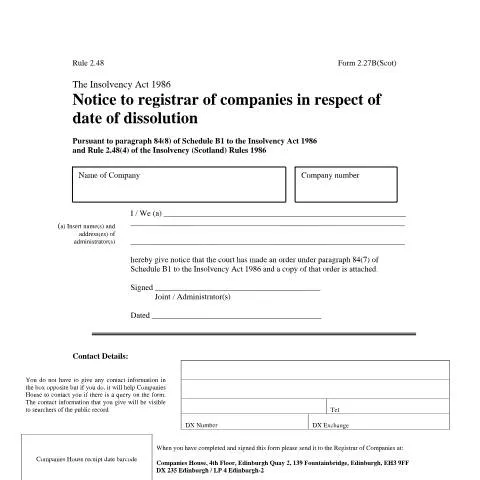
Understanding the Notice to Registrar of Companies: A Deep Dive into Form 2.27B (Scotland)
Navigating the complexities of corporate dissolution in Scotland can often be overwhelming for business owners and administrators. The Notice to Registrar of Companies in respect of date of dissolution, also known as Form 2.27B, is an essential document within the framework of the Insolvency Act 1986. This guide will explore the nuances, significance, and procedural aspects associated with this notice, equipping you with the necessary insights to effectively engage with it.
Why Form 2.27B Matters: The Context of Corporate Dissolution
Form 2.27B plays a pivotal role in the corporate dissolution process, particularly in the context of insolvency. When a company is dissolved, it ceases to exist in the eyes of the law. However, the process leading to this final step must adhere to legal protocols to ensure that all stakeholders are duly notified and that their rights are protected. This notice serves as a formal communication to the registrar at Companies House, indicating the legal dissolution of a company following a court order.
Understanding the Insolvency Act 1986 is crucial, as it lays the groundwork for business liquidation and administration processes. Specifically, the provisions under paragraph 84(8) of Schedule B1 outline the requirements for notifying the registrar following a court order that facilitates the dissolution process.
Who Needs to Be Involved? Identifying the Stakeholders
The stakeholders involved in the submission of Form 2.27B typically include:
- Administrators: Appointed individuals responsible for managing the affairs of the company during its administration. They must ensure that the dissolution process is conducted in compliance with legal requirements.
- Company Directors: They may also be involved, especially if they were responsible for the company’s management prior to its dissolution.
- Creditors: While not directly involved in the submission of this notice, creditors may need to be informed about the dissolution to ensure that their claims are settled appropriately.
- Companies House: The official body where the notice is submitted, responsible for maintaining the public register of companies in the UK.
Recognizing the roles of these individuals is vital for ensuring a smooth dissolution process, as they must collaborate to meet the necessary legal obligations.
Step-by-Step Guidance on Utilizing Form 2.27B
When it comes to practical application, understanding how to effectively use Form 2.27B is essential. Here’s a detailed step-by-step process:
1. Gathering Necessary Information
Before filling out the form, ensure that you have the following information readily available:
- The name of the company being dissolved.
- The company number as registered with Companies House.
- Details of the administrator(s) involved, including their names and addresses.
- A copy of the court order that mandates the dissolution.
2. Completing the Notice
The form itself is straightforward but requires careful attention to detail. Here’s how to approach it:
- Begin by inserting the names and addresses of the administrators in the designated section.
- Make sure to attach the court order as specified. This document serves as proof of the legal authority under which the dissolution is taking place.
3. Signing and Dating
Once completed, the form must be signed by the administrator(s). It’s vital to date the form accurately, as this date will be significant in the context of the dissolution timeline.
4. Contact Details
While providing contact information is optional, it is advisable to include a contact number. This facilitates communication with Companies House should any queries arise regarding the notice. Be mindful that this information will be part of the public record.
5. Submitting the Notice
The completed Form 2.27B should be submitted to the following address:
Companies House 4th Floor, Edinburgh Quay 2 139 Fountainbridge, Edinburgh, EH3 9FF DX 235 Edinburgh / LP 4 Edinburgh-2
Ensure you send the notice promptly to avoid any delays in the dissolution process.
Key Terms to Understand: Legal Language Decoded
Engaging with legal documents can often introduce terminology that may be unfamiliar. Here are some key terms associated with Form 2.27B and the dissolution process:
| Term | Definition |
|---|---|
| Insolvency: | The inability of a company to pay its debts as they fall due. |
| Administrator: | An individual appointed to manage a company's affairs during insolvency proceedings. |
| Liquidation: | The process of selling a company's assets to pay off debts, leading to the dissolution of the company. |
| Court Order: | A formal ruling made by a court that may allow for dissolution and outline the process involved. |
Understanding these terms can help clarify the process and ensure that all parties are on the same page throughout the dissolution journey.
Common Misinterpretations and Pitfalls to Avoid
While Form 2.27B is designed to be straightforward, misunderstandings can lead to complications. Here are some common misinterpretations to be wary of:
- Assuming Immediate Dissolution: It’s crucial to understand that submitting Form 2.27B does not guarantee immediate dissolution. The dissolution will take effect only once Companies House processes the notice.
- Incomplete Information: Failing to provide all required information, such as not attaching the court order, can lead to delays or rejection of the notice.
- Ignoring Timeframes: Be aware that there are certain timeframes and conditions under which the notice must be submitted following the court order. Failure to adhere to these can complicate the dissolution process.
As with any legal document, clarity is paramount. Ensuring that all aspects of Form 2.27B are correctly executed is vital for avoiding unnecessary complications.
Interrelation with Other Documents and Processes
Form 2.27B does not exist in isolation; it interacts with various other documents and processes involved in the dissolution of a company. Understanding these relationships ensures a comprehensive approach:
A. The Role of Insolvency Practitioners
Often, administrators are insolvency practitioners who play a crucial role in guiding the company through the administration process. Their expertise can be invaluable in ensuring compliance with all legal obligations, including the timely submission of Form 2.27B.
B. The Importance of the Court Order
As mentioned earlier, a court order is a prerequisite for submitting Form 2.27B. This order provides the legal grounds for dissolution and may dictate specific terms that need to be followed throughout the process.
C. Other Relevant Notices
It's also important to be aware of other notices that may be required throughout the dissolution process. For instance, additional notifications to creditors or stakeholders may be necessary, depending on the circumstances surrounding the company's insolvency.
Navigating the Aftermath of Dissolution
Once Form 2.27B has been submitted and the dissolution process is complete, there are several steps that the administrators and former directors should consider:
- Retention of Records: It's vital to retain all company records for a minimum period, typically six years, as they may be required for tax purposes or in the event of any future inquiries.
- Settling Outstanding Obligations: Ensure that all creditors have been settled, and any legal obligations have been addressed before proceeding with other ventures.
- Future Business Plans: If the business owner or directors intend to form a new company, they must be aware of legal implications, especially if they were involved in the insolvency proceedings.
Being diligent in these post-dissolution activities can help former business owners navigate their next steps more effectively and comply with any ongoing legal obligations.
Final Thoughts on Form 2.27B and Corporate Responsibility
Engaging with Form 2.27B is more than a bureaucratic necessity; it is an integral part of a responsible approach to corporate governance and accountability. Ensuring that the dissolution process is conducted transparently and in adherence to legal frameworks reflects not only on the business's reputation but also on the integrity of its directors and administrators.
Understanding the implications of this notice and the broader context of corporate insolvency is essential for making informed decisions that align with both legal requirements and ethical standards in business. As you navigate this process, remember that seeking professional guidance from insolvency practitioners can provide additional support and clarity.
By adhering to the procedures outlined in this guide, stakeholders can facilitate a smoother dissolution process, protecting both their interests and the rights of any affected parties.
Understanding the Circumstances Requiring Form 2.27B Submission
When dealing with the dissolution of a company in Scotland, it’s essential to understand the specific scenarios that necessitate the submission of Form 2.27B to the Registrar of Companies. Primarily, this form is required when a company has ceased trading and is no longer carrying on business. However, there are additional nuances to consider.
For instance, a company may be dissolved due to various reasons such as voluntary dissolution by the directors, compulsory dissolution initiated by creditors, or administrative dissolution if the company fails to adhere to statutory obligations like filing annual accounts or annual returns. Each of these scenarios comes with its own set of evidential requirements.
In cases of voluntary dissolution, the directors must first ensure that all debts are settled, and the company’s assets are properly distributed. Form 2.27B must reflect the date of actual cessation of trading, which is a critical element for the accuracy of the record. This date not only marks the end of the business activities but also serves as a reference point for any potential claims by creditors or tax liabilities that may arise post-dissolution.
Compulsory dissolution, often initiated when a company is unable to pay its debts, requires the submission of Form 2.27B to confirm the date of dissolution as ordered by the court. It’s worth noting that this scenario typically involves complex legal proceedings, which can complicate the dissolution process. Therefore, it’s advisable to seek legal counsel to navigate the specifics of such situations effectively.
Finally, administrative dissolutions often arise from a failure to comply with filing requirements. Companies that do not file their annual returns or accounts within the prescribed timeframe risk being struck off the register. In these instances, Form 2.27B must be filed to officially document the company’s dissolution. The date of dissolution noted in the form should align with the date the Registrar acted to dissolve the company, ensuring records accurately reflect the company’s status.
Understanding these circumstances not only aids in proper compliance but also prepares former directors and stakeholders for potential post-dissolution liabilities or obligations.
The Implications of Dissolution for Company Directors and Shareholders
The dissolution of a company is not merely a procedural matter; it carries significant implications for directors and shareholders, influencing both their legal standing and financial responsibilities. When submitting Form 2.27B, it is critical for directors and shareholders to understand how dissolution affects their status and what obligations may persist even after the company is officially dissolved.
For directors, the primary concern lies in the potential liability for company debts. In Scotland, once a company is dissolved, directors may still be held accountable for certain obligations if they have acted improperly or if the company was trading while insolvent. The Insolvency Act 1986 allows for claims against directors if it is established that they failed to act in the best interests of the company and its creditors. As such, prior to dissolution, careful consideration of financial standings and obligations is paramount.
Equally, shareholders may face repercussions if the dissolution process is not executed correctly. They must ensure that all assets are distributed fairly and in accordance with their shareholdings. Any discrepancies in asset distribution can lead to disputes among shareholders or claims from creditors post-dissolution. Therefore, it’s advisable for shareholders to be active participants in the dissolution process, ensuring that their interests are adequately represented and protected.
Moreover, while Form 2.27B acts as a formal notification of dissolution, it does not absolve directors and shareholders of responsibilities linked to tax obligations. Companies are required to settle any outstanding taxes with HMRC before dissolution, including Corporation Tax, VAT, and PAYE-related liabilities. Failure to do so could result in personal liability for directors and potential claims against shareholders, undermining the entire dissolution process.
Additionally, it’s essential to consider the implications for employees if the company employed staff prior to dissolution. Directors must comply with employment laws, including providing proper notice and fulfilling redundancy obligations. The dissolution should not be used as a means to sidestep these responsibilities, as HMRC, through the National Insurance contributions, stays vigilant on such matters.
Overall, the implications of dissolution extend well beyond the submission of Form 2.27B. A thorough understanding of these ramifications not only ensures compliance with legal obligations but also prepares directors and shareholders for any potential challenges that may arise post-dissolution.
Post-Dissolution Responsibilities and Record-Keeping
Even after the submission of Form 2.27B and the dissolution of a company, certain responsibilities remain imperative for directors and shareholders. Understanding these obligations is crucial for ensuring that all legal and financial aspects are appropriately managed during and after the dissolution process.
Firstly, while the company is no longer active, directors must retain company records for a minimum of six years following dissolution. This includes financial documents, minutes of meetings, and correspondence with HMRC regarding tax matters. The Data Protection Act 2018 mandates that personal data be handled appropriately even after a company has dissolved, ensuring compliance with UK GDPR standards. Keeping meticulous records can serve not only as a safeguard against potential claims but can also facilitate future endeavors for directors who may establish new businesses.
In terms of financial obligations, directors should remain aware that certain debts may persist even after dissolution. For example, if a company is dissolved while owing taxes, HMRC may pursue directors personally if they determine that the dissolution was an attempt to evade tax responsibilities. Therefore, it is prudent for directors to seek professional advice regarding any outstanding liabilities prior to dissolution.
Stakeholders must also consider the potential for claims from creditors after dissolution. Although the general rule is that a dissolved company cannot incur new liabilities, there may be exceptions based on pre-existing conditions or undisclosed claims. Directors should ensure that they follow all legal processes to settle debts and notify all known creditors of the dissolution, as failure to do so can lead to complications and legal challenges.
Moreover, if assets were not fully distributed prior to the dissolution, stakeholders must understand the legal implications of retained assets. Directors may need to address any unexpected claims on these assets, especially if the dissolution is contested by creditors. Therefore, a clear plan for asset distribution is essential to mitigate future conflicts.
Finally, an often-overlooked aspect of post-dissolution responsibilities relates to the safeguarding of one’s professional reputation. Directors and shareholders should be conscious of the legal and ethical standards upheld in business practices. A poorly executed dissolution can have long-lasting effects on a director's ability to manage future enterprises, as a history of mismanagement may raise red flags for future investors and regulatory bodies.
In summary, the responsibilities following the dissolution of a company extend well beyond the completion of Form 2.27B. Engaging in thorough record-keeping, fulfilling financial obligations, and maintaining professional standards are vital for ensuring a smooth transition from active business to dissolution.