Understanding the SH19: A Critical Step in Capital Reduction
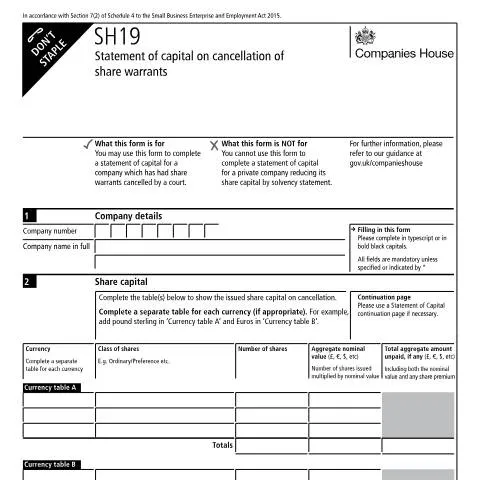
When a company in the UK decides to cancel share warrants, it must file a Statement of Capital using the SH19 form. This process is crucial for ensuring that the company's capital structure reflects the true value of its share capital after such cancellations. The SH19 form serves to maintain transparency and accuracy in the financial records of businesses, which is a key aspect of corporate governance in the UK.
Who Is Responsible for Filing the SH19?
The responsibility for filing the SH19 typically falls to the company’s directors or secretaries. This requirement acknowledges that those in leadership positions are most aware of the company’s financial situation and the implications of any alterations to the share capital. It is essential for those responsible to not only understand the filing process but also the accuracy of the information submitted since any inaccuracies could lead to complications, including potential penalties or delays in processing.
Role of Directors in Filing
Directors must ensure that the form is completed with precision, as it will be scrutinised by Companies House. It is advisable for directors to engage with financial advisors or accountants when preparing the SH19, especially if the capital structure is complex.
Who Else Can File?
Aside from directors, the SH19 can be filed by persons authorized under sections 270 or 274 of the Companies Act 2006. These individuals must have a clear understanding of the company’s capital and share structure.
The Regulatory Framework Behind the SH19
The requirement to submit the SH19 form stems from the Small Business, Enterprise and Employment Act 2015, specifically Section 7(2) of Schedule 4. This piece of legislation was enacted to simplify and modernize corporate procedures, making it easier for companies to manage their capital while ensuring that stakeholders are kept informed.
Key Aspects of the Regulatory Framework
- Transparency: The SH19 is vital for maintaining accurate public records on businesses, which is a legal requirement.
- Protection of Stakeholders: The form provides a way to protect the interests of shareholders and creditors by ensuring that capital reductions are properly documented.
- Compliance: Failure to file the SH19 when required can lead to non-compliance with UK corporate law, resulting in penalties.
Steps to Complete the SH19 Form
Completing the SH19 form requires careful attention to detail. The form includes several mandatory fields that must be filled out correctly to avoid rejection by Companies House. Below are the principal steps to ensure the form is completed accurately.
Gather Required Information
Before starting to fill the SH19, ensure you have the following:
- Company Name and Number: Ensure these match the information held on the Companies House register.
- Details on Share Capital: This includes the number of shares being cancelled, the nominal value of each share, and totals for different currencies if applicable.
- Particulars of Rights: Information regarding voting rights, dividend rights, and any other special rights associated with shares must be clearly stated.
Filling Out the Form
- Section 11: Company Details: Fill out the full company name and number in bold black capitals. This ensures clarity and prevents any misinterpretation.
- Section 22: Share Capital: Complete the tables indicating the issued share capital following the cancellation of share warrants. If multiple currencies are involved, separate tables must be created for each.
- Rights Attached to Shares: Provide detailed particulars regarding the rights associated with each class of shares, ensuring all necessary information is included.
- Authentication: A person authorized by the company must authenticate the form. They should enter their printed name without needing to provide a signature.
Submitting the SH19: Channels and Considerations
Once the SH19 form is completed, it needs to be submitted to Companies House. There are several ways to do this:
Online Submission
Submitting the SH19 form online is often the quickest way to ensure it is received. Companies House provides an online portal where the form can be uploaded. This method is generally processed faster than paper submissions and is less prone to errors.
Paper Submission
Should you choose to submit the form by post, it is imperative to use the correct address. Sending the form to an incorrect address can lead to unnecessary delays. Ensure you retain proof of postage as well, in case any issues arise.
In-Person Submission
Companies House also allows forms to be submitted in person at their offices. This can be beneficial if you have questions or require immediate assistance.
What Happens After Submission?
Once you submit the SH19 form, the processing time can vary. Companies House states that processing typically takes around 5-10 working days for online submissions, while paper submissions may take longer.
Tracking Your Submission
You can track the status of your submission through the Companies House online services. If you notice that your submission hasn't been processed within the expected timeframe, reaching out to Companies House directly via their contact methods can help clarify any issues.
Addressing Common Issues and Errors
Even with careful preparation, issues can arise when submitting the SH19 form. Here are some common problems and how to navigate them:
Rejected Applications
If your form is rejected, Companies House will provide feedback on what went wrong. Typical reasons for rejection include:
- Incomplete fields
- Mismatched company details
- Incorrect calculations for share capital
To rectify the situation, carefully review the feedback, amend the form accordingly, and resubmit as soon as possible.
Missing Information
If you receive a notification that information is missing from your SH19 submission, do not delay in providing the additional details. This could potentially hold up the entire capital reduction process, which could impact your company's operations and governance.
What to Do in Case of Disputes or Concerns
In the event of a dispute regarding the submitted form or the process, it is advisable to seek legal counsel. Consulting with an expert who specializes in corporate law can provide you with the necessary insights and guidance to resolve the issue efficiently.
Preparing for Future Capital Changes
Having filed the SH19 and successfully cancelled share warrants, companies must reflect on ongoing compliance and best practices for managing their capital. This includes keeping accurate records of all share transactions and remaining aware of any future obligations under the Companies Act 2006.
Continuous Monitoring of Share Capital
Companies should regularly audit their share capital and consider potential changes that might impact its structure. This proactive approach helps in maintaining compliance and ensures that any future filings, similar to the SH19, can be completed with minimal complications.
Staying Informed on Regulatory Changes
With legislative changes being relatively common, it’s essential to stay updated on any amendments to the Companies Act or related regulations that might impact how share capital adjustments are handled. Regular training or updates for directors and authorized personnel can be beneficial.
Conclusion: The Importance of Accurate Reporting
Completing the SH19 form accurately is not merely a regulatory obligation; it is a fundamental aspect of conducting business responsibly. The integrity of a company’s capital structure is vital for maintaining stakeholder trust and compliance with legal requirements. By remaining diligent in the completion and submission of the SH19, companies can avoid potential pitfalls and ensure they navigate the complexities of capital management effectively.
By understanding the nuances of the SH19 form and the surrounding regulatory framework, businesses can make informed decisions that align with their strategic goals while fulfilling their legal obligations.
Understanding the Statement of Capital: Importance and Implications
The Statement of Capital is a crucial document for companies in the UK when making changes to their share structure, including the reduction of capital. This document, specifically Form SH19, is essential for ensuring compliance with the Companies Act 2006, which outlines the regulatory framework for corporate governance in the UK. The Statement of Capital provides a snapshot of a company’s equity, detailing the number and type of shares in circulation, their nominal value, and the amount unpaid on those shares. It's important to understand that any reduction in capital must be properly communicated to Companies House through this statement to maintain transparency and uphold shareholder rights.
When shares are cancelled, such as in the case of share warrants being annulled, the company must update its Statement of Capital to reflect this change accurately. The implications of failing to file an accurate Statement can lead to significant legal repercussions, including penalties and loss of credibility with shareholders and creditors. Therefore, understanding how to properly fill out Form SH19 in conjunction with the Statement of Capital is vital for any company undergoing capital restructuring.
Step-by-Step Guide to Completing Form SH19
Filling out Form SH19 can seem daunting, but breaking it down into manageable steps can streamline the process. Here's a step-by-step guide to ensure you complete the form accurately:
- Gather the Necessary Information: Before starting, make sure you have all relevant information at hand. This includes details of the shares being cancelled, the original Statement of Capital, and any resolutions passed by the shareholders authorising the reduction.
- Fill in Company Details: Begin by entering your company's name and registration number at the top of the form. Ensure that these details match what is registered with Companies House.
- Detail the Changes in Capital Structure: You must specify how many shares are being cancelled, the nominal value of these shares, and the resultant change in the company's share capital. This includes both the total number of shares prior to cancellation and the new total after the changes.
- Ensure Compliance with Legal Requirements: Check that the reduction complies with the Companies Act 2006 and any other relevant legislation. Confirm that the reduction does not compromise company solvency and is in the interest of shareholders.
- Complete the Declaration: The form requires a declaration, which must be signed by a director or the company secretary. This asserts that the information provided is accurate and that the company has adhered to all legal requirements regarding the reduction of share capital.
- Submit the Form to Companies House: Once completed, send the form to Companies House either online or via post. Ensure that you do this within the stipulated timeframe to avoid penalties.
By following these steps meticulously, you will enhance the chances of your Form SH19 being accepted without issues. Remember, attention to detail is paramount when dealing with company documents that affect share capital.
Common Pitfalls and How to Avoid Them
Even seasoned company directors can encounter difficulties when submitting the Statement of Capital through Form SH19. Here are some common pitfalls and tips on how to avoid them:
- Incomplete Information: Often, submissions are delayed or rejected due to missing information. To mitigate this, double-check that all sections of the form are filled out completely, particularly the details regarding the number of shares cancelled and the company's new capital structure.
- Failure to Notify Shareholders: Shareholder consent is crucial when modifying the capital. Ensure that all relevant shareholders are notified and that you follow the correct procedures for communication. This might involve holding a meeting or issuing written resolutions, as per the company’s articles of association.
- Ignoring Legal Compliance: It's essential to ensure that the reduction of capital does not infringe upon the legal requirements set forth in the Companies Act. Consulting with a legal professional or a company secretary can provide clarity and help ensure compliance.
- Post-Submission Follow-up: After submitting your form, monitor the status of your submission via Companies House. If there are any issues, you want to address them promptly before they escalate into serious problems.
By being aware of these common pitfalls and taking proactive steps, companies can navigate the complexities of capital reduction with greater assurance.
Post-Submission Considerations: Monitoring and Compliance
After submitting your Form SH19 and receiving confirmation from Companies House, it's vital to implement a robust monitoring process to ensure ongoing compliance with the new capital structure. This includes:
- Updating Company Records: Once the capital reduction is approved, updates must be reflected in the company's statutory registers, including the register of members and the register of charges. This ensures that all records align with the latest company status.
- Regular Review of Shareholder Agreements: If your company has entered into shareholder agreements, it’s essential to review them to confirm that the terms remain appropriate following the capital reduction. Any changes in share structure may affect the rights and obligations of shareholders.
- Consider Impact on Future Financings: Analyze how the capital reduction may affect future financing options, including potential investments or loans. A reduced capital base can alter the company's ability to raise funds, which may be critical for expansion plans or operational sustainability.
- Ongoing Communication with Shareholders: Maintain open lines of communication with your shareholders regarding the impacts of the capital reduction. Transparency will help build trust and foster a positive relationship, especially if the changes affect dividend distributions or voting rights.
By taking these post-submission considerations into account, companies can ensure they remain compliant and well-prepared for any future changes in their capital structure.