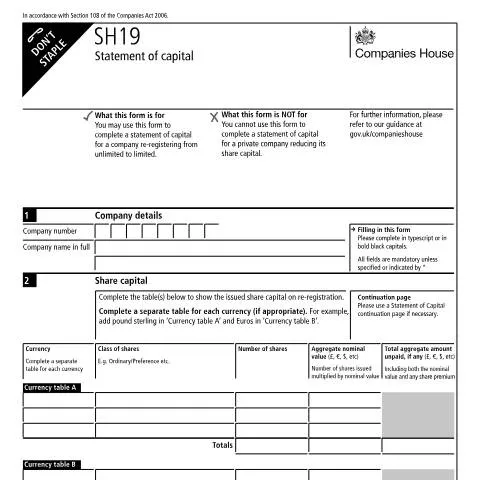
Navigating the SH19 Form: A Key Step in Transitioning from Unlimited to Limited Company
When a company finds it necessary to transition from an unlimited to a limited status, one of the crucial steps is completing the Statement of Capital (SH19). This document not only reflects the company's capital structure but also plays a significant role in its legal standing and operational integrity. Therefore, understanding how to accurately prepare and submit the SH19 form is essential for any business undergoing this transformation.
Understanding the Importance of the SH19 Form in Company Structure
The SH19 form is designed specifically for companies re-registering from unlimited to limited status under Section 108 of the Companies Act 2006. This transition is pivotal, as it limits the liability of shareholders to the amount unpaid on their shares. This means that personal assets are generally protected from company debts, an important consideration for many business owners.
- Legal Protection: A limited company structure offers shareholders protection against personal liability.
- Attracting Investment: Investors are often more willing to invest in limited companies, knowing their liability is capped.
- Perpetual Existence: Limited companies can continue to exist beyond the involvement of the original owners.
Who is Required to Submit the SH19 Form?
The obligation to submit the SH19 form lies with the directors of the company that is transitioning to limited status. It is crucial that they ensure all necessary information is accurately reflected in the document, as inaccuracies can lead to delays or complications in the registration process.
The following entities typically need to complete the SH19:
- Companies currently operating under unlimited status.
- Directors who wish to formalize the capital structure during the transition.
Deciphering the Rubrics: A Step-by-Step Guide to Completing the SH19 Form
Completing the SH19 form involves several crucial sections, each of which requires careful attention to detail. Here's a breakdown of the essential parts of the form:
Section 11: Company Details
In this section, companies must provide their full name and company number. It is essential to ensure that these details match the information on the public register to avoid complications.
Section 22: Share Capital
This section requires the completion of one or more tables to show the issued share capital at the time of re-registration:
- Class of shares: Specify the types of shares issued (e.g., Ordinary, Preference).
- Number of shares: Indicate how many shares for each class have been issued.
- Aggregate nominal value: Provide the total nominal value of the shares issued.
- Currency considerations: If shares are issued in multiple currencies, separate tables must be provided for each denomination.
Prescribed Particulars of Shares
Each class of shares must have detailed rights and privileges outlined. This includes rights attached to voting, dividends, and capital distribution. Directors should prepare to articulate these particulars, as they will play a role in future shareholder relations and corporate governance.
Critical Considerations: Common Pitfalls in Completing the SH19 Form
While it may seem straightforward, there are specific common mistakes that can lead to the form being returned or rejected:
- Inaccurate company details: Always double-check that the company name and number match the public record.
- Incomplete share capital information: Ensure that you have provided the total number of shares along with their aggregate values.
- Failure to sign: The form must be authenticated by an authorised person, such as a director or secretary.
Submission Pathways: Navigating the Channels for SH19 Filing
Companies House offers several options for submitting the SH19 form, each with its own advantages:
Online Submission
For companies looking for efficiency, online submission is often the preferred method:
- Speed: Electronic submissions are processed faster than paper forms.
- Immediate confirmation: Receive confirmation of submission almost instantly.
Paper Submission
Companies that prefer traditional methods can also submit the form via post:
- Documentation: Make sure that the completed form is accompanied by any necessary continuation pages.
- Correct Address: It is crucial to send the form to the right Companies House office; details are available on their website.
Post-Submission: What Happens After Filing the SH19 Form?
Once the SH19 is submitted, companies can expect several outcomes:
- Public Record Update: The information provided will be added to the public register, which is accessible to the public.
- Compliance Confirmation: Companies House may issue a confirmation statement once the transition to limited status is successful.
- Ongoing Obligations: Limited companies must adhere to continuing legal obligations, including annual filings and maintaining accurate records.
Historical Context: The Regulatory Framework Surrounding the SH19 Form
The SH19 form is rooted in the Companies Act 2006, which established clear guidelines for company structures in the UK. Understanding this regulatory landscape is crucial for any director or business owner:
- Corporate Governance: The Act aims to foster transparency and accountability in corporate practices.
- Shareholder Rights: Specific provisions ensure that shareholders are aware of their rights and obligations.
Looking Ahead: Why Correctly Completing the SH19 is Crucial for Business Growth
Completing the SH19 form may seem like a bureaucratic hurdle, but it represents a significant milestone in a company's evolution. By ensuring accuracy and attention to detail in this process, companies not only secure their legal status but also lay the groundwork for future growth and investment opportunities.
In this competitive landscape, taking the time to fully understand and correctly complete the SH19 can make all the difference. Understanding the details, ensuring compliance, and accurately representing the company’s structure will serve as a solid foundation as the business moves forward.
Understanding the Statement of Capital in the Context of Company Re-registration
The Statement of Capital is a crucial document that reflects the financial structure of a company, particularly when transitioning from an unlimited to a limited company. This statement outlines the total amount of share capital, the number of shares issued, and the nominal value of each share. When a company opts for this re-registration, it must ensure that the Statement of Capital is accurate and complies with the requirements set forth by Companies House.
In the case of re-registration, submitting an SH19 form alongside a revised Statement of Capital is necessary. Companies should note that the share capital must be at least £1, and the details provided in this document must be consistent with the information held by Companies House on the company’s record. Additionally, any changes made during the transition need to be clearly documented and submitted to ensure compliance with the Companies Act 2006.
It's also important to remember that if there are multiple classes of shares, these must be detailed separately in the Statement of Capital. This includes specifying the rights attached to each class, such as voting rights and dividend entitlements. Failing to provide complete information on the Statement of Capital can lead to complications in the re-registration process and may even delay a company’s transition to limited status.
Common Challenges and How to Overcome Them When Completing SH19
Transitioning from an unlimited to a limited company can present several challenges, particularly when completing the SH19 form and the accompanying Statement of Capital. One common issue is the misunderstanding of the requirements regarding share capital, particularly the nominal value and the total number of shares issued. It's vital for company directors to fully comprehend these aspects to avoid pitfalls.
One potential solution is to consult with an accountant or a legal professional who specializes in company law. They can provide invaluable advice on structuring share capital effectively to meet both legal requirements and the company's strategic goals. Additionally, using the Companies House guidance can help clarify any uncertainties regarding the completion of these forms.
An often-overlooked aspect is ensuring that all shareholders are properly informed and that any necessary shareholder resolutions are passed before submitting the SH19 form. This step is crucial to confirm that all shareholders agree to the changes in the company's structure. Missing this can lead to disputes and further complications, potentially hindering the re-registration process.
Implications for Future Financial Reporting and Obligations
Once a company has successfully re-registered from unlimited to limited status, it must be aware of the implications this has for its financial reporting and obligations. Limited companies are required to follow stricter financial reporting standards than their unlimited counterparts. This includes preparing annual accounts that comply with the UK Generally Accepted Accounting Practice (GAAP) and filing these accounts with Companies House.
Moreover, the change in corporate structure brings an obligation to adhere to the Companies Act 2006’s requirements regarding governance, such as holding annual general meetings (AGMs) and maintaining accurate registers of directors and shareholders. Directors of limited companies must also be mindful of their duties under this act, including acting in the best interest of the company and avoiding conflicts of interest.
In terms of tax implications, re-registering to a limited company can also affect how profits are taxed. Unlike unlimited companies where profits may be taxed at the individual level, limited companies are subject to Corporation Tax on their profits, which might offer potential tax planning opportunities. Therefore, it is advisable to engage with a tax advisor to explore the most effective strategies following the re-registration.