Understanding the RR09 Form: A Path to Re-Registration
The need for a company to transition from public to private status is not uncommon, especially following significant changes in shareholding or capital structure. In such cases, the RR09 form serves as a critical instrument for public companies looking to re-register as private companies after the cancellation of shares. This administrative process, governed by the Companies Act 2006, requires careful attention to detail in order to meet the legal requirements set forth by Companies House.
Who Takes the Lead? The Profile of Applicants
Throughout the re-registration process, the role of individuals within the company is paramount. Typically, the application is filed by company directors or secretaries, but various other roles can also take the lead:
- Director
- Secretary
- Person authorised
- Administrator
- Administrative receiver
- Receiver or receiver manager
- CIC manager
Understanding who can sign the RR09 form is crucial for ensuring the legitimacy of the application. However, specific company circumstances may change who is eligible. For example, if a company has gone through a restructuring where previous directors have left, it may be necessary for a solicitor or an appointed legal representative to file the form.
The Significance of Share Cancellation in Re-Registration
Before delving into the specifics of the RR09 form, it's essential to understand the background leading to its necessity. The cancellation of shares is a significant event in a company's life that can have lasting implications on its structure and operations. According to section 662(1) of the Companies Act 2006, this process must be underpinned by a directors’ resolution that indicates a reduction in the nominal value of its allotted share capital below the authorized minimum.
Once the shares are cancelled, the company can initiate the transition process to private status. This move often aims to simplify governance, decrease regulatory burdens, or to provide an environment more conducive to long-term planning and investment without the pressure of public market fluctuations.
Decoding the RR09: Filling Out the Form
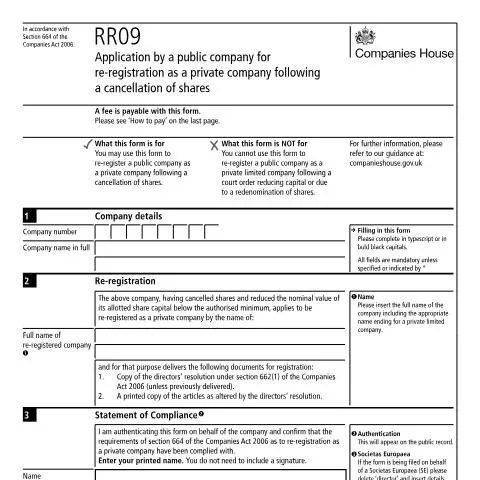
Completing the RR09 form accurately is vital for a successful re-registration. The form requires specific information, and any oversight can lead to rejection or delays. The following segments break down each mandatory section of the form:
Section 1: Company Identification
In this opening section, you will provide:
- Company Name: This should be the official name of the company as registered, including the required designation of "Limited" or "Ltd" to reflect its new status.
- Company Number: This is the unique identifier assigned by Companies House, which must match the information on the public register.
Having this information correct is crucial; discrepancies can result in immediate rejection of the application.
Section 2: New Company Name
Upon re-registration, the company is expected to adopt a new name, different from its previous public designation. This section should clearly state:
- The desired name post-re-registration
- Compliance with naming regulations, ensuring the name does not include sensitive words or phrases
A common pitfall here is assuming the name availability; checking the Companies House register before submission will prevent unnecessary complications.
Section 3: Declaration of Compliance
The authenticity of the document hinges on this statement, where the signing party must confirm that the company complies with all requisite laws for re-registration. This section is pivotal and requires:
- Printed name of the person signing: A signature is not required but must be clearly printed to avoid confusion.
- Role within the company: Clearly stating your position helps validate your authority to submit this form.
Documentation and Fees: What to Include
Alongside the filled form, several crucial documents must be attached to facilitate the re-registration process:
- Copy of the directors' resolution under section 662(1) of the Companies Act 2006.
- Altered articles reflecting changes approved by the directors' resolution.
- A payment of £124 for the processing fee. The payment method should be clearly noted, whether it's a cheque or postal order made to Companies House.
Failing to include any of these documents can lead to the application being returned or delayed. It’s advisable to review the checklist provided on the form meticulously.
Submission Channels: Navigating the Process
Once the RR09 form is completed and all required documents are gathered, the next step is to submit the application. Companies House offers several avenues for submission:
- Online Submission: This is often the most efficient method, allowing for immediate processing. Ensure you have a registered account with Companies House to utilize this option.
- Postal Submission: For those preferring traditional methods, forms can be mailed to Companies House. It is essential to check for the correct postal address to avoid delays.
- In-Person Submission: Companies House offices accept walk-in submissions, but it’s advisable to schedule an appointment due to potential waiting times.
Each method comes with its own processing times and protocols. Online submissions are typically the fastest, while postal submissions may take several days to reach the office and be processed.
After the Submission: Tracking Your Application
Once the application has been sent, stakeholders may wonder what the next steps are in the process. Companies House provides options for tracking the progress of your application:
- Online Account: If submitted online, your application status can be monitored through your Companies House account.
- Contacting Customer Support: For applications submitted via post, contacting Companies House directly can provide updates. Having your company number and application details handy will facilitate this process.
In the event that your application is rejected, Companies House will provide reasons for the refusal. Understanding these reasons will help rectify any issues that may pertain to naming or documentation errors.
Understanding the Wider Context: Legal Framework and Regulations
The re-registration process is not an isolated event; it is embedded within a broader legal and regulatory framework. The Companies Act 2006 serves as the backbone of company law in the UK, stipulating the procedures and requirements for such transformations. Its guidelines ensure that companies operate within a set structure, protecting both the company’s interests and those of its shareholders.
The specific provisions relevant to the RR09 form are primarily contained within sections 662 and 664, which govern the conditions under which a public company can transition to a private entity. Awareness of these regulations not only assists in completing the RR09 form but also prevents future legal complications arising from misinterpretation of the laws.
Final Thoughts on the RR09 Process
Transitioning from a public to a private company through the RR09 form is a significant step that requires careful planning and execution. Every detail matters, from understanding the legal framework to filling out forms with accurate information. While it may seem daunting, following the guidelines set forth by Companies House can streamline the process, ultimately leading to a successful re-registration.
It is always wise to consult legal or financial advisors throughout this process, especially when dealing with share cancellations and changes in company structure. Their expertise can help navigate complex regulations and ensure compliance, minimizing the risk of errors that could delay the transition.
By staying informed and organized, companies can achieve their desired status efficiently and focus on their future growth and operational goals.
Understanding the Cancellation of Shares in Public Companies
Before diving into the re-registration process, it is vital to understand why a company might choose to cancel its shares. Cancellation of shares typically occurs when a public company decides to reduce its capital or simplify its equity structure. This could be due to various strategic reasons such as reducing the number of shareholders, improving earnings per share (EPS), or preparing for a transition to private ownership.
When shares are cancelled, the company must adhere to specific legal procedures outlined in the Companies Act 2006. For instance, shares can be cancelled by issuing a resolution in a general meeting and informing Companies House accordingly. Understanding the nuances of these regulations is crucial, as improper cancellation can lead to legal repercussions or complications during the re-registration process.
Furthermore, it is important to consider the implications of shareholders' rights during this process. Shareholders must be formally notified and potentially compensated, depending on the circumstances of the share cancellation. This concern is particularly relevant for companies transitioning from public to private status, as the rights and protections afforded to public shareholders differ significantly from those in private entities.
Step-by-Step Guide to Re-registering a Public Company as a Private Company
Once the shares have been successfully cancelled, the next step is the re-registration of the public company as a private limited company. This process involves several key steps that must be meticulously followed to ensure compliance with UK regulations.
1. Prepare the Necessary Documentation: You will need to prepare several documents, including:
- Special Resolution: A formal resolution passed by the shareholders, consenting to the change in status from public to private. This resolution must be filed with Companies House.
- Form RR09: This is the application form for re-registration as a private limited company and must be completed and submitted along with the special resolution.
- Amended Articles of Association: These should reflect the new status and include the limitations on share transfers that are typical of private companies.
2. Submit Documents to Companies House: All the prepared documentation must be submitted to Companies House. Ensure that submissions are made in accordance with their guidelines, as failing to comply can lead to delays or rejections of your application.
3. Pay the Required Fee: There is a fee associated with the re-registration process, which varies depending on whether you are opting for standard or expedited service. Ensure you check the latest fee structure on the Companies House website.
4. Await Confirmation: Once your application is submitted, Companies House will review the documents. If everything is in order, they will issue a certificate of incorporation as a private company. This certificate will serve as proof of your company’s new status.
Tax Implications of Re-registering as a Private Company
Re-registering your company as a private limited entity after cancelling shares can have various tax implications that you need to consider. Understanding these implications will help you navigate your financial responsibilities more effectively.
Firstly, when transitioning from a public to a private company, you may encounter changes to your Capital Gains Tax (CGT) liabilities. Public companies often have different tax obligations compared to their private counterparts, particularly in relation to capital distributions and share buybacks. It is advisable to consult with a tax advisor to determine how these changes will affect your company's tax position.
Moreover, the way dividends are taxed can also change. Private companies generally have more flexibility in declaring dividends but must adhere to the legal requirements set out in the Companies Act 2006. This means ensuring that dividends are only paid out of distributable profits, which could require a reassessment of your financial reporting.
Additionally, re-registration may impact your eligibility for certain tax reliefs or incentives that are available specifically to public companies. For example, research and development (R&D) tax credits might have different qualifying criteria for private companies, which could affect your financial planning strategies.
It is crucial to maintain open lines of communication with HMRC regarding your company’s change in status. Notify them of the re-registration and update your tax records to reflect your new private company status. Staying compliant with tax regulations will help you avoid potential penalties or complications in the future.