Understanding the AM14 (Scot) Notification Process: A Key Step in Asset Management
In the realm of corporate governance in Scotland, the AM14 (Scot) notification serves as a pivotal document for companies undergoing administration. When a Scottish company finds itself in financial distress, certain legal mechanisms come into play to manage the assets effectively. Understanding this document and the broader context in which it operates is essential for administrators, stakeholders, and decision-makers alike.
The Context of Asset Disposal in Administration
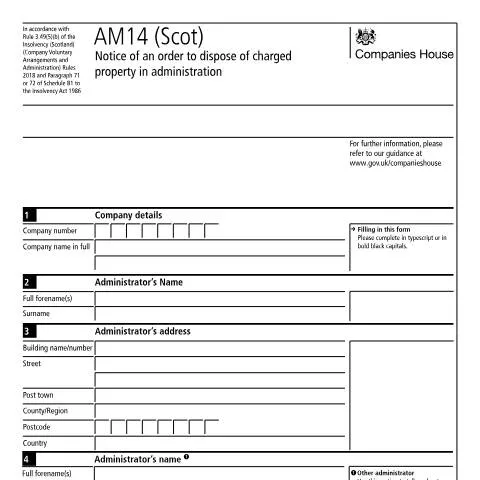
When a company enters administration, an administrator is appointed to oversee the company's affairs, business, and property. One of the administrator's critical responsibilities is to manage the company's assets, particularly those that are charged. This is where the AM14 (Scot) notice comes into play, as it formalizes the order to dispose of these charged properties in compliance with the Insolvency Act 1986 and the associated rules set out in the Insolvency (Scotland) (Company Voluntary Arrangements and Administration) Rules 2018.
Significance of Charged Property
Charged property refers to assets that have been used as security for loans or other financial arrangements. In the event of insolvency, these assets cannot simply be sold off without following proper legal procedures. The AM14 document is instrumental in ensuring that all actions related to the disposal of such property are conducted transparently and lawfully.
Decoding the Components of the AM14 Notice
The AM14 notice comprises several vital components that administrators must pay close attention to. Each section of the notice plays a role in ensuring compliance with legal requirements.
Sections of the AM14 Notice
- Company Details: This includes the full name of the company and its registered number. It is important to ensure these details match those held on the public register.
- Administrator’s Information: The notice requires the name, address, and contact information of the administrator overseeing the process. This section ensures accountability and provides a point of contact for any queries related to the notice.
- Court Order Reference: A sealed copy of the court order permitting the disposal of the charged property must be attached. This legal backing is crucial for the legitimacy of the disposal process.
- Signature and Date: The document must be signed and dated by the administrator, indicating their approval and understanding of the information presented.
Common Misinterpretations and Pitfalls
In the administrative process, misinterpretations can lead to significant complications. Below are some common pitfalls associated with the AM14 (Scot) notice.
Misalignment with Legal Requirements
One of the frequent missteps occurs when the information provided in the AM14 notice does not align with the records held at Companies House. Discrepancies in the company name or number can result in the notice being rejected, thereby delaying important asset disposal procedures.
Failure to Attach Relevant Documentation
Another critical error is neglecting to include the sealed court order. Without this document, the AM14 notice lacks the necessary legal authority, undermining any actions taken based on the notice.
The Pathway for Effective Utilization of the AM14 Notice
Executives and administrators must approach the AM14 notice with a structured methodology to ensure it supports their objectives effectively. Below is a step-by-step guide to utilizing the document.
Step-by-Step Process for Administrators
- Verify Company Details: Confirm that the company's name and registration number are accurate as per the records held at Companies House.
- Draft the Notice: Complete the AM14 notice using bold black capitals or typescript to enhance readability.
- Gather Supporting Documents: Ensure that the sealed court order is attached along with any other relevant documentation that may support the case for disposal.
- Sign the Notice: The administrator must sign and date the notice to affirm its validity and compliance.
- Submit the Notice: Return the completed AM14 notice to the appropriate address—typically the Edinburgh office of Companies House—for expediency.
Interconnections with Other Legal Documents
The AM14 notice is just one component in a broader framework of legal filings and requirements during the administration process. Recognizing how this document interacts with others is crucial for administrators.
Related Documents and Their Importance
| Document | Description |
|---|---|
| Form 4.12 (Scot) | Details the appointment of an administrator and must be filed with Companies House upon the commencement of administration. |
| Form 4.51 (Scot) | Required when the administrator seeks to dispose of charge property under other conditions, offering additional context to the AM14 notice. |
| Annual Reports | Periodic filings that provide updates on the company’s status and the progress of the administration process. |
Identifying Key Stakeholders and Their Roles
Understanding the audience for the AM14 (Scot) notice is essential. The stakeholders involved in the administration process each have a role to play.
Who Should Be Informed?
- Company Directors: They must be kept in the loop regarding the administration process and the implications of the AM14 notice on the company's assets.
- Creditors: They need to be informed about the disposal of charged property as it affects their claims and potential recoveries.
- Shareholders: Understanding the implications of asset disposal on their equity interests is crucial for shareholders during the administration process.
Practical Considerations for Administrators
As administrators navigate the complexities of asset management, several practical considerations can enhance their effectiveness in using the AM14 notice.
Keeping Accurate Records
Maintaining meticulous records of all communications, submissions, and related documents is vital. This practice not only ensures compliance but also provides a clear trail that can be referenced in case of disputes or questions regarding the administration process.
Engaging Legal Expertise
Due to the nuanced nature of insolvency law, engaging legal advisers who specialize in this area can be invaluable. They can provide guidance on interpreting the legal implications of the AM14 notice and ensure that all actions taken are within the confines of the law.
Final Thoughts on Effectively Using the AM14 (Scot) Notification
In conclusion, the AM14 (Scot) notice is a cornerstone document within the administration process of a Scottish company facing insolvency. By understanding its significance, components, and procedural requirements, administrators can navigate the complexities of asset disposal while ensuring compliance with legal frameworks. Mastery of this document equips stakeholders with the tools they need to make informed decisions, ultimately steering the company toward a more stable financial future.
Understanding the Legal Context for Charged Property Disposal
In Scotland, the legal framework governing the disposal of charged property is primarily influenced by both common law principles and statutory regulations. It is critical for companies to understand the implications of the Charges (Scotland) Act 2019, which streamlined the process for registering charges on property. Under this act, companies must ensure that any charges against their property are documented with the Register of Charges at Companies House. This legal requirement not only ensures transparency but also protects the rights of creditors.
When a company decides to dispose of charged property, it is essential to consider the interests of all parties involved. The company must notify all secured creditors and, if necessary, seek their consent before proceeding with the disposal. Failure to do so could result in legal disputes that may hinder the disposal process. Additionally, under the Companies Act 2006, a director of a company has a fiduciary duty to act in the best interests of the company, which includes considering the implications of disposing of charged property on the company's financial health.
Step-by-Step Guide to Completing Form AM14 (Scot)
Completing the AM14 (Scot) form requires careful attention to detail to ensure compliance with legal requirements. Here is a step-by-step guide to assist Scottish companies in accurately completing this important document:
- Identify the Property: Clearly describe the charged property in the form. This includes its location, type, and any relevant identifiers that distinguish it from other properties.
- Detail the Charge: Specify the nature of the charge affecting the property. This could include mortgages, liens, or other security interests that have been registered.
- Provide Notice to Creditors: Before submitting the AM14 (Scot), ensure that you have issued appropriate notice to all secured creditors. Keep a record of these communications as proof of compliance.
- Submission of the Form: Submit the completed AM14 (Scot) to Companies House along with the required fee. Ensure that you keep copies of all submitted documentation for your records.
- Follow Up: After submission, monitor the status of your application. Companies House typically processes submissions within specific time frames, but it’s good practice to confirm receipt and address any issues that may arise.
By following these steps meticulously, companies can mitigate risks associated with the disposal of charged property and ensure that they comply fully with the existing legal framework.
Implications of Non-Compliance with Disposal Regulations
The implications of non-compliance when disposing of charged property can be severe for Scottish companies. If a company fails to notify creditors or does not adhere to the proper procedures outlined in the AM14 (Scot) guidelines, it risks facing legal challenges that can jeopardize its operations.
In scenarios where creditors are not informed, they may take legal action to enforce their rights over the charged property. This could include seeking a court order to stop the disposal or to reclaim the property. Furthermore, if a company disposes of charged property without proper consent, it may be held liable for any resulting financial losses incurred by its creditors.
The reputational damage associated with non-compliance can also be significant. A company's credibility may be questioned, leading to difficulties in securing future financing or business partnerships. Therefore, it is crucial for companies to adhere strictly to the regulations governing the disposal of charged property, as the consequences of oversight could extend far beyond legal repercussions.