Skip to content
Business

Understanding the AM03 (Scot) Notice in Company Administration

Official documentBusiness
PreviewDocument preview: Understanding the AM03 (Scot) Notice in Company Administration — Business
Official document

What would you like to do?

Complete the fields, sign, then download.

Understanding the AM03 (Scot) Notice: A Critical Step in Company Administration

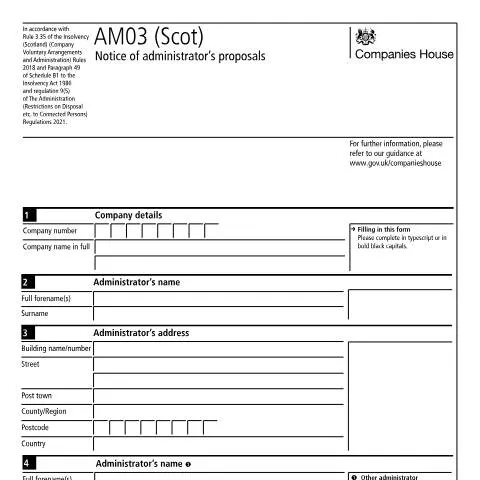
The AM03 (Scot) notice is an essential document used by administrators of Scottish companies undergoing insolvency procedures. This document serves as a formal notification of the administrator's proposals, providing crucial information for interested parties such as creditors, shareholders, and certain stakeholders involved in the company's administration process. Understanding this notice is not just about compliance; it’s about navigating the often complex landscape of corporate insolvency effectively.

The Importance of the AM03 Notice in Corporate Insolvency

When a Scottish company is placed into administration, one of the first actions taken by the appointed administrator is to prepare the AM03 notice. This document outlines the administrator's proposals for the company's future and is governed by specific legal frameworks, notably the Insolvency (Scotland) (Company Voluntary Arrangements and Administration) Rules 2018 and the Insolvency Act 1986. The proposals can significantly influence how the administration process unfolds, as they detail the administrator's intended course of action, which could include restructuring, liquidation, or any other viable solution.

Key Elements of the AM03 Notice

The AM03 notice includes several critical components:

  • Company Details: Essential information about the company, including its full name and registration number.
  • Administrator's Information: Names and addresses of the appointed administrators responsible for managing the company's affairs during the insolvency process.
  • Statement of Proposals: A detailed outline of what the administrators propose to do with the company, including restructuring plans or asset disposals.
  • Qualifying Report: A report that provides further insights into the financial status of the company and the rationale behind the proposals.

Who Should Pay Attention to the AM03 Notice?

The AM03 notice is not an isolated document; it has implications for various stakeholders involved in or affected by the company's insolvency:

  • Creditors: They must review the proposals carefully as they outline how their debts may be dealt with.
  • Shareholders: Understanding the proposals is crucial, as it can affect their ownership and potential return on investment.
  • Employees: Staff may also be impacted by changes in the company’s operations or structure as proposed in the AM03 notice.

Utilizing the AM03 Notice Effectively

Engaging with the AM03 notice is more than just a formality. It involves a systematic approach to ensure all information is accurate and relevant. Here’s a step-by-step guide on how to leverage this document:

  1. Review the Proposals: Examine the details presented in the statement of proposals. Pay special attention to the administrator's rationale for their suggested actions.
  2. Assess the Impact: Consider how the proposals could affect your interests as a creditor, shareholder, or employee.
  3. Engage with the Administrator: If any part of the proposal is unclear, reach out to the administrator for clarification or further discussion.
  4. Prepare for Meetings: Often, meetings are held to discuss the proposals in detail. Preparing questions or points of concern can be beneficial.
  5. Document Your Stance: If you are a creditor, it's wise to document your concerns or positions regarding the proposals for future reference.

Common Misinterpretations Surrounding the AM03 Notice

Due to the complex nature of insolvency, several misconceptions may arise regarding the AM03 notice:

  • Misunderstanding of "Proposals": Some stakeholders may confuse the proposals with guaranteed outcomes. The AM03 serves as a suggestion, and the final decision rests with the creditors during meetings.
  • Assumption of Automatic Acceptance: Just because a proposal is made does not mean it will be accepted. Stakeholders have the right to challenge or reject proposals if they find them unsatisfactory.
  • Overlooking the Importance of Deadlines: The AM03 notice must be filed within specific timeframes. Missing these deadlines can complicate the administration process significantly.

The AM03 notice is rooted in a robust legal framework that governs company insolvency in Scotland. Understanding this framework is vital for grasping the implications of the notice:

Legal Reference Description
Insolvency Act 1986 This act provides the overarching legal basis for insolvency procedures, including administration and voluntary arrangements.
Insolvency (Scotland) (Company Voluntary Arrangements and Administration) Rules 2018 These rules outline the procedural requirements for handling insolvency cases in Scotland, including the preparation and submission of the AM03 notice.
The Administration (Restrictions on Disposal etc. to Connected Persons) Regulations 2021 This regulation restricts certain transactions to protect the interests of creditors during the administration process.

Best Practices When Dealing with the AM03 Notice

To optimize the outcomes during the administration process, stakeholders should consider adopting these best practices:

  • Stay Informed: Regularly check announcements from Companies House and the administrator for any updates or changes regarding the AM03 notice.
  • Engage with Legal Counsel: If you have significant stakes involved, consulting with a legal professional specializing in insolvency can provide tailored advice and strategies.
  • Participate Actively: During creditor meetings, ensure to voice your opinions and concerns. Active participation can influence the final outcome of the proposals.
  • Document Everything: Keep records of communications and decisions related to the AM03 notice and administration process for future reference and accountability.

Final Considerations and Moving Forward

The AM03 (Scot) notice is a cornerstone document in the administration of a Scottish company, and its implications stretch beyond mere compliance. For stakeholders, understanding and engaging with this notice can significantly impact their interests and outcomes during the insolvency process. While complexities abound, staying informed, participating actively, and seeking professional advice when necessary can navigate these turbulent waters more effectively.

Understanding the Role of an Administrator in Scottish Companies

In the context of Scottish companies, the role of an administrator is pivotal in managing the affairs of a company facing financial difficulties. An administrator is appointed to take control of the company's assets and to formulate a plan for its future. This role is governed by the Insolvency Act 1986, which outlines the duties and powers of an administrator. Administrators are typically appointed when a company is in financial distress, and their primary objective is to rescue the company as a going concern whenever possible. They have the authority to make decisions regarding the day-to-day operations of the company, including the power to sell assets, enter into contracts, and make redundancies. When the administrator proposes a plan for the company, it is essential to notify all relevant parties, including creditors, members of the company, and other stakeholders. This is where the AM03 (Scot) form comes into play. It ensures that stakeholders are informed about the proposed actions and have the opportunity to respond or raise any concerns. The importance of transparency during the administration process cannot be overstated. The administrator must provide a comprehensive overview of the company’s financial position and the reasons for the proposed course of action. This transparency helps to build trust among stakeholders and supports a smoother administrative process.

Filling Out the AM03 (Scot) Form: Key Considerations

Completing the AM03 (Scot) form is a critical step in the process of giving notice of the administrator’s proposals. While the form is designed to be straightforward, there are several key considerations to keep in mind to ensure compliance and accuracy. First and foremost, it is essential to include the correct details of the company, including the registered name and company number. This information must match what is recorded at Companies House to prevent any delays or issues in processing. Next, the administrator must clearly outline the proposals being put forward. This section should detail the rationale behind the proposals, including the financial analysis that led to these recommendations. It's important to articulate how these proposals aim to benefit creditors and other stakeholders, as this will be scrutinised during consultations. Additionally, the administrator should provide a timeline for the implementation of the proposals. Stakeholders need to understand the expected timeline for the administration process, including key milestones and deadlines. This not only improves communication but also sets realistic expectations for those affected by the administration. Furthermore, it is crucial to ensure that the AM03 (Scot) form aligns with the requirements set out by the Insolvency Service. This includes any specific instructions regarding the submission of the form, as well as any accompanying documents that may be necessary to support the proposals. Lastly, prior to submission, reviewing the completed form for accuracy and completeness is vital. This includes checking for any calculations, ensuring that all necessary signatures are included, and verifying that all required documentation is attached. Errors or omissions can result in significant delays in the administration process, which can be detrimental to all parties involved.

Stakeholder Engagement: Communicating Proposals Effectively

Effective communication with stakeholders is a cornerstone of the administration process, especially when notifying them of the administrator's proposals via the AM03 (Scot) form. Stakeholders often include creditors, employees, shareholders, and regulatory bodies, each with their own interests and concerns regarding the company's future. Once the AM03 (Scot) form is completed, the administrator should organize a meeting to present the proposals. This meeting serves as an opportunity to explain the rationale behind the proposals in detail, address any questions or concerns, and foster a sense of collaboration among stakeholders. It is advisable to prepare presentation materials that succinctly summarize the key points of the proposals, including the expected outcomes and benefits. Providing stakeholders with a clear and comprehensive overview will aid in their understanding and encourage constructive dialogue. Additionally, written communication should accompany the proposals, outlining the process for providing feedback or raising objections. This information may include details on how stakeholders can submit their views and the timeline for doing so. Engaging stakeholders through clear communication channels not only demonstrates transparency but also fosters trust and cooperation. Moreover, it is essential to consider the diverse needs of stakeholders when communicating proposals. For instance, creditors may be more focused on financial implications, while employees may be concerned about job security. Tailoring the communication to address the specific interests and concerns of each group will enhance engagement and minimize resistance to the proposals. Finally, after the deadline for feedback has passed, the administrator should summarise the responses from stakeholders and consider any necessary adjustments to the proposals. This iterative approach demonstrates responsiveness and commitment to finding the best solution for the company’s future, ultimately contributing to a successful administration process.

Frequently asked questions

What is the AM03 (Scot) notice?

The AM03 (Scot) notice is a formal document used by administrators to present their proposals during a company's insolvency.

Who needs to be informed about the AM03 (Scot) notice?

Creditors, shareholders, and stakeholders involved in the company's administration must be informed.

Why is the AM03 (Scot) notice important?

It ensures compliance and provides essential information for navigating corporate insolvency.

What does the AM03 (Scot) notice include?

It includes the administrator's proposals and relevant details about the insolvency process.

Similar documents