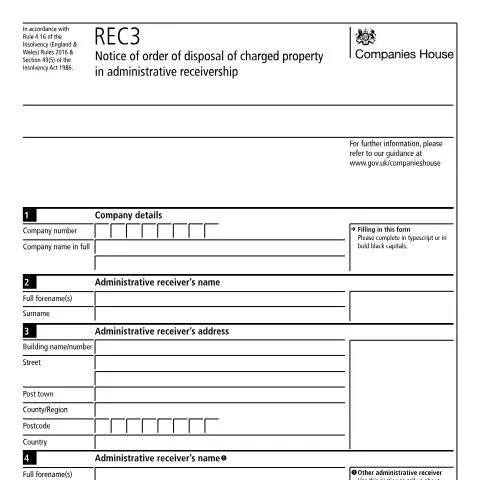
Understanding the REC3: A Critical Document in Administrative Receivership
In the complex landscape of corporate insolvency, the Notice of Order of Disposal of Charged Property (REC3) plays a pivotal role. When a company enters administrative receivership, this document signals a significant turning point, providing essential information regarding the disposal of assets that are subject to charge. Understanding its purpose, implications, and proper handling is crucial for all stakeholders involved.
Defining the Scope of the REC3
The REC3 serves as an official notification to Companies House regarding the disposal of charged property by an administrative receiver. It is governed by the Insolvency (England & Wales) Rules 2016 and is in line with Section 43(5) of the Insolvency Act 1986. This document is not merely a formality; it carries legal weight and affects various parties, including the creditors and the company undergoing receivership.
- Charged Property: Refers to assets that have been pledged as security for a loan. The REC3 details how these assets will be disposed of in accordance with court orders.
- Administrative Receiver: An individual or entity appointed to manage the affairs of the company, typically tasked with recovering debts owed to creditors.
Who Needs the REC3?
This document is essential for various stakeholders, including:
- Administrative Receivers: They must file the REC3 after obtaining a court order to dispose of charged property, ensuring compliance with legal requirements.
- Creditors: Creditors need to be aware of the disposal of charged assets as it directly impacts their recovery positions.
- Company Directors: Understanding the implications of asset disposal is vital for directors, especially regarding their duties and potential liabilities.
Interrelated Documentation: A Holistic Approach
The REC3 does not exist in a vacuum; it is part of a broader administrative process involving various documents. Key related documents include:
- Notice of Appointment of Administrative Receiver (REC1): This initial notice informs Companies House of the receiver's appointment.
- Notice of Intention to Appoint Administrators (Form 2B): This form is relevant when the company is transitioning towards administration.
- Statements of Affairs: Required for providing an overview of the company’s financial position; this document can influence decisions regarding asset disposals.
Key Concepts to Grasp for Effective Use
When dealing with the REC3, certain concepts are indispensable for proper navigation:
- Charged Property: Understand what constitutes charged property, as this will dictate which assets the REC3 pertains to.
- Court Orders: The disposal must align with the court order; thus, familiarity with the specifics of the court’s directive is critical.
- Public Record Implications: All submitted information is made public, affecting reputations and future dealings.
Navigating the Process: A Step-by-Step Guide
Using the REC3 effectively involves a structured approach:
- Gather Necessary Information: Collect details regarding the company, the administrative receiver, and the specific court order.
- Complete the Document: Ensure all fields are filled accurately and in bold black capitals, as prescribed.
- Attach Required Documentation: Include a copy of the court order with the submission.
- Submit to Companies House: While you can send the REC3 to any Companies House address, it's advisable to use their Cardiff office for expedited processing.
Common Misinterpretations and Pitfalls
Misunderstandings related to the REC3 can lead to complications. Here are common errors to avoid:
- Incomplete Information: Ensure that all information corresponds with the details held in the public register.
- Failing to Attach Court Orders: Not providing the necessary court order can result in rejection of the submission.
- Neglecting to Sign: The administrative receiver must sign the document to validate it.
Frequently Encountered Procedural Questions
During the handling of the REC3, several questions often arise:
- What if the court order specifies multiple disposals? Each disposal must be notified via a separate REC3, detailing the specific items being disposed of.
- How is the information accessed by the public? All information filed with Companies House, including the REC3, becomes publicly accessible, which is vital for transparency.
- What happens if errors are identified after submission? If discrepancies are found post-submission, it may be necessary to file a correction notice or contact Companies House directly for guidance.
Conclusion: The Role of the REC3 in Responsible Insolvency Management
The REC3 is not merely a bureaucratic hurdle but a cornerstone in the process of managing insolvency and ensuring fairness among creditors. By understanding its purpose, the related documentation, and the implications of its submission, stakeholders can navigate the complexities of administrative receivership with confidence, ultimately upholding their responsibilities under UK law.
Understanding the Order of Disposal of Charged Property (REC3)
The REC3 form, commonly associated with the notice of order of disposal of charged property, is a crucial document in the realm of property law in the United Kingdom. It serves a specific purpose when dealing with properties that are subject to a charge, typically due to mortgages or other financial obligations. Understanding the implications of the REC3 process is essential for both lenders and borrowers, as it ensures that all parties are aware of the steps being undertaken concerning the charged property.
The REC3 process begins when a creditor intends to dispose of property that is secured against a debt. This could occur when a borrower defaults on their loan agreement, prompting the creditor to take action to recover their investment. It is essential to recognise that the REC3 serves as a notification mechanism, informing both the debtor and any interested third parties about the creditor’s intentions regarding the property in question.
To initiate this process, the creditor must complete the REC3 form accurately. It is imperative to include detailed information, such as the address of the property, the nature of the charge, and the identity of the creditor. Inaccuracies or omissions can lead to significant delays or complications in the disposal process. Once the form is completed, it must be served to the relevant parties in accordance with the legal requirements outlined in the relevant legislation.
In most cases, the REC3 must be filed with the Land Registry to ensure that the notice is officially recorded. This recording is crucial as it protects the rights of the creditor and provides transparency in the disposal process. It is also advisable for creditors to seek legal advice to ensure compliance with any specific legal requirements that may apply, as these can vary based on the nature of the charge and the property involved.
Legal Rights and Protections Involved in the REC3 Process
The REC3 process is not just a simple notification; it is deeply embedded within a framework of legal rights and protections. Both creditors and debtors must understand their rights under this procedure to navigate the complexities that can arise. For creditors, initiating a REC3 is a step towards securing their investment, but it is essential to respect the legal rights of the borrower, particularly those outlined in the Consumer Credit Act 1974 and other relevant legislation.
Borrowers, on the other hand, have the right to receive clear and timely information concerning any action taken against their property. They should be aware that upon receiving a REC3 notice, they have a specific timeframe within which to respond. This response may involve negotiating terms with the creditor, addressing any default, or seeking legal counsel to explore options for contesting the disposal if applicable.
Furthermore, it is crucial to understand the potential ramifications of receiving a REC3 notice. If the property is sold without addressing the underlying issues, the debtor may face significant financial repercussions, including the possibility of losing their home. Therefore, proactive engagement with the creditor and seeking to negotiate a resolution can be beneficial in mitigating these risks.
It is also worth noting that within this framework, the Data Protection Act 2018 and UK GDPR provide protections concerning the processing of personal data associated with the REC3 process. Creditors must ensure that any personal information shared during this process is handled in compliance with these regulations. This includes obtaining the necessary consent when required and ensuring secure handling of sensitive data.
Challenges and Considerations When Filing a REC3
Filing a REC3 can present various challenges, particularly for those unfamiliar with the legal landscape surrounding property disposals. One of the primary challenges is ensuring compliance with the procedural requirements set forth by the Land Registry and the relevant legislation. Any misstep in the filing process can lead to delays or even the rejection of the filing, which could hinder the creditor’s ability to proceed with the disposal.
The complexity increases when multiple parties are involved. For instance, if a property is co-owned or if there are multiple charges against it, coordinating communication and notifications can become cumbersome. It is essential to maintain clear records of all communications and comply with any additional notification requirements that may apply to these cases.
Moreover, creditors should be prepared for the possibility of disputes arising from the REC3 notification. Debtors may contest the validity of the charges, argue that they were not properly notified, or raise issues regarding the terms of the credit agreement. In such cases, having thorough documentation and legal support becomes vital to navigate the dispute effectively.
It can also be beneficial to consider alternative options to disposal, such as restructuring the debt or entering into a repayment plan. These alternatives can help avoid the need for disposal altogether and may result in more favourable outcomes for both parties. Exploring these avenues early in the process can save time, resources, and emotional stress.