Understanding the IE01(Scot) Document: A Crucial Step in Asset Management
Navigating the complexities of asset management, particularly when it comes to dealings across borders, is no small feat for any company. The Notice of Approval of an Undertaking for Assets in Another Member State (IE01(Scot)) serves as a pivotal element in this process, especially for Scottish companies engaged in cross-border insolvency matters. This document is not merely a form to fill but a detailed guide to ensure that undertakings are adequately approved and recognized across EU member states.
Key Features of the IE01(Scot) Document
The IE01(Scot) document encapsulates several essential components that facilitate the approval of an undertaking by an office holder. Here’s a closer look at its primary features:
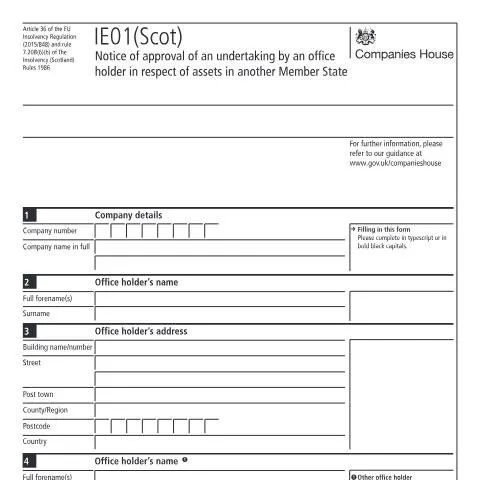
- Identification of the Company: The company’s full name and company number are crucial for uniquely identifying the entity involved in the undertaking.
- Office Holder Information: The document requires detailed information about the office holder(s), including their names and addresses. This identifies who is responsible for the undertaking.
- Date of Approval: Recording the date of approval is vital for tracking the timeline of the undertaking’s validity.
- Attach Relevant Documents: The requirement to attach copies of the undertaking ensures that appropriate documentation accompanies the notice.
The Context of the IE01(Scot) Document
Understanding the legal framework surrounding the IE01(Scot) is critical. This document derives its authority from Article 36 of the EU Insolvency Regulation (2015/848) and Rule 7.20B(6)(b) of The Insolvency (Scotland) Rules 1986. These regulations aim to streamline processes in insolvency cases that span multiple jurisdictions within the EU, thus ensuring that the interests of creditors and debtors are adequately protected.
What the IE01(Scot) Covers
The IE01(Scot) explicitly covers the approval process for an undertaking related to assets located in another member state. It is important to note that the scope of this document is specifically aimed at situations where the assets in question are situated outside Scotland, thus necessitating adherence to both Scottish and EU insolvency laws.
Boundaries and Limitations
While the IE01(Scot) document plays a significant role in the insolvency process, it is essential to recognize its limitations:
- The document does not facilitate the outright transfer of assets but rather approves the undertaking concerning those assets.
- It is not applicable for assets located within Scotland, where separate provisions would apply.
- The document must be meticulously completed and submitted to avoid delays and potential legal challenges.
Practical Steps for Utilizing the IE01(Scot)
For companies that need to submit the IE01(Scot), understanding the correct procedure is vital. Below are the steps to effectively utilize this document:
- Gather Necessary Information: Ensure you have all required details about your company and the office holder, including company name, number, and addresses.
- Complete the Document: Fill in the IE01(Scot) document with accurate information. It is advisable to use typescript or bold black capitals for clarity.
- Attach Supporting Documents: Include a copy of the undertaking related to the assets in question, as this substantiates the approval request.
- Sign and Date the Document: Ensure the office holder signs and dates the form, which is a critical step in validating the notice.
- Submit to Companies House: Return the completed document to Companies House, ideally to the provided address for expediency.
Critical Concepts for Effective Usage
To effectively navigate the IE01(Scot) process, certain key concepts should be understood:
- Public Record: All information submitted via the IE01(Scot) will be published on the public register, making it accessible to creditors and other stakeholders.
- Office Holder’s Role: The office holder is a key player in this process, acting on behalf of the company in insolvency matters and ensuring compliance with legal requirements.
- Insolvency Regulation: Familiarity with the EU Insolvency Regulation is crucial, as it governs how cross-border insolvency cases should be handled.
Common Procedural Questions Regarding the IE01(Scot)
Despite the comprehensive nature of the IE01(Scot), companies often have procedural queries. Here are some common concerns:
1. What should be done if the form is filled out incorrectly?
If you notice any errors after submission, it is advisable to contact Companies House directly. They may return the document for correction or provide guidance on how to rectify the issue.
2. Can multiple office holders be included?
Yes, if there are multiple office holders, the IE01(Scot) provides sections to include their details. This transparency can aid in the overall management of the undertaking.
3. What happens if the undertaking is declined?
In the event that the undertaking is not approved, the office holder should assess the reasons for rejection and determine the necessary steps to address any issues highlighted by Companies House.
Situations That Necessitate the IE01(Scot)
The IE01(Scot) is indispensable in various circumstances, including:
- When a Scottish company with assets in another EU member state seeks to formalize its insolvency processes.
- In cases where there are potential conflicts of interest arising from cross-border asset management.
- For ensuring compliance with EU regulations when dealing with creditors in other member states.
Conclusion: The Importance of Properly Filing the IE01(Scot)
Filing the IE01(Scot) is a cornerstone for any Scottish company dealing with assets across EU borders. Understanding its contents, correctly utilizing it, and being aware of its limitations will enhance the efficacy of your asset management strategies. Remember that transparency and compliance with legal obligations are paramount in the realm of insolvency. By approaching the process seriously and with due diligence, companies can navigate the complexities of cross-border insolvency with confidence.
Understanding the IE01(Scot) Form and Its Application
The IE01(Scot) form is a critical document for businesses and individuals in Scotland who wish to notify HMRC of an undertaking for assets located in another member state. This form is primarily applicable to those who are either registered for VAT or are involved in cross-border trade within the EU. The primary purpose of this document is to streamline the reporting process for assets held outside of the UK, ensuring compliance with tax regulations while providing a clear framework for asset management.
Firstly, it is essential to understand what constitutes an "undertaking." In this context, an undertaking refers to any legal obligation or commitment towards a specific course of action involving assets. For instance, this could include agreements regarding property, equipment, or financial instruments situated in another EU member state. To effectively fill out the IE01(Scot) form, you need to gather comprehensive details regarding the assets in question, including their nature, value, and the specific jurisdiction where they are located.
The form requires individuals or businesses to submit information regarding their current status, any previous notifications sent to HMRC, and the rationale behind the undertaking. A prevalent error made by applicants is the omission of crucial details, which can lead to delays or complications in the approval process. Therefore, it's advisable to review the guidance notes provided by HMRC thoroughly and, if necessary, consult with a tax adviser who specializes in international asset management.
Moreover, in accordance with the Data Protection Act 2018 and UK GDPR, businesses must ensure that any personal data included in the IE01(Scot) submission is handled appropriately. This includes safeguarding individuals' information and only disclosing data that is necessary for the application process. Failure to comply with these regulations could result in legal repercussions, further complicating the asset undertaking process.
Overall, filing the IE01(Scot) form is not merely a bureaucratic necessity but a vital step in ensuring that your asset management aligns with both UK tax laws and international obligations. It is crucial to approach this undertaking with meticulous attention to detail and an understanding of the broader implications of cross-border asset management.
The Implications of Non-Compliance with the IE01(Scot) Process
Non-compliance with the IE01(Scot) process can expose individuals and businesses to a range of financial and legal repercussions. Understanding the consequences of failing to notify HMRC about assets held in another member state is essential for anyone engaging in international trade or asset management.
One of the most immediate implications is the potential for hefty fines. HMRC has strict guidelines regarding asset reporting, and failure to comply can result in penalties that vary based on the severity of the oversight. For instance, if you neglect to submit the IE01(Scot) form or provide inaccurate information, you may face fines that could significantly impact your financial standing. These penalties can accumulate over time, especially if the oversight is deemed intentional or egregious.
Additionally, non-compliance may lead to increased scrutiny from HMRC. When assets are not reported appropriately, it raises red flags within the tax authority, prompting them to audit the individual or business involved. Audits can be time-consuming and costly, requiring considerable resources to assemble documentation and defend against any claims of wrongdoing. During an audit, HMRC can also review other tax-related matters, potentially unearthing further compliance issues that could lead to additional penalties or back taxes owed.
Furthermore, not adhering to the IE01(Scot) process can impact your ability to engage in future transactions involving cross-border assets. Financial institutions and business partners often perform due diligence checks to assess the compliance record of potential associates. A history of non-compliance could deter other parties from entering into agreements or partnerships, as they may perceive you as a high-risk entity. This could hinder opportunities for growth, investment, or expansion in foreign markets.
Lastly, non-compliance can also damage your reputation both in the industry and within your community. Businesses thrive on trust, and demonstrating a disregard for regulatory obligations can lead to a loss of credibility. Once lost, reputational damage can be challenging to repair, often requiring significant efforts to rebuild relationships and regain the trust of stakeholders.
In conclusion, compliance with the IE01(Scot) process is not just a regulatory requirement; it is crucial for safeguarding your financial health, business reputation, and operational integrity in an increasingly interconnected marketplace.
Best Practices for Filling Out the IE01(Scot) Form
Filling out the IE01(Scot) form can seem daunting, particularly given the complexities involved in asset management across borders. However, adhering to best practices can streamline the process and enhance the likelihood of a successful submission. Here are some key recommendations:
Preparation and Documentation: Begin by assembling all necessary documentation related to the assets you are reporting. This includes purchase agreements, valuations, and any relevant contracts. Having this information readily available will facilitate a smoother filling process and help ensure that no critical details are overlooked.
Follow the Guidance Notes: HMRC provides comprehensive guidance notes tailored to the IE01(Scot) form. These notes outline specific requirements, common pitfalls, and examples of completed forms. Take the time to review these resources thoroughly, as they can provide clarity on complex sections of the form and help you understand what HMRC expects.
Consult with Tax Professionals: If you are uncertain about any aspect of the IE01(Scot) form, seeking advice from a tax professional is prudent. Specialists in international taxation and asset management can offer tailored guidance based on your unique circumstances and help you navigate any complexities. Their expertise can mitigate risks associated with errors or omissions.
Double-Check for Accuracy: Before submitting your completed form, conduct a thorough review to check for accuracy. Ensure that all figures are correct and that the information provided aligns with your supporting documentation. Any discrepancies could lead to delays or complications with your submission.
Use Clear Language: When filling out the form, use clear and concise language. Avoid jargon or overly technical terms that may confuse the reader. HMRC values straightforward communication, so being direct and transparent in your answers will make it easier for them to process your application.
Timely Submission: Ensure that you submit the IE01(Scot) form within the designated timeframe. Late submissions can attract penalties and may trigger further scrutiny from HMRC. Mark deadlines on your calendar to prevent any inadvertent oversights.
Retain Copies: After submitting your IE01(Scot) form, retain copies for your records. This will help you keep track of your submissions and provide a reference in case HMRC has questions or requires clarification later on.
By adhering to these best practices, you can enhance the quality of your submission and position yourself for a successful outcome. Taking the process seriously and preparing adequately will not only facilitate compliance but also reinforce your commitment to responsible asset management in an increasingly globalized economy.