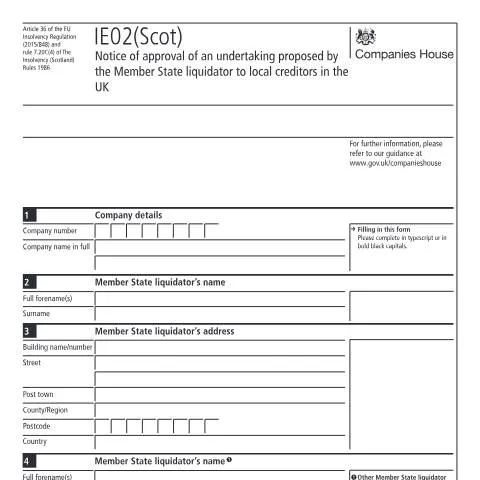
Understanding the IE02(Scot) Document: A Vital Resource for Liquidators in the UK
In the intricate landscape of corporate insolvency, the IE02(Scot) serves as an essential notification mechanism through which local creditors in the UK are informed of an undertaking approved by a Member State liquidator. This document is significant not only for its procedural importance but also for its implications on stakeholder relations during insolvency proceedings. By comprehending its nuances, liquidators and creditors can navigate the complexities of insolvency with greater assurance.
Contextual Background: The Role of the Member State Liquidator
The Member State liquidator is a pivotal figure in cross-border insolvency matters, particularly under the EU Insolvency Regulation (2015/848). This regulation establishes a framework for managing insolvency cases that span multiple jurisdictions. The liquidator’s responsibilities include the management of the insolvent company’s assets and the communication with creditors.
What is an Undertaking?
- An undertaking, in this context, refers to a formal commitment made by the liquidator to local creditors, outlining the plan for settling debts or managing the company’s affairs post-insolvency. This is crucial for maintaining transparency and fostering trust among creditors.
When is the IE02(Scot) Used?
- This notification is particularly relevant when a Member State liquidator proposes a plan that directly affects local creditors in the UK. Thus, understanding when to use the IE02(Scot) is key for compliance and effective communication.
Key Components of the IE02(Scot): Breaking Down the Document
The IE02(Scot) document encompasses several critical elements that contribute to its function as an official record of approved undertakings. Familiarity with these components will enhance the liquidator's ability to effectively use this document.
Company Information
- Full Company Name and Number: Accurate company details are imperative. The company’s name must match the official records held by Companies House to avoid any discrepancies.
Member State Liquidator Details
- Names and Addresses: Detailed information about the Member State liquidator is required, including full names and addresses. This ensures that creditors know who is responsible for managing the insolvency process.
Details of the Undertaking
- Approval Dates: The document must clearly state the date on which the undertaking was approved. This timestamp is crucial for establishing a timeline for the approval of the insolvency plan.
Signature Requirements
- Liquidator's Signature: A valid signature from the Member State liquidator confirms the authenticity of the undertaking, ensuring that creditors can trust the document’s legitimacy.
Submission Process: Where and How to File
- Filing Locations: While the document can be sent to any Companies House address, there is a recommended address for expedited processing. Understanding filing protocols can save time and reduce administrative hurdles.
Practical Steps for Liquidators: Navigating the IE02(Scot)
For liquidators, the successful submission of the IE02(Scot) involves several methodical steps. Each step plays a vital role in ensuring that the notification is compliant with legal requirements and serves its intended purpose of informing local creditors.
Prepare Accurate Documentation:
- Ensure that the company name and number align with the public register.
- Assemble all necessary documents that accompany the undertaking.
Completing the IE02(Scot):
- Fill in the required sections using typescript or bold black capitals. This not only enhances legibility but complies with submission standards.
Review and Sign:
- Double-check all entries for accuracy. Inaccuracies can lead to delays or rejections. The Member State liquidator must then sign and date the document.
Submitting the Document:
- Choose whether to send the form to the recommended address or another Companies House address. Consider using recorded delivery for important documents.
Decoding Terminology: Essential Terms Relating to the IE02(Scot)
To effectively navigate the procedural landscape surrounding the IE02(Scot), it is essential to grasp the key terminologies associated with this document. Misunderstanding these terms can lead to serious missteps.
| Term | Definition |
|---|---|
| Liquidator | An individual or entity appointed to wind up the affairs of a company and distribute its assets to creditors. |
| Undertaking | A formal commitment made by the liquidator to carry out specific actions regarding asset management and repayment to creditors. |
| Insolvency | A financial state where an individual or company cannot meet its debts as they fall due. |
| Member State | A country that is part of the European Union and participates in the cross-border insolvency regulations. |
| Public Record | The official register maintained by Companies House that contains details of companies, including their directors and financial information. |
Understanding these terms is crucial for liquidators and creditors alike, ensuring clear communication and a shared understanding of the insolvency process.
Common Misinterpretations: Clarifying the Use of the IE02(Scot)
Misinterpretation of the IE02(Scot) can lead to unnecessary complications during the insolvency process. Here are some common pitfalls:
Assuming Blanket Approval:
- It is important to note that the approval of an undertaking does not automatically imply that all creditors will be satisfied with the terms. Creditors may have legitimate concerns or objections that need to be addressed.
Neglecting Local Regulations:
- While the IE02(Scot) adheres to EU regulations, local laws may impose additional requirements or stipulations. Liquidators must be aware of these nuances to avoid violations.
Overlooking Communication:
- The document serves as a formal notification, but effective communication with creditors is equally vital. Liquidators should be proactive in reaching out to creditors to discuss the undertaking and address any queries.
Filing Errors:
- Failure to ensure that all information is complete and accurate can result in the document being returned by Companies House. It is essential to double-check details to prevent administrative setbacks.
Interconnections with Other Documents in the Insolvency Process
The IE02(Scot) does not exist in isolation; rather, it is part of a greater suite of documentation required during insolvency proceedings. Understanding how it relates to other documents can streamline the process for liquidators.
Insolvency Petition: This document initiates the insolvency process and sets the stage for the liquidator’s involvement.
Liquidation Report: Following the approval of the undertaking, the liquidator must prepare a report detailing the progress made in liquidating the company's assets and addressing creditor claims.
Creditor Meetings: These meetings are essential for discussing the undertaking with creditors. The IE02(Scot) can serve as a reference point during these discussions.
Each of these documents interacts with the IE02(Scot), creating a cohesive framework for managing insolvency matters effectively. Liquidators must ensure that all documentation is synchronized to avoid confusion and maintain clarity throughout the process.
The Importance of Timeliness in Submitting the IE02(Scot)
Timeliness is a critical factor in the insolvency process. The IE02(Scot) must be submitted promptly to ensure that creditors are informed and that the liquidator can proceed with the plan as approved.
Legal Implications of Delays: Delays in filing can lead to complications, such as challenges from creditors or scrutiny from regulatory bodies. Liquidators must adhere to strict timelines to protect their position and the interests of creditors.
Impact on Creditor Relations: Proactive communication through timely submissions fosters goodwill among creditors and enhances trust in the liquidator's management of the insolvency process.
Navigating Time Constraints: The liquidator should develop a timeline that incorporates all steps from preparing the IE02(Scot) to submitting it. This preemptive approach can mitigate risks associated with procrastination.
Final Thoughts: Leveraging the IE02(Scot) for Effective Creditor Communication
The IE02(Scot) serves as more than just a document; it is a vital tool for communication between the Member State liquidator and local creditors in the UK. By understanding its components, ensuring compliance with legal standards, and engaging with stakeholders proactively, liquidators can successfully navigate the complexities of insolvency proceedings.
As the regulatory framework around insolvency continues to evolve, staying informed about the nuances of the IE02(Scot) and its applications will enable liquidators to fulfil their roles effectively while safeguarding the interests of creditors.
Understanding the Roles of Creditors in the Approval Process
When you give notice of approval of a proposed undertaking to local creditors, it’s crucial to understand the diverse roles that creditors play in this process. Creditors are not just passive recipients of information; they actively influence the direction of the proposed undertaking. Their responses can shape how the proposed undertaking is implemented or even if it progresses at all.
In the context of the UK, creditors typically fall into several categories, including secured creditors, unsecured creditors, and preferential creditors. Secured creditors hold specific rights over assets due to their secured loans, which means they must be considered first in any proposed undertaking. This priority affects how the proposed undertaking is structured, as it seeks to address their claims to avoid potential enforcement actions.
Unsecured creditors, on the other hand, do not have specific rights over assets. Their claims are generally considered after those of secured creditors. In a proposed undertaking, showing how you intend to address these creditor claims can foster goodwill and promote a collaborative environment for the project. Additionally, preferential creditors, such as employees owed wages, must be treated with particular care, especially under the Employment Rights Act 1996.
Each creditor's feedback plays a significant role in determining the feasibility of the undertaking. They may ask for modifications or additional guarantees before approving the proposal, and their influence can be vital in securing the necessary consensus to move forward. Therefore, understanding each creditor's position and responding appropriately during the notice period can help align interests and build stronger support for the proposed undertaking.
Key Considerations in Preparing Your Notice of Approval
Preparing a notice of approval of a proposed undertaking requires careful consideration of multiple factors to ensure compliance with legal and procedural requirements. The notice itself must include clear details about the proposed undertaking, including the specific terms, expected outcomes, and how creditors' interests will be safeguarded.
One of the most critical considerations is the timing of the notice. It must be communicated timely to allow creditors sufficient time to review and respond. Under the relevant legislation, you typically have a specific timeframe, so understanding the exact deadlines and planning accordingly is vital. For instance, the notice must be dispatched in line with the stipulated timeframes outlined in the Insolvency Act 1986 and aligned with the local court requirements.
Additionally, clarity in communication cannot be overstated. The notice should not only adhere to formalities but also be understandable. Legal jargon can alienate creditors; hence, utilizing plain English is advisable to ensure all parties comprehend the implications of the proposed undertaking. Including a summary at the beginning can help non-specialists grasp the essence before diving into the complex details.
Lastly, it is prudent to consider the documentation that accompanies the notice. Supplementary materials, such as financial forecasts, asset valuations, and risk assessments, can enhance the proposal's credibility and provide a comprehensive view of the undertaking's viability. These documents can address potential concerns and demonstrate due diligence, which may reassure creditors about the feasibility of the proposed undertaking.
Next Steps After Sending the Notice: Engaging with Local Creditors
Once you have dispatched the notice of approval of a proposed undertaking to local creditors, the next phase involves actively engaging with them to gauge their reactions and address any concerns they may raise. This step is essential, as creditor buy-in is often a prerequisite for successfully moving forward with the undertaking.
Initiate communication by inviting creditors to discuss the proposal in detail. This could take the form of a meeting, either in person or virtually, where you can present the proposed undertaking and respond to questions in real-time. Such interactions not only demonstrate transparency but also signal your willingness to collaborate with creditors. Furthermore, being approachable and open to feedback can build trust and foster positive relationships with your creditors.
Consider creating a feedback mechanism where creditors can submit their views or concerns formally. This could be a simple online form or dedicated email address for responses. Encouraging this engagement can provide valuable insights into how your proposal is perceived, allowing adjustments to be made before seeking formal approvals.
It’s also crucial to document all interactions with creditors. Keeping detailed records of any discussions, agreements, or other communications will serve as evidence of your compliance with legal obligations and may protect your interests in the event of disputes. Moreover, if creditors express dissatisfaction or concerns, addressing them promptly and proactively can mitigate potential conflicts and keep the proposed undertaking on track.