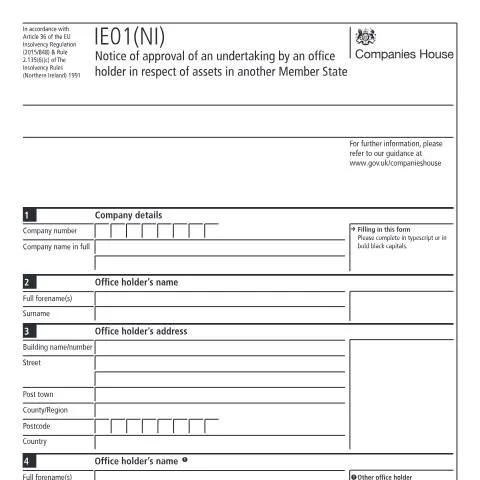
Navigating the IE01(NI) Document: A Critical Tool for Asset Management in Northern Ireland
In the complex world of corporate governance, the Notice of Approval of an Undertaking for Assets in Another Member State (IE01(NI)) serves as a pivotal document for office holders managing assets that cross borders within the European Union. This guide elaborates on the significance of the IE01(NI) form, its practical implications, and the nuances one must consider when utilizing it effectively.
Understanding the Scope and Purpose of IE01(NI)
The IE01(NI) notice is not merely paperwork; it is a critical component of compliance and corporate responsibility when handling assets in another EU member state. This document is anchored in the EU Insolvency Regulation (2015/848) and is governed by Rule 2.135(6)(c) of The Insolvency Rules (Northern Ireland) 1991. Key aspects covered by the IE01(NI) include:
- Approval of Undertakings: The document confirms the approval of an undertaking by an office holder concerning assets located in another EU member state.
- Legal Compliance: It ensures that the office holder is acting within the boundaries of EU and UK law related to insolvency and asset management.
- Public Record: Information provided in the IE01(NI) becomes part of the public record, thereby increasing transparency in corporate dealings.
Despite its importance, it’s crucial to note that the IE01(NI) is specifically designed for undertakings related to assets in EU jurisdictions and does not apply to other international contexts.
When the IE01(NI) Becomes Indispensable
The IE01(NI) form is essential for several stakeholders involved in corporate governance, particularly in situations that require cross-border asset management. Here are some scenarios where the form becomes indispensable:
- Insolvency Procedures: If a company operating in Northern Ireland is involved in insolvency proceedings concerning assets in another EU member state, the IE01(NI) is required to formalize the undertaking.
- Transfer of Assets: When transferring assets between jurisdictions within the EU, the document acts as a record of approval necessary for legal compliance.
- Collaboration with Foreign Administrators: In cases where an office holder needs to coordinate with administrators in other EU countries, the IE01(NI) facilitates this process by outlining approved undertakings.
In these instances, failing to file the IE01(NI) can result in legal challenges, non-compliance with insolvency regulations, and potential financial repercussions for the company involved.
Common Misinterpretations of the IE01(NI)
The intricacies of the IE01(NI) can lead to several misinterpretations that might jeopardize compliance. Understanding these common pitfalls is vital for office holders:
- Assuming Universality: Some may mistakenly believe the IE01(NI) applies to all international assets. In reality, it specifically pertains to assets in the EU.
- Incorrect Details: Failing to ensure that the company name and number match the public register could result in the rejection of the notice.
- Neglecting Attachments: The document must be accompanied by the requisite supporting documentation. Omitting these can lead to unnecessary delays or rejections.
Office holders must review the document carefully to avoid these misinterpretations, ensuring that all information is precise and complete.
Related Documents and Their Interconnections
Understanding how the IE01(NI) interacts with other official documents is crucial for a seamless filing experience. Here’s a brief overview of its interconnections:
| Document Name | Purpose | Relation to IE01(NI) |
|---|---|---|
| SA100 Tax Return | Annual income tax return for self-assessment. | While not directly related, tax liabilities must be resolved before asset management can take place. |
| P60 Certificate | Summarizes total pay and deductions for employees. | Relevant for office holders managing staff during insolvency processes. |
| IE01(NI) | Approval notice for assets in another member state. | This serves as a central document for cross-border asset management. |
This interconnectedness highlights the importance of comprehensive understanding and compliance across various documentation within corporate governance.
Key Procedural Steps in Utilizing the IE01(NI)
For an office holder, navigating the procedural landscape surrounding the IE01(NI) is essential for compliance and operational efficiency. Below are the critical procedural steps to follow:
- Verify Eligibility: Ensure that the undertaking pertains to assets in another EU member state and check that you possess the necessary authority to act on behalf of the company.
- Gather Required Information: Collect the full company name, company number, and details of the office holder(s) involved in the process.
- Complete the IE01(NI): Fill out the document using typescript or bold black capitals, ensuring all fields are accurately completed.
- Attach Supporting Documents: Include any necessary approvals or evidence that validates the undertaking.
- Submit the Document: Return the completed IE01(NI) to the designated Companies House address for proper recording.
By adhering to these steps, office holders can mitigate risks and streamline the process of asset management across jurisdictions.
Practical Tips for Enhanced Filing Efficiency
Efficiency in filing the IE01(NI) can save both time and resources for the company. Here are some practical tips:
- Use Digital Tools: Utilize electronic filing options when available to expedite submission and reduce the chances of errors.
- Double-Check Information: Prior to submission, conduct a thorough review of all the information provided to ensure accuracy.
- Maintain Records: Keep copies of the submitted IE01(NI) and all related documents for future reference and compliance audits.
By implementing these strategies, office holders can enhance their procedural efficiency and ensure a smooth asset management process.
Final Thoughts: The Importance of Clarity and Accuracy in Asset Management
The IE01(NI) notice stands as a vital instrument for office holders navigating the complexities of managing assets across EU member states. By understanding its specific functions, applicability, and procedural requirements, stakeholders can ensure compliance and make informed decisions in corporate governance.
Moreover, as the regulatory landscape continues to evolve following Brexit, remaining informed and adaptable is crucial. Continuous education on documentation and regulatory changes will empower office holders to manage their responsibilities effectively, safeguarding both their interests and those of the entities they represent.
Understanding the IE01(NI) Form: Key Components and Requirements
When it comes to the IE01(NI) form, it's essential to grasp its various components and the specific requirements involved in giving notice of approval for an undertaking for assets located in another member state. The form is crucial for businesses and individuals who are operating or holding assets outside the UK, particularly in light of the implications of Brexit on cross-border engagements.
The IE01(NI) form is generally required when a UK resident intends to take on an undertaking that involves assets situated within another EU member state. As such, it's important to have a thorough understanding of the information needed to effectively complete this form. Typically, you will need to provide:
- Personal Information: Your name, contact details, and National Insurance number.
- Details of the Undertaking: A comprehensive description of the assets involved, including their location, value, and any contractual obligations linked to them.
- Tax Residency Information: Information pertaining to your tax residency status in the UK and the EU member state where the assets are located.
- Financial Statements: Recent financial statements may also be required to demonstrate your ability to manage the assets effectively and responsibly.
Each of these elements plays a critical role in ensuring that HM Revenue and Customs (HMRC) can accurately assess your undertaking and its potential tax implications. Providing incomplete or inaccurate information could result in delays or rejections, so careful attention to detail is paramount.
Common Challenges and Solutions When Submitting IE01(NI)
Completing and submitting the IE01(NI) form can present various challenges, especially for individuals and businesses unfamiliar with the regulatory landscape surrounding cross-border assets. Below are some common challenges you might encounter, along with effective solutions to mitigate these issues.
Lack of Clarity on Requirements: One of the primary challenges faced by applicants is the lack of clarity regarding the specific requirements for the IE01(NI) form. It's crucial to consult the official guidelines published by HMRC and possibly seek assistance from a tax professional who specializes in cross-border transactions.
Documentation Issues: As previously noted, the IE01(NI) requires various documents to substantiate your application. Gathering these documents, especially from foreign entities, can be challenging. Building rapport with counterparties in the other member state and ensuring clear communication can facilitate the process of obtaining necessary documentation.
Timeliness of Submission: With deadlines approaching, timely submission is critical. It’s advisable to start the application process early to avoid last-minute complications. Setting internal deadlines that precede the official submission deadline will provide a buffer to address any unexpected issues that may arise.
In the event of a rejected application, it is essential to address the reasons for rejection meticulously before resubmission. Take note of the feedback provided by HMRC and ensure that all concerns are addressed in the subsequent submission.
Post-Submission Process: What to Expect and Next Steps
Once you've successfully submitted the IE01(NI) form, it’s important to understand what happens next and the subsequent steps you may need to take. Knowing what to expect can help you prepare for any future actions required on your part.
After submitting your form, it will typically go through an initial review process by HMRC. They may take several weeks to assess your application, depending on the complexity of the undertaking and the volume of applications being processed at that time. During this period, it is advisable to stay proactive:
- Monitor Communication: Check your email and post regularly for any communication from HMRC. They may require additional information or clarification that could expedite the approval process.
- Prepare for Potential Follow-Up: Be ready for potential follow-up inquiries from HMRC. If they need further details, providing them promptly will facilitate a smoother resolution.
- Understand Your Obligations: Once approved, you may have ongoing responsibilities regarding reporting and taxation of your assets in the other member state. Familiarise yourself with these obligations to ensure compliance.
Finally, after receiving approval, document all communications and retain copies of your submitted forms and any correspondence. This will serve as a useful reference for future transactions involving cross-border assets.