Navigating the REC3 (Scot): A Practical Overview
Understanding the implications of secured property within the context of receivership can be complex, particularly for companies facing financial difficulties. The Notice of Authorisation to Dispose of Secured Property in Receivership, commonly referred to as the REC3 (Scot), is an essential document that plays a crucial role in this process. This guide will walk you through the intricacies of the REC3, its applications, and important considerations to ensure a smooth navigation through receivership.
What Lies Within the REC3 Document?
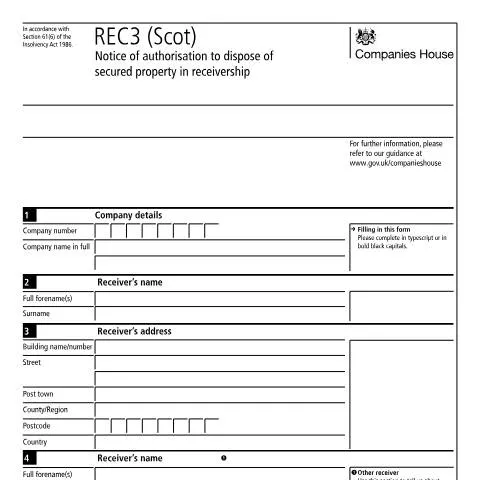
The REC3 (Scot) is a formal notice that facilitates the disposal of secured property by a receiver. Primarily governed by Section 61(6) of the Insolvency Act 1986, this document authorises receivers to manage and sell assets that have been secured against a loan or other financial obligation. Here’s what you need to note:
- Company Information: The document requires detailed company information, including the full company name and registration number. This is pivotal as it ensures that the action taken is legitimate and documented accurately within the public register.
- Receiver’s Details: The REC3 also mandates the disclosure of the receiver’s name and address, emphasising the importance of transparency in the disposal process.
- Court Order Reference: A copy of the relevant court order must accompany the REC3, reinforcing the legal framework that supports the receiver's authority to dispose of the property.
Understanding the Role of Receivers
Receivers are appointed to manage the affairs of a company in financial distress, especially when secured creditors need assurance that their interests are protected. The REC3 (Scot) serves as an official record that the receiver has been granted the necessary authorisation to act on behalf of the company. This section elaborates on various roles a receiver might fulfil:
- Asset Management: Receivers are tasked with managing the assets of the company, ensuring they are preserved and maximised before any sale.
- Disposal of Assets: They have the authority to sell secured assets to satisfy outstanding debts, making the REC3 a critical component in legitimising these actions.
- Reporting: Receivers must keep detailed records and provide reports on the status of the company and the assets under their control, highlighting accountability.
When is the REC3 Necessary?
Understanding when the REC3 (Scot) comes into play is crucial for both companies and their stakeholders. Here are some scenarios where this notice becomes essential:
- Financial Distress: When a company is insolvent or nearing insolvency, receivership may be initiated, necessitating the use of the REC3.
- Secured Creditors' Interests: If secured creditors wish to liquidate assets to recover debts, the REC3 acts as an official notice to proceed with authority.
- Asset Disposal Plans: If a receiver plans to dispose of assets within the frameworks of the Insolvency Act, the document substantiates their power and provides legitimacy.
Exploring Related Documentation
The REC3 (Scot) does not exist in a vacuum and is part of a larger framework of documentation related to insolvency and receivership. Here’s a list of other important documents that may be involved in the process:
| Document | Purpose |
|---|---|
| Insolvency Notices | Alerts stakeholders of the financial status and steps being taken. |
| Receiver's Report | Details the actions taken by the receiver and the financial health of the company. |
| Court Orders | Legal backing for the receiver's actions, including disposals of assets. |
| Company Accounts | Provides a financial overview to assess the company’s position. |
Key Terminology to Grasp
Familiarising oneself with certain legal terminologies associated with the REC3 (Scot) is paramount for a clear understanding of the proceedings. Here are some key terms:
- Receivership: A situation where a receiver is appointed to manage a company's assets due to insolvency.
- Secured Property: Assets that have been pledged as collateral for a loan.
- Insolvency Act 1986: The legislation that governs insolvency proceedings in the UK, including receivership.
- Public Register: The official record maintained by Companies House, listing all relevant information about companies registered in the UK.
Steps to Take Following Issuance of the REC3
Once the REC3 has been authorised, several steps should be followed to ensure compliance and successful asset management:
- Notify Stakeholders: Inform all relevant parties, including creditors and shareholders, about the issuance of the REC3.
- Conduct Asset Valuation: It’s crucial to appraise the value of secured property to facilitate a fair disposal process.
- Begin Disposal Process: The receiver can now initiate the sale or other forms of disposal as per the court order.
- Document Everything: Keep meticulous records of all actions taken, including communications and asset transactions.
- Report Back to the Court: After completing the disposal, the receiver must report back to the court to close the receivership.
Limitations of the REC3 Document
While the REC3 (Scot) provides essential authorisation for disposing of secured property, it’s crucial to recognise its limitations:
- Scope of Authority: The REC3 does not grant unlimited powers to the receiver, and any disposal must comply with the broader legal framework.
- Dependence on Court Orders: The effectiveness of the REC3 is tied to the existence of a court order; without this, the receiver cannot act.
- Public Record Impact: All information provided in the REC3 will be publicly accessible, which may have implications for the company's reputation.
Common Pitfalls to Avoid
When utilising the REC3 (Scot), several common traps can hinder the process. Awareness of these can save significant time and resources:
- Incomplete Information: Ensure that all required fields are correctly filled out; incomplete forms may result in delays or rejection.
- Failure to Attach Documentation: Always attach the necessary court order and any other supporting documents, as omitting these can invalidate the notice.
- Lack of Timeliness: Be mindful of timelines regarding the disposal of assets, as delays can lead to additional complications.
Engaging with Companies House
As the overseeing authority, Companies House plays a pivotal role in the submission and processing of the REC3 (Scot). Understanding how to effectively engage with them can streamline your experience:
- Direct Communication: Always consider reaching out via the official contact avenues for any clarifications.
- Documentation Checks: Regularly verify with Companies House that your documentation is consistent and up-to-date in the public register.
- Utilise Guidance Resources: Companies House offers various resources that can provide additional clarity on the management of receivership and the REC3.
Final Thoughts on Managing Receivership
Effective management of receivership and the associated documentation, such as the REC3 (Scot), is fundamental to ensuring that companies can honour their commitments while navigating financial difficulties. By understanding the document, its uses, limitations, and the overall process, stakeholders can make informed decisions that protect their interests and set the stage for recovery.
Understanding the Legal Framework of Receivership in Scotland
Receivership is a legal process primarily used in Scotland, where a receiver is appointed to manage the assets of a company or individual in financial distress. This process is governed by specific legislation, including the Insolvency Act 1986 and the Companies Act 1985. Understanding the legal framework is crucial for anyone involved in a receivership, as it dictates the rights and responsibilities of all parties involved.
Under Scottish law, receivership can occur when a creditor secures a court order to appoint a receiver. This appointment allows the receiver to take control of the property or assets that are secured under a loan or financial obligation. The receiver’s primary duty is to act in the best interests of the secured creditors, and this often involves selling the secured assets to recover owed amounts.
One important aspect to note is that the appointment of a receiver typically follows a standard procedure. The creditor must file the necessary paperwork with the court and obtain permission to appoint a receiver. Once appointed, the receiver must adhere to the guidelines set forth by the court and the relevant legislation, including the Data Protection Act 2018, ensuring that personal data is handled appropriately throughout the process.
The REC3 (Scot) Form: A Detailed Breakdown
The REC3 (Scot) form is a crucial document in the receivership process in Scotland, specifically relating to the notice of authorisation to dispose of secured property. Completing this form requires careful attention to detail, as it outlines the receiver's authority to sell or manage the secured assets.
When filling out the REC3 (Scot) form, it is essential to include accurate details regarding the secured property, including a clear description of the asset, its estimated value, and any encumbrances that may affect the sale. Additionally, the form must specify the reasons for the sale and demonstrate that the disposal aligns with the best interests of the creditors involved.
The form must be submitted to the relevant authority to formalise the receiver's authority. It is imperative to ensure compliance with any additional local regulations that may impact the sale process. This might include obtaining valuations from independent assessors or notifying affected parties of the intended sale.
Moreover, the completion of the REC3 (Scot) form must adhere to established timelines; any delays in submitting the form may hinder the receiver's ability to act promptly. Furthermore, the form should be kept in the official records of the receivership, as it may be reviewed in any subsequent legal proceedings or audits.
Common Challenges and Considerations in the Receivership Process
While receivership can serve as an effective method for managing financial distress, it also comes with its own set of challenges. One of the most significant challenges involves navigating legal complexities. Receivers must ensure compliance with all applicable laws while attempting to maximise the value of the secured assets. Failure to comply with legal requirements can lead to disputes among creditors and potentially costly litigation.
Another consideration is the management of stakeholder expectations. Creditors may have varying levels of understanding regarding the receivership process and what it entails. Effective communication is vital to ensure that all parties are aware of the proceedings and the potential implications for their claims. This includes keeping creditors informed about the status of asset disposals and ensuring transparency throughout the process.
Additionally, receivers must be prepared for potential objections from third parties, such as tenants occupying secured property or other stakeholders who may have a vested interest in the assets. Engaging with these parties early on can help mitigate disputes and streamline the disposal process.
Lastly, it is essential for receivers to be aware of the financial implications of their decisions. The costs associated with managing a receivership, including legal fees, valuations, and administrative expenses, can quickly accumulate. Receivers must balance the need to act prudently with the urgency of securing the best outcomes for creditors.