Understanding Official Form 206G: Schedule G - Executory Contracts and Unexpired Leases
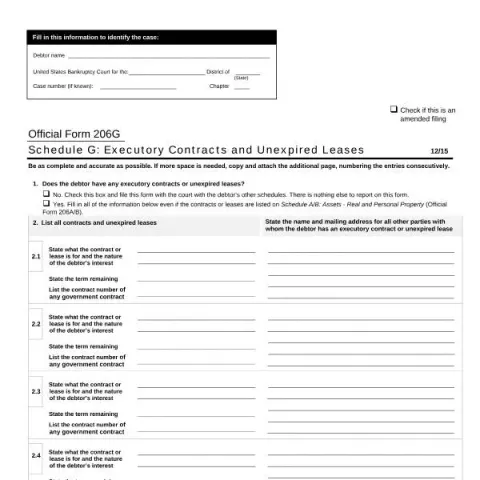
When filing for bankruptcy in the United States, debtors are required to submit various schedules to provide a comprehensive overview of their financial situation. One such essential document is Official Form 206G: Schedule G, which specifically addresses executory contracts and unexpired leases. This form is crucial for accurately disclosing ongoing contractual obligations that may impact the bankruptcy estate.
Purpose of Schedule G in Bankruptcy Filings
Schedule G serves to identify all contracts and leases that are still in effect at the time of filing. These may include agreements such as commercial leases, service contracts, licensing agreements, or other arrangements that the debtor has yet to fulfill or terminate. Proper disclosure ensures transparency and allows the court, creditors, and trustees to assess the debtor's obligations and potential liabilities.
When to Use Schedule G
The form must be completed if the debtor has any executory contracts or unexpired leases. If the debtor confirms that there are none, they can check the box indicating “No,” and no further details are necessary. However, in most cases involving ongoing agreements, comprehensive listing is required to avoid potential legal complications or disputes over omitted obligations.
Key Sections of the Form and Their Significance
1. Declaration of Existence
The first section asks whether the debtor has any executory contracts or unexpired leases. A simple checkbox determines whether the debtor will proceed to list specific agreements or declare none exist.
2. Listing Contracts and Leases
If the debtor has ongoing agreements, they must provide detailed information for each, including:
- Parties involved: Name and mailing address of the other contracting party.
- Description of the contract or lease: What the agreement pertains to and the debtor’s interest.
- Remaining term: Duration left before expiration or termination.
- Government contracts: If applicable, the contract number assigned by a government agency.
This detailed listing helps the court and creditors understand the scope and nature of the debtor’s contractual obligations.
Completing Schedule G: Practical Tips
Accurate and Complete Information
Debtors should ensure all listed contracts are current and accurately described. Omissions or inaccuracies can lead to disputes or complications during the bankruptcy process.
Use of Additional Pages
If the debtor has numerous contracts or leases, they may attach additional pages, continuing the numbering sequentially from the initial schedule. Each page should clearly indicate the case number and debtor’s name.
Fill in your form directly online
No printing: type your details into the boxes of the official form, tick, then download the PDF ready to send.
- 1Type into the form boxes
- 2Tick in one click
- 3Save and download the PDF
Identifying Contracts
For each agreement, it’s important to specify the nature of the contract and the debtor’s interest. For example, whether the debtor is a lessee, licensee, or party to a service agreement. This clarity aids in the proper classification and valuation of obligations.
Filing and Submission Process
Schedule G is submitted along with other schedules as part of the debtor’s bankruptcy petition. It must be signed and filed with the United States Bankruptcy Court for the district where the case is pending. Filing deadlines and procedures are governed by the local rules of the court, which can be found on the court’s official website.
Points of Attention and Common Pitfalls
- Omission of contracts: Failing to disclose existing agreements may result in legal challenges or the assumption or rejection of contracts during bankruptcy proceedings.
- Incorrect descriptions: Vague or inaccurate descriptions of contracts can cause delays or disputes.
- Failure to update: Debtors should review and update Schedule G if new contracts are entered into or existing ones are terminated before filing.
By carefully completing Schedule G, debtors ensure transparency and facilitate a smoother bankruptcy process, helping to protect their rights and interests while complying with legal requirements.