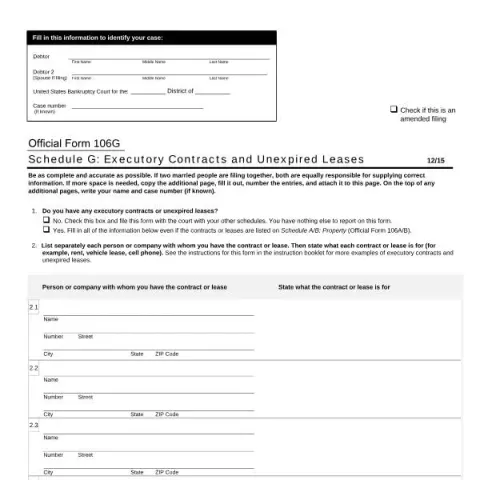
Understanding Official Form 106G: Schedule G – Executory Contracts and Unexpired Leases
The United States Bankruptcy Court requires debtors to provide comprehensive information about their contractual obligations when filing for bankruptcy. One essential component of this process is completing Official Form 106G, known as Schedule G: Executory Contracts and Unexpired Leases. This form helps the court and creditors understand the debtor’s ongoing contractual commitments, which can significantly influence the bankruptcy proceedings and potential reorganization or liquidation strategies.
Purpose and Scope of Schedule G
Schedule G is designed to list all executory contracts and unexpired leases that the debtor has at the time of filing. An executory contract is a contract that has not been fully performed by both parties and remains ongoing, such as service agreements or supply contracts. An unexpired lease is a lease agreement that is still in effect, like a rental or vehicle lease. Providing accurate and complete information on Schedule G ensures transparency and facilitates the court’s assessment of the debtor’s contractual obligations.
Who Should Complete Schedule G?
This form must be filled out by any individual or business filing for bankruptcy who has ongoing contracts or leases. Both single and married filers should ensure that all relevant agreements are disclosed. If multiple contracts or leases exist, each must be listed separately, with details about the other party and the nature of the agreement.
Step-by-Step Guide to Filling Out Schedule G
1. Confirm if You Have Any Contracts or Leases
At the top of the form, you will be asked whether you have any executory contracts or unexpired leases. If you answer No, you can check the corresponding box and file the form along with your other schedules. If Yes, proceed to provide detailed information about each agreement.
2. Listing Your Contracts and Leases
For each contract or lease, you need to include:
- Party Name: The name of the individual or company with whom you have the contract or lease.
- Address: The complete address, including street number, city, state, and ZIP code.
- Description: A brief description of what the contract or lease is for (e.g., rent, vehicle lease, cell phone service).
If you have more than five agreements, you can attach additional pages. Be sure to clearly label each additional page with your name, case number, and a continuation of the list.
3. Identifying Your Case
Include your case number if known, along with your name and spouse’s name if applicable. This information helps the court associate the disclosures with your specific bankruptcy case.
Additional Considerations and Best Practices
Accuracy is crucial when completing Schedule G. Omissions or incorrect details could impact the bankruptcy process, especially if contractual obligations are contested or if the court needs to decide whether to assume or reject a contract or lease.
Fill in your form directly online
No printing: type your details into the boxes of the official form, tick, then download the PDF ready to send.
- 1Type into the form boxes
- 2Tick in one click
- 3Save and download the PDF
In cases where the debtor is unsure whether a contract qualifies as executory or unexpired, consulting the instructions provided with the official form or seeking legal advice is recommended. The form also includes space for amendments if additional contracts are discovered after initial filing.
After Filing Schedule G
Once completed and filed with the court along with other schedules, Schedule G becomes part of the official record of the bankruptcy case. The court and creditors will review this information during the case proceedings. If circumstances change—such as entering into new contracts or terminating existing ones—the debtor may need to amend Schedule G accordingly.
In summary, Schedule G is a vital document that provides a clear picture of the debtor’s contractual commitments. Proper completion ensures transparency, facilitates the court’s review process, and can influence the outcome of the bankruptcy case.