Understanding Official Form 106H: Schedule H – Your Codebtors in Bankruptcy Filings
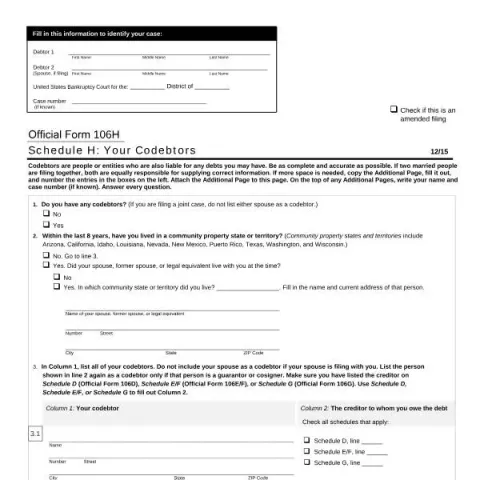
When filing for bankruptcy in the United States, accurately disclosing all debts and liable parties is crucial. Official Form 106H, known as Schedule H: Your Codebtors, plays a vital role in this process by requiring debtors to list individuals or entities who share liability for debts. This form helps the court and creditors understand the scope of shared financial responsibilities and ensures transparency during bankruptcy proceedings.
Purpose of Schedule H
The primary purpose of Schedule H is to identify all codebtors—people or entities who are also responsible for debts listed in other schedules of the bankruptcy petition. These can include co-owners of property, guarantors, or co-signers. Properly completing this form is essential because it informs the court about potential liabilities that could affect the debtor’s discharge or repayment plan.
For example, if a debtor has co-signed a loan with a family member or owns property with others that secures a debt, these individuals or entities must be listed. Accurate disclosure helps prevent surprises post-bankruptcy and ensures all liable parties are accounted for in the legal process.
Who Must Fill Out Schedule H?
Debtors filing for bankruptcy under any chapter must complete Schedule H if they have codebtors. Both individual debtors and married couples filing jointly are required to provide complete and accurate information. If two spouses are filing together, they must list any shared codebtors, but spouses are generally not listed as codebtors for each other unless they are guarantors or co-signers.
It is also important to note that if the debtor is filing a joint case with a spouse, each spouse must disclose their own codebtors separately on the form.
How to Complete Schedule H
Step 1: List All Codebtors
In Column 1, enter the full name of each codebtor, including first, middle, and last names. If there are more codebtors than space on the form, you can copy the Additional Page to list additional individuals or entities. Each codebtor must be associated with the specific creditor to whom the debt is owed.
Step 2: Identify the Creditor and Schedule
In Column 2, specify the creditor’s name and address. Additionally, you must indicate the schedule where the debt is listed:
- Schedule D – Creditors holding secured claims
- Schedule E/F – Creditors holding priority or unsecured claims
- Schedule G – Executory contracts and unexpired leases
This classification helps clarify the nature of the debt and the relationship between the codebtor and the creditor.
Fill in your form directly online
No printing: type your details into the boxes of the official form, tick, then download the PDF ready to send.
- 1Type into the form boxes
- 2Tick in one click
- 3Save and download the PDF
Step 3: Attach Additional Pages if Necessary
If you have more than a few codebtors, complete additional pages following the same format. Remember to write your name and case number at the top of each extra page to ensure proper identification.
Where and How to Submit Schedule H
Schedule H is submitted as part of your overall bankruptcy petition package. It must be filed electronically or in paper form with the United States Bankruptcy Court handling your case. Debtors should ensure all pages are complete, legible, and attached securely to the main petition documents.
Common Errors to Avoid
- Omitting codebtors: Failing to list all liable parties can lead to complications or denial of discharge.
- Incorrect creditor references: Ensure the creditor’s name and address match those listed on other schedules.
- Incomplete or inaccurate information: Double-check names, addresses, and schedule references to prevent delays.
Conclusion
Completing Schedule H accurately is a critical step in the bankruptcy process. It ensures full transparency regarding shared liabilities and helps protect the integrity of the proceedings. Debtors should carefully review the instructions, list all relevant codebtors, and attach additional pages if necessary to ensure a complete and truthful filing.