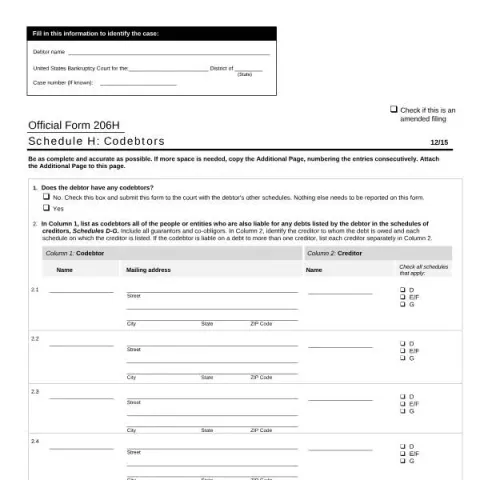
Understanding Official Form 206H: Schedule H – Codebtors in Bankruptcy Filings
When filing for bankruptcy in the United States, debtors are required to provide comprehensive information about their financial obligations, including details about any other individuals or entities who share responsibility for the debts. Official Form 206H, known as Schedule H: Codebtors, is the specific document used to disclose this information. This form is essential for ensuring transparency and accuracy in the bankruptcy process, particularly when multiple parties are liable for the same debts.
What Is the Purpose of Schedule H?
Schedule H serves to identify all codebtors—persons or entities who are jointly liable for debts listed in the debtor’s schedules. This includes co-signers, guarantors, co-obligors, or any other parties who share responsibility for the debts. The information provided on this form helps the bankruptcy court, creditors, and the trustee understand the full scope of liabilities associated with the case.
By disclosing codebtors, the debtor ensures that the court has a complete picture of all relevant financial relationships. This can influence decisions related to debt discharge, asset distribution, or reaffirmation agreements. It also informs creditors about the existence of other liable parties, which may impact their recovery prospects.
Who Must Complete Schedule H?
Any debtor who has co-obligors or guarantors liable for debts listed in their schedules must fill out Schedule H. If the debtor has no such parties, they simply check the box indicating “No” and submit the form along with their other bankruptcy schedules. Failing to disclose codebtors when applicable can lead to legal complications and potential dismissal of the case.
How to Fill Out Schedule H
Completing Schedule H involves providing detailed information about each codebtor and the corresponding creditor. Here’s a step-by-step overview:
- Identify the codebtor: Write the full name of each individual or entity liable for the debts.
- Provide mailing address: Include the street address, city, state, and ZIP code for each codebtor.
- Specify the creditor: List the name of the creditor to whom the debt is owed.
- Indicate the schedule(s): Check all applicable schedules—D, E/F, or G—where the debt is listed.
If there are more than a few codebtors, additional pages can be attached. Each new page should continue the numbering from the previous one to maintain clarity and completeness.
Fill in your form directly online
No printing: type your details into the boxes of the official form, tick, then download the PDF ready to send.
- 1Type into the form boxes
- 2Tick in one click
- 3Save and download the PDF
Important Tips for Accurate Completion
- Be thorough: Ensure all liable parties are listed, including guarantors and co-signers.
- Use correct addresses: Confirm mailing addresses are current and accurate to avoid miscommunication.
- Check the correct schedules: Accurately mark which schedules the debts are listed in, as this affects the court’s understanding of the case.
- Avoid omissions: Missing codebtors can lead to legal issues or delays in the bankruptcy process.
Where and How to Submit Schedule H
Schedule H must be submitted as part of the debtor’s bankruptcy petition package. It can be filed electronically through the court’s electronic filing system or physically delivered to the relevant bankruptcy court clerk’s office, depending on the court’s procedures. It is important to keep copies of all submitted documents for personal records and future reference.
Common Errors to Avoid
- Omitting codebtors: Failing to disclose all liable parties can jeopardize the case.
- Incorrect information: Providing outdated or incorrect addresses or creditor names can cause delays.
- Misclassifying debts: Not checking the correct schedule boxes may lead to confusion or misallocation of liabilities.
In summary, Schedule H is a vital component of the bankruptcy filing process that ensures transparency regarding all parties responsible for debts. Proper completion and submission of this form help facilitate a smooth case process, protect the rights of creditors, and uphold the integrity of the bankruptcy system.