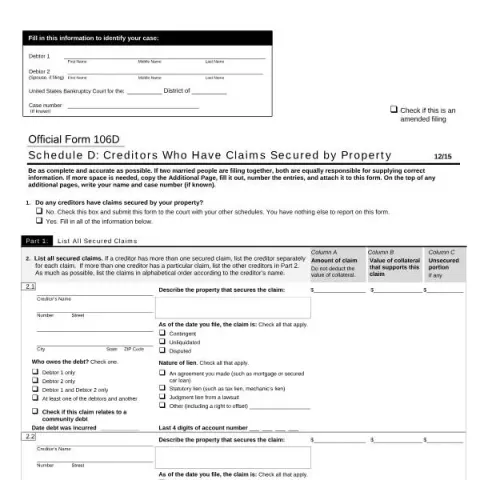
Understanding Official Form 106D: Schedule D — Creditors Who Have Claims Secured by Property
Filing for bankruptcy involves a detailed process where debtors must disclose their financial situation comprehensively. One of the critical components of this disclosure is Schedule D, officially known as Official Form 106D. This form specifically addresses creditors who hold secured claims against the debtor’s property. This article provides an overview of Schedule D, its purpose, who must complete it, and how to do so accurately.
Purpose and Importance of Schedule D
Schedule D serves to list all creditors with secured claims, meaning those creditors who have a legal right to take specific property to satisfy a debt. These claims are secured by collateral, such as real estate, vehicles, or other assets. Accurate completion of Schedule D is essential because it impacts the debtor’s overall bankruptcy estate and determines how assets are distributed. It also informs the court and creditors of the extent of secured claims and the value of collateral supporting each claim.
Who Needs to Complete Schedule D?
Debtors must fill out Schedule D if they have any claims secured by property as of the date they file for bankruptcy. If no such claims exist, the debtor can check the box indicating “No” and submit the form along with other schedules. However, if there are secured claims, detailed information must be provided for each creditor holding such claims.
Step-by-Step Guide to Filling Out Schedule D
Part 1: Listing All Secured Claims
The core of Schedule D involves listing each secured claim separately, especially if a creditor has multiple claims or if multiple creditors are involved with a single claim. The debtor should:
- List creditors alphabetically to facilitate easy review.
- Provide the name and address of each creditor.
- Describe the property that secures the claim, such as a house, car, or other assets.
- State the amount of the claim as of the filing date, without deducting the collateral value.
- Indicate the value of the collateral supporting the claim.
- Specify the unsecured portion of the claim if applicable.
- Check the applicable status boxes: whether the claim is contingent, unliquidated, or disputed.
- Identify the nature of the lien, such as a mortgage, statutory lien, judgment lien, or other.
- Specify who owes the debt: Debtor 1, Debtor 2, or both.
- Note the date when the debt was incurred and the last four digits of the account number.
Additional Pages
If there are more secured claims than can fit on the initial page, the debtor should complete an additional page, numbering the claims accordingly (e.g., 2.3, 2.4). The same detailed information must be provided for each claim listed on additional pages.
Important Deadlines and Submission
Schedule D must be filed along with the other bankruptcy schedules and petitions. The deadline for submission varies depending on the type of bankruptcy case but is generally due within the initial filing period. Failure to accurately complete and timely submit Schedule D can result in delays or issues with the case, including challenges from creditors or the court.
Fill in your form directly online
No printing: type your details into the boxes of the official form, tick, then download the PDF ready to send.
- 1Type into the form boxes
- 2Tick in one click
- 3Save and download the PDF
After Filing Schedule D
Once filed, Schedule D becomes part of the official court record. Creditors listed on the schedule may review the information and file objections if necessary. Debtors should keep copies of all supporting documentation related to secured claims, such as mortgage statements or vehicle titles, in case of questions or disputes during the bankruptcy process.
Summary
Official Form 106D, Schedule D, is a vital document in the bankruptcy process that provides transparency regarding secured claims. Accurate and thorough completion ensures that the court and creditors have a clear understanding of the secured debts and collateral involved. Debtors should carefully follow the instructions, provide complete information, and submit the form within the designated deadlines to facilitate a smooth bankruptcy case process.