Understanding Official Form 106A/B: Schedule A/B – Property in Bankruptcy Filings
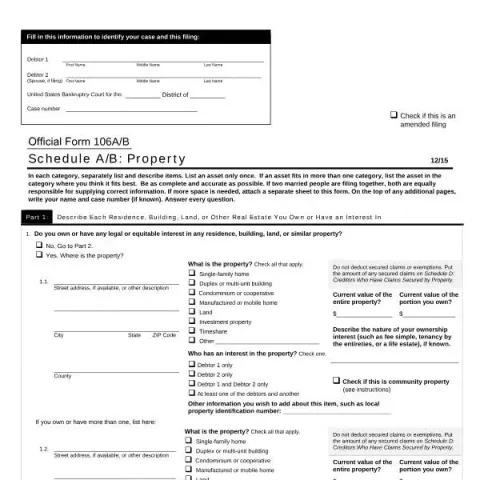
Filing for bankruptcy involves a comprehensive disclosure of your assets, and the Schedule A/B: Property form is a critical component of this process. Managed by the United States Bankruptcy Court, this official form requires debtors to list all property interests, including real estate, vehicles, and other valuable possessions. Its purpose is to provide a clear snapshot of your assets to creditors and the court, ensuring transparency and fairness in the bankruptcy proceedings.
Purpose and Scope of Schedule A/B
The Schedule A/B is designed to detail every property item that the debtor owns or has an interest in at the time of filing. This includes residences, land, investment properties, and personal assets such as vehicles and household items. The form helps the court assess the debtor’s estate, determine exemptions, and facilitate equitable distribution of assets if applicable.
It is essential for filers to be thorough and accurate. Omitting assets or providing false information can lead to legal consequences, including sanctions or dismissal of the case. The form is structured to guide debtors through listing property systematically, with specific instructions to ensure completeness.
How to Fill Out Schedule A/B
Part 1: Real Property
This section requires you to list all real estate interests, including residences, land, and other real property. For each property, you must specify the address, describe the property type (e.g., single-family home, condominium, land), and provide current valuation details. If you own only a portion of the property, indicate the value of your interest.
It’s important to specify who has an interest in the property—whether it’s solely the debtor, jointly owned with a spouse, or shared with others. Additionally, you should include the nature of your ownership, such as fee simple or tenancy by the entireties. If applicable, you can also add local property identification numbers or other relevant details.
Part 2: Vehicles and Personal Property
This section covers all vehicles—cars, trucks, boats, motorcycles—that you own, lease, or have an interest in. You are required to report the value of each vehicle, including those driven by others but owned by you. The form also prompts you to list other personal assets, which may include household items, jewelry, or collectibles, depending on the specific instructions provided with the form.
Important Considerations When Completing Schedule A/B
- Completeness: List all assets, even if they seem insignificant. Omitting items can be viewed as nondisclosure, which might affect your case.
- Accuracy: Provide current market values based on reasonable estimates. Do not inflate or undervalue assets.
- Ownership Details: Clearly specify your interest or ownership type, as this can influence exemption claims and asset distribution.
- Additional Pages: If you have more property than space allows, attach extra sheets. Be sure to label each additional page with your name and case number.
Timing and Submission of Schedule A/B
The form must be completed and filed along with your bankruptcy petition. It is part of the initial filing package and must be submitted by the deadline established by the court. Accurate and complete disclosure at this stage helps prevent delays or objections from creditors or the court.
Fill in your form directly online
No printing: type your details into the boxes of the official form, tick, then download the PDF ready to send.
- 1Type into the form boxes
- 2Tick in one click
- 3Save and download the PDF
Post-Filing Responsibilities
After submitting Schedule A/B, debtors have ongoing responsibilities to update the court if their property holdings change. If you acquire new assets or dispose of existing ones during the bankruptcy process, you may need to file amended schedules or provide additional disclosures.
Conclusion
Official Form 106A/B: Schedule A/B is a foundational document in the bankruptcy process, providing a detailed inventory of your property interests. Proper completion ensures transparency, supports the fair handling of your case, and helps fulfill your legal obligations under federal bankruptcy law. For detailed instructions and legal guidance, consult the official court resources or a qualified bankruptcy attorney.