Understanding the Approval Application for Vehicle Test and Calibration Equipment
When it comes to ensuring the safety and reliability of vehicles on British roads, the Driver and Vehicle Standards Agency (DVSA) plays a crucial role. One vital part of this process involves the approval of vehicle test and calibration equipment. This approval not only guarantees that the equipment meets the necessary standards but also affirms that it has undergone rigorous testing and evaluation.
For manufacturers and organizations looking to have their testing equipment approved, understanding the details of the application process is essential. This article will navigate through the intricate process of applying for the approval of vehicle test and calibration equipment, breaking down the requirements, timelines, and potential pitfalls.
Who Needs to Submit the Approval Application?
This application is primarily aimed at manufacturers or suppliers of vehicle test and calibration equipment. This includes:
- Manufacturers: Companies producing testing equipment for vehicles such as tachographs, emissions testers, and brake testers.
- Importers: Businesses that bring in approved equipment from other countries and need to ensure compliance with UK standards.
- Modular Equipment Suppliers: Businesses that modify existing approved equipment for specific applications.
In essence, any party looking to ensure that their vehicle test equipment is compliant with UK regulations must submit this application. This is vital not just for legal compliance, but also for maintaining high standards of safety and reliability in vehicle testing.
Key Documentation Required for the Approval Application
Before starting the application, gather the necessary documentation to avoid delays. The following documents are typically required:
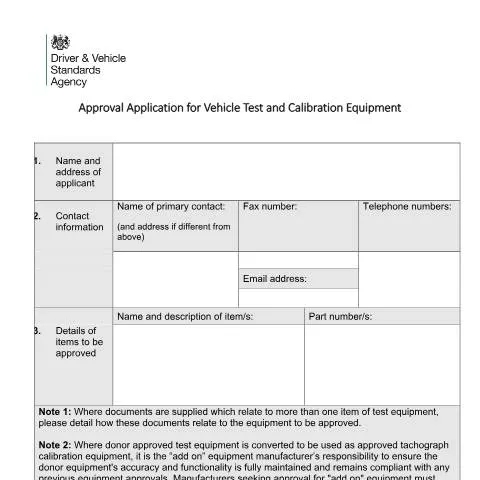
- Contact Information: Provide the name and address of the applicant, including a primary contact person. Ensure that contact details such as telephone numbers, fax numbers, and email addresses are accurate.
- Description of Equipment: Include detailed descriptions of the equipment being submitted for approval, including part numbers and how the documents relate to the equipment.
- Calibration and Accuracy Documentation: Demonstrating the accuracy of the equipment is crucial. Include calibration certificates that are traceable to ISO 17025 standards.
- Compatibility Statements: If modifying existing equipment, statements from original equipment manufacturers must confirm that the modifications do not compromise accuracy or functionality.
- Installation Documentation: Provide detailed installation manuals, user manuals, and photographs showing the equipment and its setup.
Each of these documents plays a critical role in the approval process, ensuring that the DVSA can adequately verify compliance with current standards.
Step-by-Step Application Process
Completing the application form accurately is vital for a successful submission. Follow these steps to ensure you're on the right track:
- Fill Out the Application Form: Ensure that all sections are completed thoroughly. Pay special attention to providing all requested details, including the technical specifications of the equipment.
- Compile Supporting Documents: Gather all necessary documents listed in the previous section. Each document must be included with the application.
- Submit the Application: Applications can be submitted via post or electronically, depending on the DVSA's current guidelines.
- Await Acknowledgement: After submission, you should receive an acknowledgment from the DVSA confirming that your application has been received.
- Participate in Practical Tests: Depending on the equipment, the DVSA may require practical tests to validate the information provided in the application. Be prepared to cooperate with any testing arrangements made by the DVSA.
Timing: Key Dates and What Follows
Understanding the timeline for the approval application process is essential. Here’s what you can expect:
| Stage | Estimated Timeframe |
|---|---|
| Application Submission | Immediate upon completion |
| DVSA Acknowledgment | Within 14 days |
| Initial Review | 3 to 6 weeks |
| Practical Testing (if required) | Scheduling dependent on DVSA |
| Final Approval Notification | Varies based on application volume |
It is crucial to prepare for potential delays, particularly during peak application periods. Ensuring your application is complete can help mitigate some of this delay.
Understanding the Implications: Rights and Responsibilities
Once the application is submitted, certain rights and responsibilities come into play:
- Right to Appeal: If your application is denied, you have the right to appeal the decision. This process is detailed in the DVSA's guidelines.
- Obligation to Comply: If approved, it is your responsibility to maintain the equipment according to the standards set forth during the approval process.
- Periodic Checks: The DVSA may require periodic checks to ensure ongoing compliance. Be prepared for inspections and testing as part of your responsibilities.
Failing to meet these obligations could result in revocation of your approval, which can have serious implications for your business operations.
Special Considerations for Non-UK Applicants
For applicants based outside the UK, there are additional considerations to keep in mind:
- Compliance with UK Standards: Non-UK manufacturers must demonstrate that their equipment complies with British and EU directives relevant to vehicle testing.
- Documentation Translations: Any supporting documents not originally in English need to be translated. Copies of the original documents along with translations must be included.
- Import Regulations: Non-residents should also ensure compliance with UK import regulations, including any taxation or duty implications.
Being thorough in addressing these points can help facilitate a smoother application process for non-UK entities.
Technological Changes and Their Impact on Applications
As technology continues to advance, so too does the landscape of vehicle testing equipment. Here’s how these changes can affect the approval process:
- Emerging Technologies: Equipment utilizing new technologies may require additional validation processes. Ensure your application addresses any unique features that could impact testing standards.
- Compliance with New Regulations: Stay informed about any changes to compliance requirements that could affect your equipment. Regularly check the DVSA website for updates.
- Integration with Existing Systems: If your equipment will be used alongside existing systems, provide detailed information about compatibility and integration processes.
By being proactive about these considerations, applicants can better navigate the complexities involved in gaining approval for new technologies.
The Role of Calibration and Maintenance in Approval
Calibration and maintenance are critical components of the approval process for vehicle test and calibration equipment. Here’s what to keep in mind:
- Initial Calibration: All equipment must be calibrated before submission. Ensure that you provide calibration certificates that align with ISO standards to demonstrate accuracy.
- Ongoing Maintenance: Once approved, a regular maintenance schedule should be established to ensure the equipment remains compliant with standards over time.
- Record Keeping: Maintain detailed records of all calibration and maintenance activities. This documentation will be essential for periodic checks by the DVSA.
Understanding the calibration and maintenance responsibilities is crucial for anyone looking to gain and retain approval for testing equipment.
Understanding the Approval Process for Vehicle Test and Calibration Equipment
In the UK, the approval of vehicle test and calibration equipment is not just a regulatory necessity; it's also a safeguard for road safety and environmental standards. The process is governed by several authorities, including the Driver and Vehicle Standards Agency (DVSA). It ensures that all testing equipment used in MOT tests, emissions testing, and other vehicle assessments are accurate, reliable, and comply with current legislation.
The approval process typically begins with a comprehensive evaluation of the equipment against specified standards. Manufacturers must ensure that their equipment meets the Minimum Standards of Equipment for Vehicle Testing, which are set out by the DVSA. This involves rigorous testing and validation against key performance indicators, which may differ depending on the type of vehicle or the specific test being conducted.
Once the equipment is deemed compliant, manufacturers must submit an application to the DVSA, accompanied by technical documents, performance data, and evidence of quality management systems. This application process can be intricate, often requiring detailed descriptions of the calibration procedures and maintenance regimes to ensure ongoing compliance. Therefore, it's essential for businesses involved in this sector to maintain a close relationship with the DVSA and stay updated on any changes in legislation or standards.
Key Considerations for Manufacturers Seeking Approval
Manufacturers and suppliers planning to apply for vehicle test and calibration equipment approval must keep in mind several critical factors that can influence the success of their application. One of the foremost considerations is ensuring that the equipment adheres to the relevant European and UK standards. This includes compliance with the General Product Safety Regulations, which mandate that all products placed on the market must be safe for consumers and the environment.
Additionally, manufacturers should prepare for the possibility of post-approval audits. The DVSA may conduct random checks to verify that approved equipment continues to meet the required standards over time. This means keeping accurate records of maintenance, calibration procedures, and any incidents that could affect performance. Documentation should be meticulously organized and readily accessible to facilitate the audit process.
Moreover, engaging with the industry community through trade associations can provide manufacturers with valuable insights and help them stay abreast of best practices and new technologies. Networking opportunities can lead to collaborations that enhance product quality and compliance. Furthermore, attending industry conferences and seminars can provide updates on the latest regulatory changes and technological innovations that impact vehicle testing.
Implications of Non-Compliance and Future Trends
Non-compliance with the approval process can have severe implications for manufacturers, vehicle testing stations, and ultimately, road users. In the event that equipment fails to meet the necessary standards, it can lead to invalid test results, jeopardizing vehicle safety. For manufacturers, this might result in financial penalties, reputational damage, and increased scrutiny from regulators.
As technology evolves, the landscape of vehicle testing is also undergoing significant transformation. The introduction of advanced driver-assistance systems (ADAS) and electric vehicles (EVs) necessitates updates to existing testing equipment. Manufacturers must stay proactive in adapting their products to accommodate these changes, which may involve investing in research and development to innovate testing methodologies and equipment.
Moreover, the increasing emphasis on environmental issues, such as emissions testing, requires manufacturers to keep pace with new legislation aimed at reducing carbon footprints. It is anticipated that the approval process will continue to evolve, with more stringent standards being introduced to keep up with these developments. Thus, manufacturers should be prepared for a landscape that not only demands compliance but also encourages continual improvement and adaptation to emerging technologies.