Understanding the Approved Tachograph Centre Application Process
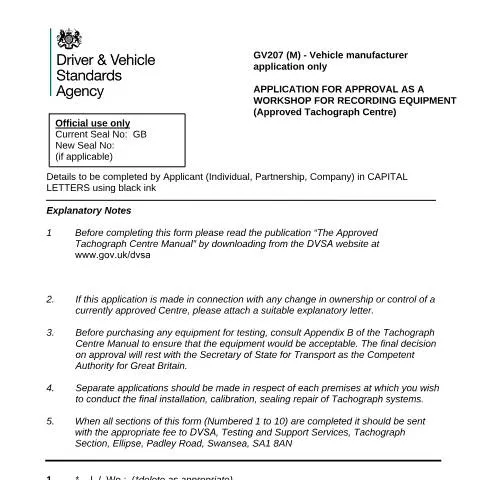
For vehicle manufacturers looking to set up an Approved Tachograph Centre (ATC), navigating the application process can be complex and critical. This document, known as GV207 (M), is essential for those intending to establish a facility capable of installing, calibrating, and sealing tachographs in compliance with legal standards. Understanding the implications and responsibilities tied to this application can mean the difference between operational success and regulatory challenges.
The Importance of an Approved Tachograph Centre
In the realm of road transport, tachographs play a pivotal role in ensuring compliance with driving time regulations and road safety. The establishment of an ATC signifies a commitment to quality and safety within the transportation sector. By obtaining approval, you gain the ability to:
- Legally install tachographs in vehicles, ensuring that they meet both legal and technical standards.
- Provide calibration services to ensure accurate data recording, vital for operator compliance.
- Engage with regulatory bodies confidently, knowing that your centre meets national standards.
However, the responsibilities extend beyond just the approval itself; they encompass maintaining high standards in services provided to clients, ensuring that all installations and calibrations are conducted under stringent protocols outlined in the Tachograph Centre Manual.
Navigating the Application Requirements
Completing the GV207 (M) form requires meticulous attention to detail. Each section must be filled out accurately to prevent delays or rejections. Here’s a closer look at the critical components of the application:
Essential Information and Initial Steps
Prior to submitting your application, it is paramount to consult the Approved Tachograph Centre Manual. This document outlines specific requirements and standards that your centre must adhere to, including:
- Approval Classes: Indicate whether your centre will handle analogue tachographs, digital tachographs, or both.
- Type of Installer: Choose between being a standard installer or a limited action installer, each carrying different responsibilities and capabilities.
When completing the form, ensure that you provide comprehensive details about your business structure, ownership, and the designated individuals responsible for operations. This transparency is vital for regulatory approval.
Understanding the Role of Your Documentation
As you prepare your application, remember that the submitted documentation is equally important as the form itself. You will need to include:
- Fully dimensional drawings of proposed calibration bays.
- Site plans indicating the layout of your centre.
- Evidence of financial standing to assure regulators of your operational viability.
- Criminal conviction declarations from all relevant parties involved in the business.
Failure to provide complete documentation could result in significant delays or outright rejection of your application. Each item plays a role in demonstrating your preparedness to operate an ATC.
Common Pitfalls and Best Practices
When filling out the GV207 form, applicants often encounter challenges that can impede the process. Here are some common pitfalls to be aware of:
- Incomplete information: Ensure that all sections are fully completed. Leaving sections blank or providing vague descriptions can lead to delays.
- Misclassification: Be precise in selecting the type of tachographs and installer options. Mistakes in these selections can complicate approval.
- Neglecting supporting documents: Failing to attach necessary documentation will result in automatic rejection of your application.
To mitigate these issues, consider developing a checklist based on the form's requirements. This can serve as a valuable tool to ensure that your submission is comprehensive and accurate.
Exploring Submission Channels: Online, Paper, or In-Person
Once your application is complete, you must decide how to submit it. The DVSA provides multiple channels:
- Online Submission: Some applicants may choose to submit forms online, which can facilitate quicker processing times.
- Postal Submission: Alternatively, mailing your application to DVSA’s Testing and Support Services team is an option. Ensure that you send it to the correct address: DVSA, Testing and Support Services, Tachograph Section, Ellipse, Padley Road, Swansea, SA1 8AN.
- In-Person Submission: Although less common, personally delivering your application can sometimes lead to immediate clarifications on any issues.
Each method has its pros and cons regarding speed and efficiency. Assess your resources and choose the option that best fits your operational needs.
Post-Submission: What Happens Next?
After submitting your application, patience is key. The DVSA will evaluate your request, which can take several weeks. However, there are steps you can take to ensure your application is on track:
- Monitoring Progress: You can follow up with the DVSA’s Tachograph Section to inquire about the status of your application.
- Addressing Queries: Be prepared for the possibility of receiving queries or requests for additional information. Responding promptly can expedite the approval process.
Once approved, your centre will receive an official notice of approval. It is crucial to review this document thoroughly to ensure compliance with all outlined conditions.
Addressing Refusals and Errors: Your Right to Appeal
In the unfortunate event that your application is denied, understanding the appeals process is essential. The DVSA provides a framework through which you can challenge a refusal. Key steps include:
- Review the Refusal Letter: Take note of the specific reasons cited for the refusal.
- Prepare an Appeal: Gather evidence and documentation that address the concerns raised in the refusal.
- Submit Your Appeal: Follow the protocol as outlined in the refusal letter to formally submit your appeal.
Having a clear strategy for addressing refusals not only aids in potential re-approval but also reinforces your commitment to compliance and regulatory standards.
Connecting the Dots: The Larger Context of Compliance
The journey of setting up an Approved Tachograph Centre does not end with the completion of the GV207 form. It is essential to recognize this application as part of a more extensive compliance framework that includes:
- Regular Inspections: Approved centres are subject to routine inspections by the DVSA to ensure ongoing compliance.
- Staff Training: Personnel involved in the installation and calibration of tachographs must receive adequate training and maintain certifications.
- Adherence to Changes in Legislation: Staying updated on new regulations and standards is critical for operational integrity.
By viewing the application process in this broader context, you ensure not only the approval of your centre but also its sustainable operation in alignment with ongoing regulatory demands.
Decoding the GV207 Form: A Section-by-Section Breakdown
| Section | Details Required | Common Mistakes |
|---|---|---|
| 1: Application Type | Indicate tachograph types and installer category. | Not specifying all relevant types or categories. |
| 2: Applicant Information | Full names, addresses, and contact details. | Missing details or incorrect contact information. |
| 6: Nature of Business | Clearly define the business type and activities. | Ambiguous descriptions that do not fit regulatory categories. |
| 8: Supporting Documents | Comprehensive list of attached documents. | Omitting necessary documents like financial statements. |
Each section carries weight in the overall approval process. By understanding the nuances of what is required, you can prevent unnecessary setbacks and ensure a smooth path towards establishing your Approved Tachograph Centre.