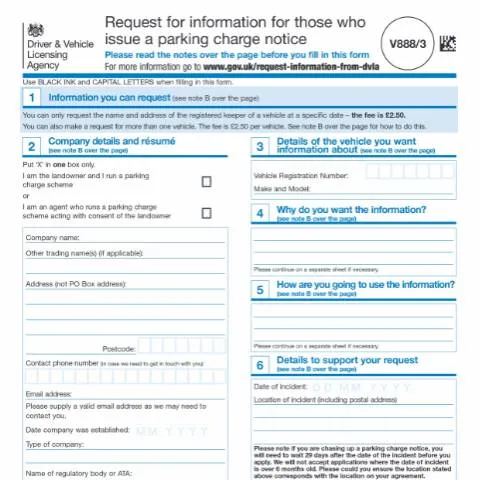
When Parking Enforcement Meets Data Protection: Understanding DVLA's V888/3 Request System
The world of private parking enforcement operates in a complex legal framework where data protection laws intersect with debt recovery practices. For companies issuing parking charge notices or trespass charges, obtaining vehicle keeper details from the DVLA represents a critical step in their enforcement process. The V888/3 form serves as the gateway to this information, but its use is governed by strict regulations designed to prevent abuse while enabling legitimate business operations.
This system reflects the balance between commercial interests and individual privacy rights, requiring companies to demonstrate legitimate grounds for accessing personal data. The DVLA's role extends beyond simple data provision – it acts as a gatekeeper, ensuring that requests comply with data protection legislation and that the information will be used responsibly.
Decoding the £2.50 Information Request: What Companies Can and Cannot Access
The V888/3 form enables access to a specific and limited dataset: the name and address of the registered keeper at a particular date. This precision is intentional – the DVLA provides only what is necessary for legitimate parking enforcement, nothing more.
The Scope of Available Information
Companies can request keeper details for vehicles involved in parking incidents, but several important limitations apply:
- Single vehicle requests at £2.50 per enquiry, though multiple vehicles can be processed if each relates to the same incident and location
- Historical data limitations – information is tied to a specific date, reflecting the keeper's details at that precise moment
- No fishing expeditions – each request must relate to a specific incident with documented evidence
The system deliberately prevents bulk data harvesting or speculative requests. Companies cannot use the service to build customer databases or conduct market research – every enquiry must have a legitimate parking enforcement purpose.
Multiple Vehicle Scenarios
When dealing with incidents involving several vehicles, companies can streamline their requests by providing a list of up to 15 vehicles per form, provided all relate to the same incident, location, and date. This efficiency measure recognises that car parks may experience multiple contraventions simultaneously.
| Request Type | Fee Structure | Documentation Required |
|---|---|---|
| Single vehicle | £2.50 | Evidence of specific incident |
| Multiple vehicles (same incident) | £2.50 per vehicle | Evidence linking all vehicles to same incident |
| Separate incidents | £2.50 per vehicle | Individual evidence for each incident |
The Legal Framework: ATA Membership and Regulatory Compliance
Access to DVLA keeper data isn't automatic – companies must demonstrate they operate within proper regulatory frameworks. The form specifically requires details of the company's membership with an Accredited Trade Association (ATA), reflecting the industry's move towards professional standards and consumer protection.
ATA Requirements and Industry Standards
Membership of an ATA provides several safeguards:
- Code of practice compliance – members must adhere to industry standards covering signage, charge levels, and appeals processes
- Consumer protection measures – including independent appeals mechanisms and popla (Parking on Private Land Appeals) participation
- Regular auditing – ensuring ongoing compliance with both ATA standards and legal requirements
The DVLA uses ATA membership as a quality filter, reducing the likelihood of frivolous or abusive requests while maintaining access for legitimate operators. This approach reflects the government's preference for industry self-regulation over direct statutory control.
Data Protection Registration Requirements
The form demands comprehensive data protection credentials, including registration numbers and expiry dates. This reflects the Data Protection Act 2018 and UK GDPR requirements that govern how personal information must be handled. Companies must demonstrate they have appropriate legal bases for processing personal data and robust systems for protecting it.
Critical Timing Considerations: The 29-Day Window and Evidence Retention
Time sensitivity permeates every aspect of the V888/3 process, with strict deadlines governing both applications and evidence retention. The form contains a crucial warning about the 29-day rule for parking charge notice applications, highlighting how timing can determine the success or failure of enforcement action.
The 29-Day Application Window
For parking charge notices, companies must wait 29 days after the incident date before applying for keeper details. This cooling-off period serves multiple purposes:
- Appeals consideration – allowing time for drivers to contest charges through proper channels
- Administrative processing – ensuring all internal procedures are completed before escalation
- Evidence consolidation – giving companies time to gather comprehensive documentation
Applications submitted before this 29-day window expires face automatic rejection, regardless of their merit. This inflexibility reflects the DVLA's commitment to procedural fairness and consumer protection.
Evidence Retention and the Two-Year Rule
Companies must retain supporting evidence for two years from the enquiry date, creating ongoing compliance obligations that extend well beyond the initial request. This requirement recognises that parking disputes can take considerable time to resolve, particularly when they progress through county courts or alternative dispute resolution mechanisms.
The two-year retention period covers all documentation supporting the request, including:
- Photographic evidence of the contravention
- Signage documentation and site layout plans
- Terms and conditions applicable at the time
- Any correspondence with the driver or appeals body
Justification Requirements: Articulating Purpose and Preventing Misuse
The V888/3 form places considerable emphasis on explaining and justifying the information request, requiring companies to articulate both why they need the data and how they intend to use it. This dual requirement serves as a deterrent to fishing expeditions while providing the DVLA with sufficient information to assess request legitimacy.
Describing the Incident and Its Context
Section 4 of the form demands a comprehensive description of the situation leading to the request. This isn't merely bureaucratic box-ticking – the DVLA uses this information to verify that the request falls within legitimate parking enforcement parameters. Companies must provide sufficient detail to demonstrate:
- Clear contravention evidence – specific details about what parking rules were breached
- Proper signage and terms – confirmation that drivers had adequate notice of parking restrictions
- Proportionate response – that the information request is necessary and proportionate to the alleged breach
Intended Use Declaration
Section 5 requires companies to specify exactly how they plan to use the obtained information. This forward-looking requirement prevents mission creep – the tendency to use data for purposes beyond those originally declared. Common legitimate uses include:
- Sending formal demand letters to the registered keeper
- Initiating county court proceedings for unpaid charges
- Facilitating direct contact for dispute resolution
The DVLA may refuse requests where the intended use appears disproportionate, unlawful, or outside the scope of legitimate parking enforcement activities.
Operational Mechanics: From Application to Information Delivery
The V888/3 process involves multiple verification steps and quality controls designed to ensure accuracy and prevent misuse. Understanding these operational aspects helps companies prepare robust applications and manage their expectations regarding processing times and outcomes.
Payment and Processing Procedures
The DVLA operates a strict payment policy for information requests:
- Cheques and postal orders only – payable to 'DVLA, Swansea'
- No cash payments accepted – reflecting security and audit trail requirements
- Damaged cheque policy – applications with damaged or altered cheques face automatic rejection
This payment structure, while potentially inconvenient in an era of electronic transactions, provides clear audit trails and reduces the risk of fraudulent applications. Companies should factor postal delays into their planning, particularly when approaching statutory deadlines.
Application Verification and Quality Control
The DVLA conducts thorough checks on all applications, examining both the completeness of submitted information and its consistency with known records. This process may involve:
- Cross-referencing vehicle details against DVLA databases
- Verifying company credentials and ATA membership status
- Checking data protection registration validity
- Assessing the reasonableness of the stated purpose
Incomplete or inconsistent applications face rejection, requiring resubmission with corrected information and additional fees. This quality control approach, while potentially frustrating for applicants, maintains the integrity of the system and protects individual privacy rights.
Compliance Obligations and Legal Safeguards
The declaration section of the V888/3 form creates binding legal obligations that extend far beyond the initial information request. Companies signing this declaration enter into a formal commitment regarding data handling, use limitations, and ongoing compliance responsibilities.
Data Protection Commitments
The declaration encompasses several critical data protection commitments:
- Accuracy warranty – companies confirm that all information provided is correct to the best of their knowledge
- Use limitation pledge – binding commitment to use information only for stated purposes
- Third-party sharing restrictions – prohibition on passing information to unauthorised parties
- Debt assignment limitations – restrictions on transferring information when selling debts to third parties
These commitments carry legal weight, with breaches potentially constituting offences under data protection legislation. The penalties for non-compliance can include substantial fines issued by the Information Commissioner's Office, in addition to any civil liability arising from misuse of personal data.
Ongoing Compliance Monitoring
The DVLA maintains oversight of how companies use obtained information, with several monitoring mechanisms in place:
- Regular audits of high-volume users
- Investigation of complaints regarding data misuse
- Cross-referencing with Information Commissioner's Office enforcement actions
- Liaison with consumer protection bodies and ombudsman services
Companies found to be misusing DVLA data may face suspension or permanent exclusion from the information service, effectively ending their ability to pursue parking enforcement actions that require keeper identification.
Strategic Considerations for Parking Enforcement Operations
Beyond its immediate function as an information request mechanism, the V888/3 form serves as a strategic checkpoint in parking enforcement operations. Companies must consider how their use of this service fits within broader business objectives, regulatory compliance requirements, and customer relationship management strategies.
Cost-Benefit Analysis and Enforcement Decisions
The £2.50 fee, while modest, can accumulate significantly for companies processing large volumes of parking contraventions. Effective operators develop decision matrices to determine when information requests represent good value:
| Charge Value | Recovery Likelihood | Request Recommendation |
|---|---|---|
| Under £25 | Low | Consider alternative resolution |
| £25-£60 | Medium | Proceed if clear evidence exists |
| Over £60 | High | Standard processing recommended |
This analytical approach helps companies maintain profitability while ensuring they pursue only viable enforcement actions. The decision framework should also consider factors such as available evidence quality, site signage adequacy, and the likelihood of successful appeals.
Integration with Broader Enforcement Strategies
The V888/3 process represents just one component of comprehensive parking enforcement strategies. Successful companies integrate DVLA information requests with:
- Automated number plate recognition systems – enabling efficient identification of repeat offenders
- Customer service protocols – providing clear appeals processes before escalating to formal enforcement
- Alternative dispute resolution mechanisms – reducing the need for costly court proceedings
- Payment plan arrangements – maximising recovery rates while maintaining customer relationships
The most effective operators view the V888/3 service as a tool for resolution rather than confrontation, using obtained contact details to facilitate dialogue and negotiate mutually acceptable outcomes. This approach not only improves recovery rates but also reduces the administrative burden associated with formal legal proceedings.
Understanding the V888/3 system's intricacies enables parking enforcement companies to operate more effectively within the regulatory framework while maintaining high standards of consumer protection. The form's requirements reflect the government's commitment to balancing commercial interests with individual privacy rights, creating a system that serves legitimate business needs while preventing abuse of personal data access privileges.
Challenging V888/3 Decisions and Appeals Process
When DVLA responds to your V888/3 request, you may not always agree with their decision or find their response adequate for your enforcement needs. Understanding the appeals and challenge mechanisms available can help protect your company's interests whilst ensuring compliance with data protection requirements.
If DVLA refuses your V888/3 application, they must provide clear reasons under the Data Protection Act 2018. Common grounds for refusal include insufficient evidence of legitimate interest, inadequate security measures for handling personal data, or failure to demonstrate that the parking contravention actually occurred. You have the right to challenge these decisions through formal channels.
The first step involves requesting an internal review from DVLA's Customer Services team. This must be done within one month of receiving the refusal notice. Your internal review request should address each specific concern raised by DVLA, providing additional evidence or clarification where possible. For instance, if DVLA questioned your security arrangements, you might submit updated data protection policies or evidence of staff training programmes.
Should the internal review uphold the original decision, you can escalate to the Information Commissioner's Office (ICO). The ICO has jurisdiction over data protection complaints and can investigate whether DVLA has properly applied the legitimate interest test required under UK GDPR. However, bear in mind that ICO investigations can take several months, during which enforcement action against the vehicle keeper may become increasingly difficult.
In cases where DVLA provides keeper details but you believe the information is incomplete or inaccurate, you can request corrections under your rights as a data controller. This is particularly relevant when dealing with fleet vehicles or lease arrangements where the registered keeper may not be the actual driver responsible for the contravention.
Some companies choose to engage legal representation when challenging V888/3 decisions, especially where significant revenue streams depend on effective parking enforcement. Solicitors specialising in parking law can help navigate the appeals process and ensure all procedural requirements are met. However, the costs of legal action should be weighed against the potential benefits, particularly for individual parking contraventions.
Documentation plays a crucial role in successful challenges. Maintain comprehensive records of all correspondence with DVLA, including reference numbers, dates, and the names of any staff members you speak with by telephone. This creates an audit trail that can prove invaluable if disputes escalate to formal proceedings.
Cross-Border Enforcement and International Considerations
Modern parking enforcement increasingly involves vehicles registered outside England, Wales, and Scotland, creating unique challenges for companies relying on V888/3 data requests. Understanding the limitations and alternative approaches for international enforcement can help set realistic expectations and develop effective strategies.
DVLA's V888/3 process only covers vehicles registered within Great Britain. Northern Ireland maintains a separate vehicle registration system under the Driver & Vehicle Agency (DVA), requiring different procedures for accessing keeper information. Companies operating near the Northern Ireland border should familiarise themselves with DVA's equivalent processes, which follow similar data protection principles but involve separate application procedures and fees.
For vehicles displaying Republic of Ireland registration plates, the situation becomes more complex. Irish registered vehicles are not covered by DVLA records, and accessing keeper details requires engagement with Ireland's National Driver Licence Service. However, the legal enforceability of parking charges against Irish residents depends on various factors, including reciprocal enforcement agreements and the specific terms of your parking arrangements.
European Union registered vehicles present additional challenges following Brexit. While some informal cooperation mechanisms remain in place, the legal framework for cross-border parking enforcement has become significantly more complex. Companies dealing with regular EU vehicle contraventions may need to consider alternative enforcement strategies, such as enhanced on-site security measures or barrier-controlled access systems.
Diplomatic vehicles pose particular challenges for parking enforcement. Cars displaying diplomatic plates are covered by the Vienna Convention on Diplomatic Relations, which grants certain immunities from local parking regulations. However, these immunities are not absolute, and the specific circumstances of each case matter significantly. The Foreign, Commonwealth & Development Office maintains guidance on diplomatic parking enforcement that companies should consult before pursuing charges against diplomatic vehicles.
Military vehicles represent another special category. MoD registered vehicles may be exempt from certain parking restrictions, particularly when on official business. However, private use of military vehicles does not automatically confer exemption from parking charges. Companies unsure about military vehicle enforcement should seek clarification from the relevant military police unit or base commander before proceeding with formal action.
Some companies operating in tourist-heavy areas develop specific procedures for handling foreign-registered vehicles. This might include multilingual signage, alternative payment methods for international visitors, or partnerships with vehicle hire companies to ensure charges can be recovered through rental agreements. While these approaches don't eliminate the need for V888/3 requests for UK-registered vehicles, they can reduce the overall enforcement burden.
Technology Integration and Digital Transformation
The parking enforcement landscape continues evolving rapidly, with technological advances creating new opportunities and challenges for companies managing V888/3 data requests. Understanding how emerging technologies interact with DVLA processes can help optimise enforcement strategies while maintaining compliance with data protection requirements.
Automatic Number Plate Recognition (ANPR) systems have revolutionised parking enforcement, enabling companies to capture vehicle details with unprecedented accuracy and efficiency. However, ANPR integration with V888/3 processes requires careful consideration of data protection implications. The images and vehicle registration data captured by ANPR systems constitute personal information under UK GDPR, requiring appropriate security measures and retention policies.
Modern ANPR systems can automatically flag vehicles for V888/3 requests, streamlining the application process significantly. Some systems integrate directly with case management software, automatically populating V888/3 forms with relevant vehicle details and contravention evidence. However, companies must ensure that automated systems include adequate human oversight to prevent errors that could undermine enforcement action.
Cloud-based parking management platforms increasingly offer integrated V888/3 submission services, handling the technical aspects of DVLA communication while maintaining compliance with data protection requirements. These platforms typically include features such as automated retry mechanisms for failed applications, progress tracking for outstanding requests, and secure storage for received keeper details.
Mobile enforcement applications enable parking attendants to initiate V888/3 requests directly from handheld devices, reducing administrative delays and improving accuracy. These applications often include GPS location services, timestamp verification, and integrated photography to create comprehensive evidence packages supporting enforcement action. However, companies must ensure that mobile devices used for enforcement meet appropriate security standards for handling personal data.
Artificial intelligence and machine learning technologies are beginning to influence parking enforcement, with some systems capable of predicting optimal enforcement strategies based on historical V888/3 success rates. These systems can identify patterns in DVLA responses, helping companies refine their application procedures and focus resources on cases most likely to succeed.
Blockchain technology offers potential solutions for creating tamper-evident records of parking contraventions, which could strengthen the evidence base for V888/3 applications. While still in early stages, blockchain-based parking systems could provide immutable audit trails that satisfy DVLA's evidence requirements whilst reducing the administrative burden of maintaining comprehensive documentation.
Integration with payment processing systems allows companies to cross-reference V888/3 requests against payment records, automatically cancelling enforcement action when charges are settled before keeper details are received. This reduces unnecessary DVLA requests and demonstrates good faith in enforcement procedures, potentially strengthening relationships with both DVLA and vehicle keepers.
Data analytics tools help companies understand the effectiveness of their V888/3 processes, identifying trends in application success rates, common reasons for refusal, and optimal timing for submissions. These insights can inform procedural improvements and resource allocation decisions, ultimately improving enforcement outcomes while reducing costs.
As parking enforcement technology continues advancing, companies must balance innovation with compliance requirements. New systems and processes should undergo thorough data protection impact assessments before implementation, ensuring they meet DVLA's requirements whilst providing operational benefits. Regular reviews of technological systems help ensure continued compliance as both technology and regulatory requirements evolve.