When Health Changes Force Difficult Driving Decisions
The moment a medical condition threatens your ability to drive large vehicles safely, you face a crossroads that can fundamentally alter your livelihood and independence. For thousands of lorry and bus drivers across the UK, the VCERT form represents this critical juncture—a formal process that allows drivers to navigate the complex intersection of health concerns, legal requirements, and practical necessities when their vocational driving entitlement comes under medical scrutiny.
The Driver and Vehicle Licensing Agency's VCERT procedure emerges when the Drivers Medical Group in Swansea identifies potential health issues that may compromise a driver's ability to meet the stringent medical standards required for Category C (lorry) or Category D (bus) licences. Unlike ordinary car driving licences, vocational entitlements carry heightened medical requirements due to the increased responsibility and risk associated with operating large vehicles carrying goods or passengers.
This isn't merely administrative housekeeping—it's a legally mandated safeguard that protects both the driver and the public, whilst providing structured options for those whose health circumstances have changed. The process acknowledges that medical fitness isn't binary; it recognises the nuanced reality that drivers face when balancing health concerns with professional obligations, insurance considerations, and personal mobility needs.
Four Distinct Pathways Through Medical Uncertainty
The VCERT system offers drivers four specific courses of action, each addressing different circumstances and intentions. Understanding these options thoroughly is crucial, as the choice made will determine both the immediate process and long-term implications for driving entitlements.
Maintaining Vocational Entitlement Under Medical Review
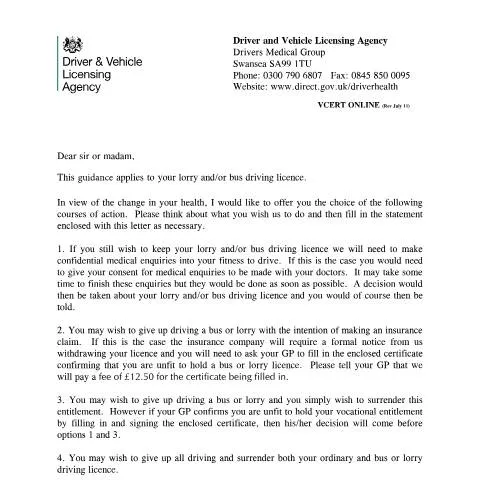
The first option allows drivers to retain their vocational licence whilst undergoing comprehensive medical assessment. This pathway requires explicit consent for DVLA's medical advisers to contact the driver's doctors and specialists directly. The process involves confidential medical enquiries that can be lengthy—potentially spanning several months depending on the complexity of the medical condition and the responsiveness of healthcare providers.
Drivers choosing this route must understand that the outcome remains uncertain. The medical review may result in licence retention, restriction, or revocation based on the clinical evidence gathered. During the assessment period, drivers typically retain their entitlements unless specifically advised otherwise by DVLA.
Formal Surrender for Insurance Purposes
The second pathway specifically addresses drivers who need to establish medical unfitness for insurance claims. This option requires dual certification: the GP must complete the enclosed GPCERT form confirming medical unfitness, and DVLA must issue formal notice withdrawing the licence. The £12.50 GP fee, paid by DVLA, reflects the administrative burden of this medical certification process.
Insurance companies often require this formal documentation to process disability or income protection claims. The timing can be critical—delays in obtaining proper certification may affect claim validity or payment schedules.
Voluntary Surrender Without Insurance Requirements
The third option enables straightforward surrender of vocational entitlement without insurance implications. However, this apparently simple choice carries an important caveat: if the GP simultaneously confirms medical unfitness through the GPCERT certificate, that medical determination takes precedence over voluntary surrender, effectively converting the process to option two.
This hierarchy ensures that medical unfitness is properly documented in DVLA records, which may be relevant for future licence applications or medical assessments.
Complete Licence Surrender
The fourth pathway involves surrendering both ordinary and vocational driving entitlements—essentially ending all driving privileges. This comprehensive approach may be appropriate when medical conditions affect all aspects of driving ability, not just vocational requirements.
| Option | Licence Status | GP Certificate Required | Insurance Documentation | Processing Time |
|---|---|---|---|---|
| Medical Review | Retained pending assessment | No | No | Several months |
| Insurance Surrender | Formally withdrawn | Yes (£12.50 fee) | Yes | 2-4 weeks |
| Voluntary Surrender | Surrendered | Optional | No | 1-2 weeks |
| Complete Surrender | All entitlements ended | Optional | Depends on circumstances | 1-2 weeks |
Navigating the VCERTREPLY Form Complexities
The VCERTREPLY form—designated VOC99A—serves as the formal response mechanism, but its apparent simplicity masks several critical considerations. Each checkbox selection triggers different administrative processes and legal consequences that extend beyond the immediate surrender decision.
Consent Implications for Medical Disclosure
Selecting the first option requires understanding that medical consent extends beyond initial enquiries. DVLA's medical advisers may need to contact multiple healthcare providers, request additional tests, or seek specialist opinions. This consent remains valid throughout the assessment period and covers all medical information relevant to driving fitness.
Under the Data Protection Act 2018 and UK GDPR, this consent must be freely given and can be withdrawn, though doing so would likely result in licence revocation due to inability to complete the medical assessment.
Physical Licence Return Requirements
Options two, three, and four all require physical return of the driving licence showing vocational entitlements. This seemingly straightforward requirement can create practical complications. Drivers who have lost their licence must first report the loss to DVLA and may need to obtain a replacement before proceeding with surrender.
The licence must show the specific Category C or D entitlements being surrendered. Older paper licences or those with complex endorsement histories may require additional verification before surrender can be processed.
Medical Certification Standards and GP Responsibilities
The GPCERT form places specific responsibilities on General Practitioners that extend beyond routine medical care. GPs must certify that the patient "cannot satisfy the medical standards required for vocational driving," which requires understanding of DVLA's specific fitness criteria rather than general medical assessment.
Clinical Assessment Requirements
DVLA's vocational driving standards encompass multiple medical domains: visual acuity and field defects, cardiovascular conditions, diabetes management, neurological disorders, psychiatric conditions, and substance misuse history. GPs must assess whether the patient's condition creates unacceptable risk in the vocational driving context.
This assessment differs significantly from fitness for ordinary driving. Conditions that might be acceptable for car driving—such as controlled diabetes or mild cognitive impairment—may disqualify vocational drivers due to the increased responsibility and longer driving periods involved.
Documentation and Invoicing Procedures
The £12.50 fee reflects the administrative burden of completing medical certification rather than clinical consultation. GPs must provide detailed medical condition descriptions and include proper invoicing documentation to receive payment. DVLA's payment processes can take several weeks, and incomplete documentation may delay both certification and payment.
The medical details section requires sufficient specificity to support the unfitness determination whilst maintaining patient confidentiality. Generic descriptions like "medical condition" are insufficient; DVLA requires enough detail to understand the functional limitations affecting driving ability.
Timing Considerations and Process Dependencies
The VCERT process operates within complex timing frameworks that can significantly impact outcomes, particularly when insurance claims or employment considerations are involved. Understanding these temporal aspects is crucial for making informed decisions about which pathway to pursue.
Medical Review Timescales
Medical assessments under option one can extend considerably beyond initial estimates. Complex cases involving multiple specialists, rare conditions, or incomplete medical records may require six months or more for resolution. DVLA's Drivers Medical Group processes thousands of cases annually, and priority is typically given to cases involving immediate safety concerns rather than routine reviews.
During extended review periods, drivers may face employment difficulties even if their licence technically remains valid. Many employers require regular confirmation of driving entitlements, and pending medical reviews can create uncertainty that affects job security or advancement opportunities.
Insurance Claim Coordination
Option two requires careful coordination between DVLA processing, GP certification, and insurance company requirements. Most insurers specify timeframes for submitting medical evidence following disability onset or diagnosis. Delays in obtaining DVLA's formal withdrawal notice may jeopardise claim validity or reduce settlement amounts.
Some insurance policies distinguish between voluntary licence surrender and medical revocation, potentially affecting benefit levels. The formal DVLA withdrawal notice provides crucial documentation establishing that surrender resulted from medical unfitness rather than personal choice.
Case Reference Systems and Administrative Tracking
The VCERT process operates through DVLA's case reference system, which provides unique identifiers linking all correspondence, medical assessments, and decisions to individual drivers. Understanding this system helps ensure proper communication and avoid processing delays.
Reference Number Significance
Each VCERT case receives a unique case reference that must appear on all subsequent correspondence. This reference links to the driver's complete DVLA record, including previous medical reviews, endorsements, and licence history. Misquoting or omitting case references can result in significant processing delays or misfiling of critical documents.
The letter reference "VCERT ONLINE" indicates the communication originated from DVLA's digital processing system rather than manual correspondence. This classification affects processing priorities and response timeframes, with online-generated cases typically receiving faster handling.
Contact Point Management
All VCERT correspondence must be directed to the Drivers Medical Group in Swansea rather than local DVLA offices. The specialised nature of medical assessments requires processing by qualified medical personnel rather than general licensing staff. Phone enquiries to 0300 790 6807 should reference the specific case number and clearly state the nature of the enquiry to ensure proper routing.
Fax communications to 0845 850 0095 remain acceptable for urgent medical information, though digital submission is increasingly preferred for security and processing efficiency.
Implications Beyond Immediate Licence Status
VCERT decisions create lasting implications that extend well beyond the immediate surrender or retention of vocational driving entitlements. These consequences can affect future licence applications, employment prospects, and insurance arrangements for years following the initial decision.
Future Licence Application Considerations
Drivers who surrender vocational entitlements may later wish to reapply when medical conditions improve or stabilise. However, previous medical revocations or surrenders create permanent DVLA records that affect future applications. Reapplication typically requires comprehensive medical assessment demonstrating sustained fitness rather than simple renewal processes.
The specific pathway chosen through VCERT affects reapplication requirements. Voluntary surrenders may require less extensive medical evidence than cases involving formal medical unfitness determinations, though DVLA maintains discretion to require full reassessment regardless of surrender circumstances.
Employment and Professional Implications
Vocational driving licence changes must be reported to current employers and disclosed in future job applications within the transport industry. Many employers conduct regular licence checks, and unexplained gaps in vocational entitlement can raise questions about driver reliability or fitness.
Professional driving qualifications such as Driver Certificate of Professional Competence (CPC) remain valid even after licence surrender, but their practical utility is obviously limited without corresponding driving entitlements. Maintaining CPC currency during periods of medical unfitness may facilitate faster return to professional driving when health permits.
The VCERT process ultimately serves as both protection and pathway—safeguarding public safety whilst providing structured options for drivers navigating the challenging intersection of health concerns and professional requirements. Success in this process depends largely on understanding the nuanced implications of each available option and selecting the pathway that best aligns with individual circumstances, health prognosis, and long-term objectives.
Complex Scenarios and Special Circumstances
Surrendering large vehicle entitlements through form VCERT becomes considerably more intricate when dealing with specific circumstances that don't fit the standard surrender process. Understanding these scenarios is crucial for drivers who find themselves in unique situations.
Medical disqualification cases represent one of the most complex areas. When a driver's Group 2 medical certificate expires or is revoked due to health conditions, they may still hold the paper counterpart showing C+E or D1+E entitlements. The DVLA's medical team must coordinate with the licensing department to ensure proper removal of these entitlements. Drivers often mistakenly believe that medical disqualification automatically removes all higher category entitlements from their record, but this isn't always the case—particularly with older licences where entitlements were added before the current digital system.
Drivers holding provisional entitlements face another layer of complexity. If you've passed your car test but hold provisional C1, C, D1, or D entitlements that you never upgraded to full licences, these may still appear on your driving record. Form VCERT can remove these provisional rights, but you must specify whether you're surrendering provisional or full entitlements. The DVLA treats provisional large vehicle entitlements differently in their database, and incorrect specification can lead to processing delays or partial removals.
Historic licensing anomalies create particularly challenging scenarios. Some drivers who passed their car test before 1 January 1997 automatically received C1 and D1 entitlements (vehicles up to 7.5 tonnes and minibuses up to 16 seats). These 'grandfather rights' may still exist on driving records even decades later. Additionally, drivers who held Group 2 licences under the old classification system (before 1999) might have entitlements that don't directly translate to current categories. The DVLA maintains conversion tables, but surrendering these historic entitlements requires careful specification of both old and new category codes.
Cases involving court-ordered disqualifications present unique procedural requirements. When a magistrate or crown court disqualifies a driver from large vehicles specifically, the court should notify the DVLA directly. However, administrative delays or communication failures sometimes mean these entitlements remain active on the driving record. Form VCERT can address these discrepancies, but you'll need to provide court reference numbers, conviction dates, and specific details of the disqualification order. The DVLA cross-references this information with court records, which can extend processing times significantly.
International licence holders who've exchanged foreign driving qualifications for UK licences may discover unexpected large vehicle entitlements on their records. EU licence exchanges before Brexit, in particular, sometimes resulted in broader entitlements than the driver actually held abroad. These cases require careful documentation of the original foreign licence and the exchange process. The DVLA may request additional evidence before processing the surrender, particularly if the entitlements significantly exceed what would be expected from standard car licence exchanges.
Drivers dealing with identity document changes—such as name changes through marriage, deed poll, or gender recognition certificates—must ensure their VCERT application reflects their current legal identity while referencing their driving licence number correctly. The DVLA's records may show the old name, creating potential matching issues. Include supporting documentation and clearly explain any identity changes in the additional information section of the form.
Post-Surrender Administrative Considerations
The administrative landscape following a successful VCERT submission involves several critical considerations that drivers often overlook, potentially creating complications months or years after the surrender process.
Insurance implications extend far beyond simply removing large vehicle coverage from your policy. Many comprehensive car insurance policies include provisions for driving other vehicles or temporary use of larger vehicles for personal purposes. When you surrender C1 entitlements, these policy clauses may become invalid, even for vehicles you could previously drive under your car licence grandfather rights. Contact your insurer immediately after receiving confirmation of your surrender to review policy terms and ensure continued coverage validity.
The DVLA's database update process doesn't always synchronise immediately across all systems. While your updated licence should arrive within three weeks, other government databases—including those used by police roadside checks, ANPR systems, and vehicle hire companies—may retain outdated entitlement information for several weeks longer. Carry your new licence and the DVLA's surrender confirmation letter when driving, particularly if you're operating vehicles near the boundary of your remaining entitlements.
Employer notification requirements vary significantly depending on your employment contract and industry. Many employers require immediate notification of any changes to driving entitlements, regardless of whether large vehicles feature in your current role. Fleet insurance policies often stipulate that all authorised drivers maintain specific minimum entitlements, and surrender of large vehicle categories could affect your eligibility to drive company cars or vans. Review your employment contract and speak with HR or fleet management before submitting VCERT.
The impact on future licence applications deserves careful consideration. Once you surrender large vehicle entitlements, regaining them requires starting the entire qualification process from scratch—theory test, practical test, and medical certification where applicable. This applies even if you previously held full unrestricted entitlements for decades. The DVLA doesn't maintain any 'fast-track' process for drivers who voluntarily surrendered entitlements, treating them identically to first-time applicants.
Penalty points and endorsement considerations create additional complexity. If you currently have penalty points that specifically relate to large vehicle offences—such as exceeding weight limits or tachograph violations—these endorsements remain on your licence even after surrendering the relevant entitlements. However, future penalty points for offences that would typically affect large vehicle entitlements (such as serious speeding offences) may have different implications for your remaining car and motorcycle entitlements. The DVLA's penalty point system considers your highest category of entitlement when determining disqualification thresholds.
European driving considerations have become increasingly complex post-Brexit. If you frequently travel to EU countries for business or leisure, surrendering UK large vehicle entitlements may affect your ability to hire or drive larger vehicles abroad. Many EU rental companies rely on UK licence checks that may not immediately reflect your surrendered entitlements, potentially allowing rentals you're no longer qualified to drive. Conversely, some EU countries have specific requirements for UK licence holders that may be affected by changes to your entitlement categories.
The DVLA's record retention policies mean that surrendered entitlements remain visible in their internal systems indefinitely, even though they don't appear on your current licence. This historical data can be accessed by certain authorities and may be relevant in future legal proceedings, employment checks, or insurance investigations. Understanding this data retention helps you respond accurately to questions about your driving history on job applications or insurance forms.
Legal Framework and Regulatory Compliance
The legal foundation underpinning form VCERT and the voluntary surrender of large vehicle entitlements operates within a complex regulatory framework that intersects multiple areas of UK transport law, creating obligations and protections that extend well beyond the simple administrative process.
The Road Traffic Act 1988 provides the primary statutory authority for the DVLA to grant, vary, and revoke driving entitlements. Section 99 specifically empowers licence holders to surrender categories voluntarily, establishing the legal basis for VCERT submissions. However, this same legislation creates ongoing obligations—once you surrender entitlements, driving vehicles requiring those categories becomes a criminal offence under Section 87, carrying penalties including unlimited fines, discretionary disqualification, and potential imprisonment for repeat offences.
The Motor Vehicles (Driving Licences) Regulations 1999 establish the detailed procedural framework governing VCERT processing. These regulations specify the DVLA's obligations regarding processing timescales, notification requirements, and the circumstances under which surrenders may be refused. Notably, Regulation 23 requires the DVLA to maintain comprehensive records of all licence variations, meaning your surrender creates a permanent legal record that may be disclosed in certain circumstances, including court proceedings or regulatory investigations.
Data protection compliance under the UK GDPR and Data Protection Act 2018 creates specific rights and obligations around VCERT submissions. The DVLA processes your surrender request under the 'public task' lawful basis, meaning they don't require explicit consent but must demonstrate necessity for road safety purposes. However, you retain rights to access the complete history of your driving record, including detailed logs of when and why entitlements were surrendered. This becomes particularly relevant if you later dispute the surrender or need evidence for legal proceedings.
The interaction with criminal law creates additional complexity, particularly around the concept of 'permitting' others to drive. If you allow someone to drive a large vehicle believing they hold appropriate entitlements, but their licence shows surrendered categories due to administrative delays or miscommunication, you may face prosecution under Section 87(2) of the Road Traffic Act 1988. The defence of 'reasonable belief' in the driver's qualification becomes more complex when VCERT submissions create temporary periods where database records don't match physical licences.
Employment law implications intersect significantly with VCERT submissions, particularly regarding contractual obligations and discrimination issues. If your employment contract specifies maintenance of particular driving entitlements, voluntary surrender could constitute breach of contract, potentially justifying dismissal or contract variation. However, if surrender relates to medical conditions that qualify as disabilities under the Equality Act 2010, employers must consider reasonable adjustments rather than automatic termination. The timing and motivation for surrender become legally significant in employment disputes.
Insurance law creates additional obligations around disclosure and material facts. The Insurance Act 2015 requires policyholders to disclose all material circumstances that would influence an insurer's decision to provide cover or set premiums. Surrendering large vehicle entitlements typically constitutes a material change, requiring immediate notification regardless of whether you currently drive such vehicles. Failure to disclose may void coverage entirely, with potential implications for third-party claims and personal liability.
The corporate compliance framework affects businesses whose employees surrender entitlements. Under the Health and Safety at Work Act 1974, employers have ongoing duties to ensure driver competence and licence validity. If an employee surrenders entitlements but continues driving vehicles requiring those categories—whether through oversight or system delays—the employer may face prosecution under health and safety legislation, particularly if incidents occur. Many businesses implement monthly licence checking procedures specifically to identify such changes promptly.
International legal considerations have evolved significantly following Brexit. The Vienna Convention on Road Traffic 1968, to which the UK remains a signatory, establishes principles of licence recognition between countries. However, surrendered entitlements may affect your ability to drive in other signatory countries, even where reciprocal agreements exist. Some countries apply their own interpretation of UK licence categories, and surrendered entitlements may not be immediately reflected in international recognition systems, creating potential legal exposure when driving abroad.
The regulatory framework around medical fitness creates ongoing obligations even after surrender. If you surrender large vehicle entitlements due to medical conditions, the DVLA may impose monitoring requirements affecting your remaining car licence entitlements. Section 94 of the Road Traffic Act 1988 empowers the DVLA to require periodic medical reviews, and surrender of higher categories may trigger enhanced scrutiny of your overall fitness to drive. This can result in additional medical reporting requirements or restrictions on your remaining entitlements.
Appeals and dispute resolution procedures provide important protections if VCERT processing goes wrong. The Transport Tribunal has jurisdiction over DVLA licensing decisions, including cases where surrenders are incorrectly processed or where drivers later claim they didn't intend to surrender specific entitlements. However, the statutory framework creates a strong presumption that written surrender requests reflect genuine intention, making successful appeals challenging without clear evidence of administrative error or misunderstanding.