When Manufacturer Certificates Fall Short: The V267 Alternative Path
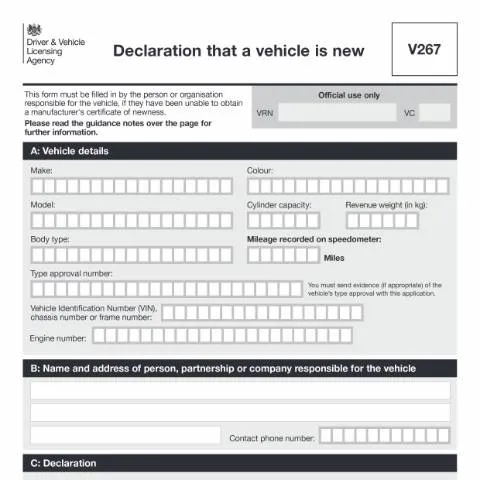
Picture this scenario: you've just purchased a brand-new vehicle, but the manufacturer has been unable to provide the standard certificate of newness required for DVLA registration. This administrative gap—more common than many realise—can halt your registration process entirely. The Declaration that a vehicle is new (form V267) serves as DVLA's official workaround, allowing the person or organisation responsible for the vehicle to step in where manufacturers cannot.
This declaration mechanism exists because real-world vehicle supply chains don't always align with administrative requirements. Small-volume manufacturers, imported vehicles, kit cars, or situations involving complex corporate restructuring can all create circumstances where the usual manufacturer certification pathway becomes unavailable. The V267 bridges this gap through a formal declaration process that places legal responsibility squarely on the declarant's shoulders.
Who Bears Responsibility: The Declarant's Role and Legal Standing
The V267 form explicitly targets the person or organisation responsible for the vehicle when manufacturer certification proves unattainable. This responsibility typically falls to vehicle importers, dealerships handling specialist marques, kit car builders, or individuals who have acquired vehicles through non-standard channels.
Understanding who qualifies as the responsible party requires careful consideration of the vehicle's journey to your ownership. If you're a dealership that has imported a vehicle directly from overseas, you become the responsible party. Similarly, if you've built a kit car or substantially modified a vehicle to the point where manufacturer certification becomes inappropriate, the responsibility shifts to you.
The legal weight of this responsibility cannot be understated. By completing form V267, you're making formal declarations under penalty of prosecution for false statements. This isn't merely administrative paperwork—it's a legal document that DVLA relies upon to establish the vehicle's status in their records.
Corporate vs Individual Declarants
The form accommodates both individual and corporate declarants, with specific provisions for partnerships and companies. Corporate declarants must ensure the signatory has appropriate authority to bind the organisation, and the form requires explicit statement of the signatory's position when acting for a company or partnership.
Technical Specifications: Decoding the Vehicle Details Section
Section A of the V267 form demands comprehensive technical information that goes well beyond basic identification. The vehicle details section reflects DVLA's need to establish definitive records for a vehicle that lacks standard manufacturer documentation.
| Information Required | Source | Critical Notes |
|---|---|---|
| Make and Model | Vehicle documentation or plate | Must match exactly with any existing type approval |
| VIN/Chassis/Frame Number | Physical plate near engine | Application rejected if missing—no exceptions |
| Engine Number | Engine block marking | Required for complete vehicle identification |
| Type Approval Number | Type approval certificate | Evidence must accompany application if applicable |
The colour specification requires particular attention. DVLA uses basic colour descriptions rather than manufacturer-specific names, so "Midnight Pearl" becomes simply "black" on official records. For multi-coloured vehicles, the guidance notes specify entering both primary colours or "multi-coloured" for three or more colours.
Revenue weight becomes relevant only for vehicles exceeding 3500kg, reflecting DVLA's focus on commercial vehicle taxation. The mileage reading must come directly from the vehicle's odometer, establishing the baseline for future MOT and service records.
Type Approval Complexities
The type approval number field presents particular challenges for non-standard vehicles. While the form allows this field to remain blank for vehicles that don't require type approval evidence due to their construction method, determining whether your vehicle falls into this category requires careful assessment of current type approval regulations.
The Four Pillars of Newness: Understanding the Declaration Criteria
Section C presents four specific criteria that define "newness" in DVLA's framework. Each criterion addresses a different aspect of the vehicle's history and status, and all four must be satisfied for a valid declaration.
The first criterion—that the vehicle has not been permanently registered in any other country—catches many applicants off-guard. Temporary registrations for transportation purposes don't disqualify a vehicle, but any permanent registration elsewhere renders the V267 inappropriate. This particularly affects vehicles imported from EU countries where temporary registration systems vary significantly.
The retail sale criterion creates interesting edge cases. The guidance clarifies this applies to sales "between non motor traders," meaning trade-to-trade transactions don't disqualify the vehicle. However, any sale to a private individual for personal use would breach this criterion, even if that individual later decided not to register the vehicle.
Delivery Mileage Interpretations
The "reasonable delivery mileage" criterion requires judgement calls that can prove contentious. While no specific mileage threshold appears in the form, DVLA's assessment considers factors including the distance from manufacturer to dealer, any demonstration use, and pre-delivery inspection requirements. Generally, mileage under 250 miles raises few questions, while higher readings require clear justification.
The final criterion regarding current or recently discontinued models addresses DVLA's concern about genuinely new vehicles versus older stock being presented as new. The two-year threshold provides flexibility for legitimate new old stock while preventing abuse of the system.
Supporting Evidence: The Documentation Ecosystem
The V267 form operates within a broader documentation framework that extends well beyond the form itself. DVLA's guidance notes emphasise the critical importance of supporting evidence, particularly regarding vehicle collection dates and import procedures.
Evidence of the collection date typically comes from supplier invoices, but alternative documentation may include delivery notes, transport company records, or customs clearance documents for imported vehicles. The key requirement is establishing when the vehicle came into the declarant's possession, as this anchors the entire newness assessment.
For imported vehicles, the documentation requirements become more complex. Temporary registration forms used for driving the vehicle into the UK must be provided, along with evidence of the transportation method if the vehicle was transported rather than driven. This dual approach allows DVLA to verify both the vehicle's import status and its usage history.
Type Approval Evidence Protocols
When a type approval number is provided, corresponding evidence must accompany the application. This creates a documentation trail that DVLA can verify against their type approval databases, but it also means delays if the evidence proves inadequate or unclear.
Processing Pathways: From Submission to Registration
Once submitted, the V267 follows DVLA's standard vehicle registration processing protocols, but with additional verification steps that reflect the form's exceptional nature. The absence of manufacturer certification triggers enhanced scrutiny of the supporting documentation and declared vehicle details.
DVLA's processing begins with verification of the technical specifications against their vehicle databases and type approval records. Discrepancies in make, model, or type approval information can trigger requests for additional evidence or clarification. This verification stage often proves the longest part of the process, particularly for unusual or low-volume vehicles.
The declaration criteria undergo systematic checking, with particular attention to the vehicle's registration history in other jurisdictions. DVLA maintains access to various international vehicle databases, and suspicious patterns or inconsistencies can prompt detailed investigations.
Outcome Scenarios
Successful processing results in standard DVLA registration documentation, with no ongoing indication that the V267 route was used. The vehicle enters DVLA's systems as any other newly registered vehicle, though the supporting documentation remains on file for future reference.
Rejection scenarios typically stem from incomplete supporting evidence, failure to meet the newness criteria, or technical specification discrepancies. DVLA provides specific feedback on rejection reasons, allowing resubmission once deficiencies are addressed.
Strategic Considerations: When V267 Represents the Optimal Route
The V267 declaration route serves specific market sectors and situations where standard manufacturer certification proves problematic or impossible. Understanding when this form represents the most appropriate approach requires assessment of both the vehicle's characteristics and the available alternatives.
For specialist vehicle importers, the V267 provides certainty in situations where manufacturer cooperation cannot be guaranteed. Small-volume manufacturers or those undergoing corporate restructuring may be unable to provide timely certification, making the declaration route more reliable for business planning purposes.
Kit car builders and vehicle modifiers face particular challenges with manufacturer certification, especially when substantial modifications affect the vehicle's original specification. The V267 allows these builders to take direct responsibility for the vehicle's status rather than navigating complex manufacturer liaison processes.
Risk Assessment Framework
The decision to use form V267 should incorporate careful risk assessment, given the legal implications of the required declarations. False declarations carry prosecution risks, making thorough documentation review essential before submission.
Consider also the long-term implications for vehicle resale and insurance. While DVLA registration via V267 creates no ongoing restrictions, some insurance providers or specialist vehicle purchasers may request details of the original registration process, making comprehensive record-keeping advisable.
Compliance Safeguards: Avoiding Declaration Pitfalls
The V267's legal framework demands scrupulous attention to accuracy and completeness. The form's warning about prosecution for false statements reflects genuine enforcement activity, making compliance safeguards essential for any potential declarant.
Verification of vehicle details should extend beyond casual inspection to include professional assessment where appropriate. Engine and chassis numbers can be difficult to locate or read accurately, and errors in these critical identifiers can invalidate the entire application.
The newness criteria require particularly careful evaluation. Each criterion contains subtleties that may not be immediately apparent, and borderline cases benefit from pre-submission consultation with DVLA's technical support services.
Documentation standards should exceed the minimum requirements where possible. While DVLA specifies certain evidence requirements, additional supporting documentation can strengthen the application and reduce processing delays. This approach proves particularly valuable for unusual vehicles or complex import scenarios.
Signature authority requires verification for corporate applicants. Ensuring the signatory has appropriate authority to bind the organisation prevents potential rejection and legal complications. Board resolutions or formal authority documentation may prove necessary for larger corporate entities.
When New Vehicle Declaration Goes Wrong: Common Rejection Scenarios and Solutions
Even with careful preparation, V267 submissions can face rejection from DVLA, often due to specific technical requirements or documentation gaps that aren't immediately obvious. Understanding these common pitfalls can save considerable time and prevent delays in vehicle registration.
One frequent rejection occurs when the chassis number format doesn't match DVLA's validation system. European vehicles typically use 17-character VIN codes, but some specialist manufacturers or kit car builders may use shorter identification numbers. If your vehicle identification number contains fewer than 17 characters, you must provide additional documentation explaining the manufacturer's numbering system. This might include a letter from the manufacturer or approved UK importer confirming the identification format.
Timing-related rejections often catch applicants off-guard, particularly regarding the "new vehicle" definition. DVLA considers a vehicle new only if it hasn't been previously registered anywhere in the world and hasn't been sold to an end user. Demonstration vehicles used by dealerships, even briefly, may no longer qualify as "new" under these criteria. If your vehicle has been used for promotional purposes, trade shows, or dealer demonstrations, you'll need to provide detailed documentation of its usage history and may require alternative registration procedures.
Documentation authenticity presents another common stumbling block. European Certificates of Conformity must bear original signatures and official stamps - photocopies or scanned versions typically face immediate rejection. If your original certificate is damaged or illegible, contact the vehicle manufacturer's UK representative to obtain a certified replacement rather than attempting to enhance or repair the existing document.
For vehicles requiring Individual Vehicle Approval (IVA), the timing between IVA certification and V267 submission proves critical. The IVA certificate must be current and specifically reference the vehicle identification number shown on your V267. Any discrepancy between these documents, even minor spelling variations in manufacturer names, can trigger rejection. Always cross-reference all identification details before submission.
Weight and dimension discrepancies frequently cause problems, particularly for commercial vehicles or modified vehicles. The weights and measurements declared on V267 must exactly match those shown on your Certificate of Conformity or IVA documentation. If modifications have altered the vehicle's specifications since manufacture, you'll need engineering certification documenting these changes and their impact on the vehicle's classification.
Special Circumstances: Military, Diplomatic, and Emergency Service Vehicles
Certain categories of new vehicles require modified declaration procedures or additional documentation beyond standard V267 requirements. These special circumstances often involve unique identification systems or exemptions from standard approval processes.
Military vehicles present particular complexities when transitioning to civilian use. Former military vehicles being declared as new for civilian registration must demonstrate they've never been registered for road use, even within military systems. The Ministry of Defence provides specific release documentation for vehicles being transferred to civilian ownership, including detailed technical specifications and modification records. This documentation must accompany your V267 submission, along with confirmation that all military-specific equipment has been removed or deactivated.
Vehicles imported under military personnel privileges require additional attestation regarding their acquisition circumstances. Service personnel returning from overseas postings may import personal vehicles duty-free under specific conditions, but these vehicles must still meet UK construction and use requirements. The V267 declaration must include reference to the relevant HM Forces importation documentation and confirm compliance with civilian safety standards.
Diplomatic vehicles operate under different registration protocols, but newly imported diplomatic vehicles still require V267 declaration when transitioning to standard UK registration. Embassy or consular vehicles being transferred to civilian use must provide Foreign and Commonwealth Office documentation confirming their release from diplomatic status. The timing of this release affects the vehicle's "new" status - vehicles used diplomatically for extended periods may no longer qualify as new under DVLA criteria.
Emergency service vehicles, including police, ambulance, and fire service vehicles, often incorporate specialized equipment affecting their classification. When declaring these vehicles as new, particular attention must be paid to their intended use category. Emergency vehicles may qualify for specific construction and use exemptions, but these must be properly documented during the initial registration process. The V267 must clearly indicate the vehicle's intended emergency service use and reference any relevant Home Office or department-specific approval documentation.
Specialist rescue vehicles, including mountain rescue, lifeboat service, or airport emergency vehicles, may require additional certification beyond standard type approval. These vehicles often incorporate unique safety equipment or modifications not covered by standard European type approval processes. Documentation must demonstrate compliance with relevant British Standards or industry-specific safety requirements, particularly for vehicles operating in high-risk environments.
Understanding Vehicle Classification Impact on Insurance and Taxation
The information declared on form V267 directly influences your vehicle's classification for insurance and taxation purposes, with implications extending far beyond the initial registration process. Understanding these connections helps ensure accurate declaration and prevents future complications.
Vehicle taxation depends heavily on the technical specifications declared during registration. CO2 emissions figures, fuel type, and vehicle category all affect the applicable Vehicle Excise Duty rate. For vehicles first registered after April 2017, the CO2 emissions declared on V267 determine whether the vehicle qualifies for the standard rate or higher luxury vehicle taxation. Inaccurate emissions data can result in incorrect tax calculations and potential penalties for underpayment.
The declared vehicle weight significantly impacts commercial vehicle taxation and operating requirements. Vehicles exceeding 3,500kg gross vehicle weight face different taxation structures and may require operator licensing for commercial use. The kerb weight and gross vehicle weight declared on V267 must reflect the vehicle's actual specifications, including any factory-fitted optional equipment that affects weight distribution.
Insurance classification relies heavily on the vehicle details captured during initial registration. The declared engine size, power output, and vehicle category influence insurance group ratings, which directly affect premium calculations. Modifications or optional equipment that alter the vehicle's performance characteristics should be accurately reflected in the V267 declaration to prevent insurance complications later.
For electric and hybrid vehicles, the declared battery capacity and electric range affect both taxation and insurance considerations. Pure electric vehicles benefit from specific tax exemptions, but these depend on accurate technical specification declaration. Hybrid vehicles face complex classification requirements based on their electric-only range and CO2 emissions during petrol or diesel operation.
Commercial vehicle classifications established during V267 processing affect operating regulations and compliance requirements. Light commercial vehicles under 3,500kg face different regulations than heavier commercial vehicles, including different speed limits, parking restrictions, and environmental zone access rights. The vehicle category declared must accurately reflect the manufacturer's intended use classification.
Import duty implications may arise from the vehicle classification established during registration. While most EU vehicles face no additional duties, vehicles from other regions may be subject to classification-specific import charges. The harmonized system codes used for import classification must align with the vehicle specifications declared on V267 to ensure consistent treatment across different government departments.
Future modification possibilities can be limited by the initial vehicle classification. Certain vehicle categories face stricter regulations regarding subsequent modifications, particularly regarding safety equipment or emissions control systems. Understanding these limitations during the initial declaration process helps prevent complications when considering future vehicle modifications or upgrades.