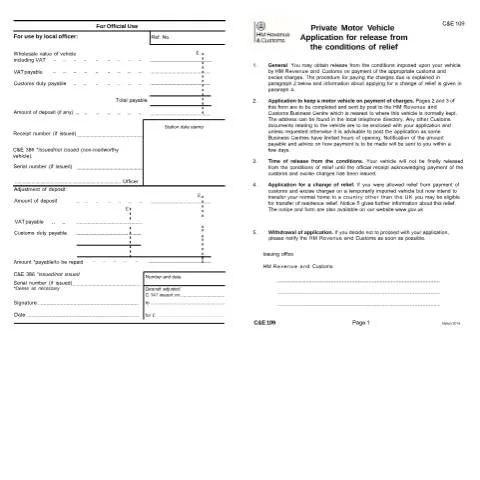
Navigating the C&E 109: A Roadmap for Vehicle Ownership Relief
When it comes to owning a private motor vehicle in the UK, especially under specific relief conditions, understanding the nuances of the C&E 109 form is essential. This official document serves as a gateway for vehicle owners to apply for the release from the conditions of relief imposed upon their vehicles, a necessary step for many individuals navigating the intricacies of tax and customs regulations. The C&E 109 not only entails a series of declarations and information inputs but also carries significant implications for vehicle registration, ownership, and financial responsibilities.
Who Finds Themselves on This Journey?
The C&E 109 is relevant for a diverse range of applicants. Primarily, those who have imported vehicles under specific relief conditions are most affected. This can include:
- Foreign nationals relocating to the UK: Individuals moving to the UK may bring their vehicles and seek exemption from certain customs duties.
- UK residents transferring their normal home outside the UK: If you’re relocating outside the UK and have a vehicle previously imported under relief conditions, this form is essential.
- Importers of non-UK vehicles: Those who purchased vehicles abroad and brought them into the UK without paying the relevant customs and excise charges.
Each of these profiles brings unique circumstances that may impact the completion and submission of the C&E 109. Understanding how your situation aligns with the intended use of this form can streamline your application process significantly.
Dissecting the Application Process: Step-by-Step
Completing the C&E 109 is not merely a matter of filling out fields; it’s about accurately representing your situation to HM Revenue & Customs (HMRC). Here’s a detailed breakdown of the steps involved:
1. Gathering Essential Documentation
Before even starting the C&E 109, ensure you have all necessary documentation. This could include:
- Proof of Identity: Such as a passport or driving licence.
- Vehicle Details: This includes the Vehicle Identification Number (VIN), chassis number, engine number, and any previous registration documents.
- Proof of Purchase: Receipts or invoices showing the price paid for the vehicle.
- Evidence of Relief Conditions: Documentation that substantiates your claim for relief, whether that’s proof of residency or evidence of taxes paid in another country.
2. Completing the C&E 109 Form
With your documents in hand, the next step is to accurately fill out the C&E 109 form. Pay close attention to these key sections:
- Personal Information: Your name, address, and contact details must be clearly stated.
- Vehicle Details: Accurately describe the vehicle, including its make, model, and registration status. Special attention must be paid to verifying whether customs duty has been paid previously.
- Declaration of Intent: Clearly indicate your reason for applying for release from the relief conditions, including any change in circumstances.
3. Submitting the Application
Once completed, the C&E 109 must be sent to the nearest HMRC Business Centre. It’s recommended to post the application to avoid any issues related to limited office hours. Ensure that:
- All relevant documents are attached.
- You maintain a copy of everything for your records.
Understanding the Role of HMRC
Once the application is submitted, it’s crucial to comprehend the role of HMRC in this process. Upon receipt of the C&E 109, HMRC will:
- Review Your Documentation: They will assess the completeness and correctness of your submission.
- Communicate Payment Details: If charges are applicable, you will receive notification of the amount due along with instructions for payment.
- Issue Receipts: Following the payment of any customs duties or VAT, HMRC will provide an official receipt, which is critical for the release of relief conditions.
What Happens After Submission?
After you have sent your application, patience is key, but staying proactive is equally important. Typically, you can expect to hear back from HMRC within a few days regarding the outcome of your application. Here’s what to keep in mind during this period:
1. Awaiting the Official Receipt
Your vehicle will not be fully released from relief conditions until you receive an official receipt from HMRC confirming payment of any due customs or excise charges. This receipt serves as proof that you have complied with UK regulations, so keep it safe.
2. Tracking Your Application
If you haven’t received communication from HMRC after a reasonable length of time, consider following up. You can:
- Contact the HMRC Business Centre where you submitted your application.
- Provide them with your application details to facilitate their search.
Alternative Pathways: What If You're Refused?
Receiving a denial of your application can be daunting, but there are steps you can take. Common reasons for refusal may include:
- Insufficient documentation.
- Inaccuracies in the information provided.
- Ineligibility under the specified relief conditions.
In the event of a refusal:
1. Understand the Reasons
HMRC will provide you with a detailed explanation for the refusal. It’s essential to review this information carefully to understand the specific areas that need addressing.
2. Appeal the Decision
If you believe your application meets all necessary criteria, you can appeal the decision. This process requires:
- A formal letter to HMRC outlining your reasons for disputing the refusal.
- Additional documentation that supports your case.
Ensure that your appeal is submitted within the given timeframe typically specified in HMRC’s refusal letter.
Handling Missing or Incorrect Information
Errors can occur, whether they stem from oversight or misinterpretation of requirements. If you discover an error post-submission, here’s how to tackle it:
1. Contact HMRC Immediately
As soon as you identify an error, reach out to HMRC. It’s critical to communicate any mistakes before they process your application further. Provide them with:
- Your application details.
- The specific error and the correct information.
2. Submit Corrected Documentation
If HMRC requires an updated version of your application or additional documents, ensure you comply promptly. Maintain copies of all correspondence.
Preparing for Payment of Customs Charges
Upon approval of your application, you may be required to pay customs or excise charges. Understanding this financial obligation beforehand can prepare you better:
1. Knowing the Amounts
While the specific amounts can vary based on the vehicle’s wholesale value and applicable duties, be prepared for potential costs that may arise. Ensure that you:
- Review HMRC’s calculations once received.
- Understand any VAT implications based on your vehicle's usage and import status.
2. Payment Methods
HMRC will outline the payment method upon approving your application. Common methods include:
- Bank transfer.
- Debit or credit card payments.
- Direct debit options.
Ensure that you retain proof of payment for your records.
Common Scenarios and Exceptions to Keep in Mind
Understanding the specific circumstances under which the C&E 109 applies can further clarify its use. Several exceptions exist that may change how you approach the application process:
| Scenario | Implications |
|---|---|
| Vehicle kept outside the UK for over three years | May affect your eligibility for certain reliefs. |
| Transfer of residence to a non-EU country | Eligibility for different relief options like transfer of residence relief. |
| Temporary importation of vehicles | Specific rules apply—ensure compliance with temporary regulations. |
Your Rights and Responsibilities
As an applicant, it’s crucial to be aware of your rights and responsibilities under the Data Protection Act 2018 and the UK GDPR. These regulations protect how your personal data is handled during the application process.
- Transparency: You have the right to know how your personal data is being used.
- Access: You can request copies of the data HMRC holds about you.
- Correction: If inaccurate data is held, you have the right to have it corrected.
Maintaining open communication with HMRC is key to navigating your responsibilities effectively while ensuring your rights are upheld throughout the application process.
Final Thoughts on the C&E 109 Journey
Completing the C&E 109 and navigating the complexities of customs regulations surrounding private motor vehicles is undoubtedly a process that requires attention to detail and a proactive approach. By thoroughly understanding the steps, preparing essential documentation, and knowing your rights, you can streamline your experience and mitigate potential pitfalls. Whether you are relocating, transferring ownership, or simply seeking to ensure compliance with HMRC regulations, the journey through the C&E 109 is a critical part of responsible vehicle ownership in the UK.
Understanding the Conditions of Relief on Private Motor Vehicle
Before applying for the release from conditions of relief on a private motor vehicle, it is essential to grasp the underlying regulations that govern this aspect. The main purpose of this condition is to ensure that vehicles registered under specific reliefs—such as those for disabled individuals or for certain employment purposes—are used strictly within the scope of the relief granted. Typically, these conditions are established to prevent misuse and ensure that the benefits are reserved for eligible individuals. Besides, it’s crucial to note that failure to comply with these conditions can result in penalties or the requirement to pay additional duties or fees.
The primary conditions usually involve maintaining the vehicle for its intended purpose and keeping it in a state that qualifies for the relief. For example, if you have claimed relief on a vehicle due to a disability, you must ensure that it is primarily used to meet your mobility needs. Any significant deviation from these conditions could necessitate a formal application to HM Revenue & Customs (HMRC) to have the relief cancelled or adjusted.
How to Prepare Your Application for Release from Conditions of Relief
When preparing your application for release from the conditions of relief on a private motor vehicle, you should take a systematic approach to ensure that your submission is robust and compliant. First, gather all necessary documentation that supports your case—this may include proof of the vehicle's usage, evidence showing why you no longer meet the conditions, and any other relevant personal circumstances that may positively impact your application.
Next, familiarize yourself with the specific criteria that HMRC considers when approving releases. Each case is assessed on its merits, so clear, logical, and well-supported arguments are essential. Consider if there are factors such as a change in your health condition or a shift in your personal circumstances that have necessitated this change. The clearer you can articulate these reasons, the more likely you are to receive a favorable outcome.
It is also advisable to keep a copy of your application and any correspondence with HMRC for your records. This will be useful in the event that follow-up communication is necessary or if you need to refer back to previous conversations as your case progresses.
Potential Challenges and How to Overcome Them
Applying for a release from conditions of relief on a private motor vehicle can sometimes present challenges. For instance, an application might be rejected due to insufficient evidence or failure to meet specific criteria set out by HMRC. Understanding these potential pitfalls in advance will allow you to take proactive measures to counteract them.
One common challenge is proving that the vehicle is no longer required for its originally intended purpose. This could be due to changes in your health status or a change in employment type that requires a different vehicle. To mitigate this, consider obtaining supporting letters from medical professionals or your employer that clearly articulate the reasons for your application.
Moreover, timeliness is critical. Ensure that you submit your application within the prescribed timeframes, as delays can lead to complications or even rejection of your request. Regularly check for updates on your application status and maintain open lines of communication with HMRC. If your application is declined, be prepared to follow the appeals process, which may involve further evidence gathering and additional submissions.