Understanding the CT600M: Essential Insights for Businesses in Freeports and Investment Zones
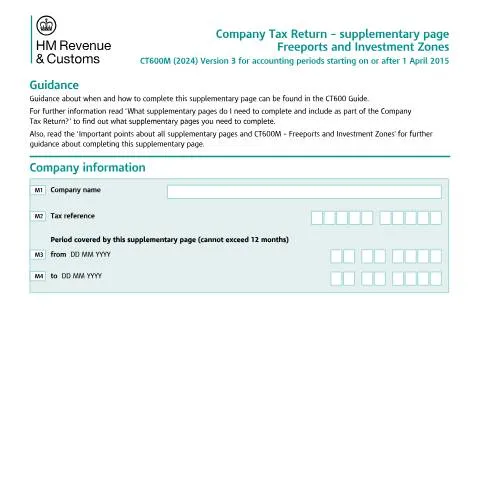
The CT600M form is an essential document for businesses operating within Freeports and Investment Zones in the UK. This supplementary page of the Corporation Tax Return offers a pathway for companies to claim enhanced benefits associated with investments in these strategically designed areas. As economic hubs, Freeports and Investment Zones aim to stimulate growth through targeted incentives. Therefore, understanding how to effectively complete and submit the CT600M can significantly impact a company's financial performance.
The Strategic Importance of Freeports and Investment Zones
Freeports and Investment Zones are designated areas designed to boost economic activity by offering tax reliefs and other incentives. These zones are tailored to attract investment and spur job creation. Here’s why they matter:
- Job Creation: These zones are designed to attract businesses, leading to a surge in local employment opportunities.
- Incentives for Businesses: Through tax exemptions and grants, businesses can reduce initial capital outlays, making it easier to establish operations.
- Innovation Hotspots: By concentrating resources, these zones foster innovation and collaboration among businesses, educational institutions, and governmental entities.
The CT600M form plays a critical role in enabling businesses to capture the financial benefits afforded by these zones.
Who Needs to File the CT600M?
Understanding who is obligated to file the CT600M is essential for compliance. The following entities must complete this form:
- Limited Companies: Any limited company operating in a Freeport or Investment Zone must fill in the CT600M as part of their Corporation Tax Return.
- Partnerships with Corporate Partners: If a partnership includes a corporate entity that operates within these zones, the CT600M is required.
- Unincorporated Associations: Associations that meet specific criteria may need to report via the CT600M.
It’s important to note that different rules may apply depending on the specific circumstances of the business, including its structure and the nature of the activities carried out in the Freeport or Investment Zone.
A Step-by-Step Guide to Completing the CT600M
Completing the CT600M correctly is crucial for ensuring that businesses receive the tax benefits they are entitled to. Here’s how to tackle it:
- Gather Required Information: Before starting, collect all necessary documentation, including:
- Company name and tax reference (M1, M2)
- Details of the period covered (M3, M4)
- Location and address of the Freeport or Investment Zone (M5)
- Total qualifying expenditure and claims (including structures and buildings’ allowance) - detailed in sections M5 through M30
- Fill in the Form Accurately: Use the CT600M guide as a reference to ensure that all entries are completed accurately.
- Calculate Allowances and Expenditures: Verify that all claims are substantiated with valid receipts and documentation, especially for enhanced capital allowances.
- Signature: Ensure the form is signed by an authorized individual within the company.
With these steps, businesses can confidently fill out the CT600M, ensuring they do not miss any critical information that may affect their financial outcomes.
Navigating Submission: Where and How to File the CT600M
Once the CT600M is completed, the next step is submission. The process can be straightforward if approached methodically:
- Electronic Submission: Most businesses will file the CT600M electronically via HMRC’s online services. Ensure that you have a valid Government Gateway account.
- Paper Submission: If unable to file electronically, the completed form can be mailed to the relevant HMRC office. However, this method may delay processing times.
Regardless of the method, ensure that the submission adheres to deadlines, particularly the overall Corporation Tax Return submission deadline of 31 January following the end of your accounting period.
Understanding the Benefits: Enhanced Allowances Explained
The CT600M allows businesses to claim significant tax benefits. Here are the key incentives available:
Structures and Buildings Allowance (SBA)
The SBA is available to companies that construct or renovate buildings within Freeport areas. The following details are relevant for claims:
- Qualifying Expenditure: Claims should detail all costs associated with the construction or renovation of structures.
- Claim Submission: Amounts claimed should be reported accurately in the relevant boxes of the CT600.
Enhanced Capital Allowances (ECA)
For businesses investing in plant and machinery, Enhanced Capital Allowances provide additional tax relief:
- Eligibility: Ensure that the investment meets the criteria set out for ECAs, including usage within Freeports or Investment Zones.
- Reporting: These claims also need to be accurately reported on the CT600M.
Challenges and Solutions: What if You Encounter Issues?
Businesses may face challenges when completing or submitting the CT600M. Here are common scenarios and how to address them:
Missing or Incorrect Information
If a submission is made with incorrect information or missing details, HMRC may reject the filing. In such cases:
- Review the Submission: Take immediate steps to review the submitted form against your records.
- Refile as Necessary: Submit a corrected version of the CT600M as soon as discrepancies are identified.
Disputes with HMRC
In instances where HMRC disputes a claim made on the CT600M:
- Gather Evidence: Collect all supporting documents that substantiate your claim.
- Communicate Promptly: Respond to queries from HMRC in a timely manner to resolve issues efficiently.
Distinguishing the CT600M from Similar Forms
Many businesses may confuse the CT600M with other forms related to Corporation Tax. Here’s how the CT600M stands apart:
| Form | Purpose | Specific Use Cases |
|---|---|---|
| CT600 | Main Corporation Tax Return | All companies filing for Corporation Tax |
| CT600M | Supplementary page for Freeports/Investment Zones | Only for companies benefiting from tax incentives in these zones |
| CT600A | Supplementary page for capital gains | For companies needing to report capital gains |
The CT600M specifically addresses the unique benefits associated with operating in Freeports and Investment Zones, making it critical for eligible businesses to utilize this document properly.
Preparing Supporting Documentation: What You Need
Effective use of the CT600M requires proper documentation. Below are essential records to gather:
- Financial Statements: Accurate accounts showing qualifying expenditure.
- Contracts and Invoices: Documentation supporting any claims for capital allowances.
- Site Plans and Construction Evidence: For claims related to building allowances, clear evidence must be provided.
Having these documents prepared ahead of time can streamline the filing process and improve the chances of a successful claim.
In summary, the CT600M is an integral element for businesses engaged in Freeports and Investment Zones, providing access to valuable tax incentives. Mastering its completion and submission can significantly benefit a company's growth trajectory. Ensure that all relevant information is gathered, accurately reported, and submitted in accordance with HMRC guidelines to reap the full financial advantages of operating in these designated areas.
Understanding Freeports: Definition and Benefits
Freeports are designated areas within the UK where normal tax and customs rules do not apply, designed to encourage economic activity and promote international trade. Established through government policy, these zones offer various incentives to businesses, including reduced Corporation Tax rates, customs duty exemptions, and simplified customs procedures. The aim is to stimulate investment and job creation, particularly in areas that may have faced economic challenges or downturns.
When operating within a Freeport, businesses can benefit from significant financial advantages. For example, companies may enjoy a reduced Corporation Tax rate of 10% on profits generated within the Freeport zone, compared to the standard rate of 19%. Additionally, businesses can import goods without paying customs duties, provided they are used for production within the Freeport. These incentives are aimed at attracting both domestic and foreign investment, creating a competitive business environment that fosters innovation and growth.
It's important to note that Freeports also encourage regional development by attracting specific industries, such as manufacturing, logistics, and technology. Each Freeport is expected to focus on sectors that can drive local economies, creating skilled jobs and revitalising communities. By offering these zones, the UK government aims to leverage its geographical advantages and enhance its trade relationships post-Brexit.
Investment Zones: Targeting Economic Growth
Investment Zones are another key aspect of the UK government's strategy to boost local economies and attract foreign investment. These zones are tailored areas where businesses can benefit from various tax incentives, tailored support, and reduced regulatory burdens. The aim is to create a conducive environment that encourages start-ups, scale-ups, and established businesses to invest in designated regions.
Similar to Freeports, Investment Zones offer reduced Corporation Tax rates and additional financial incentives, such as enhanced capital allowances, which allow businesses to deduct a higher proportion of their capital expenditures from their taxable profits. The intention is to make these zones attractive for investment in sectors such as technology, renewable energy, and advanced manufacturing. The government collaborates with local authorities to identify areas that would benefit most from these initiatives, often focusing on regions with historically lower economic performance or high unemployment rates.
Furthermore, Investment Zones are designed to foster collaboration between public and private sectors, allowing for tailored support for businesses looking to expand or relocate. This collaboration can include training programmes for the local workforce, investment in infrastructure, and streamlined planning processes, ensuring that businesses can operate efficiently and effectively. Ultimately, these zones are a strategic move to balance economic development across the UK, ensuring that no region is left behind in the pursuit of growth and innovation.
Preparing Your CT600M Submission: Step-by-Step Guide
When it comes to submitting your CT600M form for Corporation Tax, particularly in the context of Freeports and Investment Zones, preparation is vital. Understanding the requirements and ensuring all necessary documentation is ready can streamline the submission process. Below is a comprehensive step-by-step guide to assist you in preparing your CT600M submission effectively.
1. Gather Financial Information: Start by compiling all relevant financial data for the accounting period. This includes profit and loss accounts, balance sheets, and any supporting documents that reflect income, expenses, and taxation obligations. For businesses operating in Freeports or Investment Zones, ensure you highlight any specific income or expenses that may qualify for tax incentives.
2. Determine Tax Liabilities: Calculate your Corporation Tax liabilities based on the profits generated during the period. If your business has benefited from the reduced tax rate in a Freeport, ensure you document this clearly. The applicable tax rate for your company should align with the specific regulations governing the Freeport or Investment Zone where your business operates.
3. Complete the CT600M Form: The CT600M form has specific sections that require detailed information about your corporation's trading activities, profit or loss, and tax calculations. Pay special attention to the sections relating to Freeport or Investment Zone incentives. Provide precise details, including taxable profits and any deductions or adjustments that apply based on activities within these zones.
4. Include Relevant Attachments: Ensure that you attach any supplementary documents required alongside your CT600M submission. This might include copies of financial statements, details of any investment projects within the Freeport or Investment Zone, and evidence supporting claims for tax reliefs.
5. Review and Submit: Before submitting your CT600M, review all entries for accuracy and completeness. Double-check that all calculations are correct and that all required signatures are in place. Once you are confident that everything is in order, submit your CT600M through the appropriate channel, ensuring it complies with the deadlines set by HMRC.
6. Keep Records: After submission, maintain a copy of the CT600M along with all supporting documents for at least six years, as required by HMRC regulations. This is crucial in case of any inquiries or audits regarding your tax affairs.
By following these steps and understanding the specific incentives related to Freeports and Investment Zones, you can ensure a smooth and compliant Corporation Tax submission process.