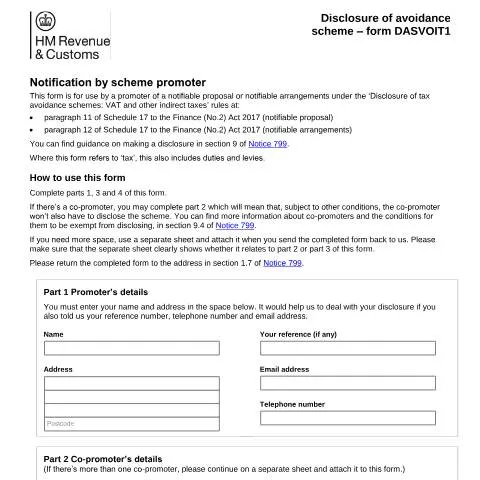
Understanding the Necessity of DASVOIT1 in Tax Regulation
In the complex landscape of UK taxation, the DASVOIT1 form emerges as a pivotal document for those involved in promoting indirect tax schemes. Launched as part of the Finance (No.2) Act 2017, this form is designed for tax scheme promoters to disclose certain arrangements or proposals that could be classified as tax avoidance schemes. The underlying goal of this legislation is to enhance transparency and ensure that the tax system operates fairly for all taxpayers.
This document plays an essential role in combating tax avoidance by mandating promoters to report schemes that may lead to indirect tax advantages. Understanding the parameters set forth by HM Revenue & Customs (HMRC) is crucial for promoters to navigate their obligations effectively.
Navigating the Legal Framework: The Finance Act of 2017
The introduction of the DASVOIT1 form is deeply rooted in UK tax law, particularly the Finance (No.2) Act 2017. This piece of legislation set out specific criteria under which tax schemes must be disclosed. Notably, paragraphs 11 and 12 of Schedule 17 outline the definitions of notifiable proposals and arrangements under the indirect tax framework.
Notifiable proposals refer to schemes where the promoter believes they may provide a tax advantage, while notifiable arrangements cover existing, similar schemes. The establishment of these definitions serves to protect the integrity of the UK tax system and discourages aggressive tax avoidance practices.
Moreover, the duty to disclose is not just a bureaucratic formality; it is a legal obligation that carries significant consequences for non-compliance. Promoters who fail to report schemes in accordance with the stipulations outlined in the Finance Act may face penalties, including financial fines and reputational damage.
Who is Required to Complete the DASVOIT1 Form?
The DASVOIT1 form is primarily aimed at promoters of tax avoidance schemes. This category typically includes accountants, tax advisors, and legal professionals who design tax strategies for clients. Understanding whether you fall under this category is the first step in determining your obligation to submit this disclosure.
Additionally, if the scheme involves co-promoters, they may also be required to participate in the disclosure process. In such cases, the promoter must complete part 2 of the form, ensuring that the second promoter is not held liable for a separate disclosure.
Promoters must carefully assess their involvement in tax schemes and the potential tax advantages they confer. If there is any ambiguity regarding the obligation to disclose, it is prudent to seek professional guidance to avoid inadvertent non-compliance.
Decoding the DASVOIT1 Form: A Step-by-Step Guide
Completing the DASVOIT1 form can initially seem daunting, but a systematic approach can streamline the process. Here is a breakdown of the key sections of the form that promoters must complete:
Part 1: Promoter's Details
The first section requires basic information about the promoter. Promoters must enter their name, address, and contact details. While providing a reference number is optional, supplying an email address and phone number can facilitate communication with HMRC. Clear and accurate information in this section is fundamental, as it establishes the identity of the promoter responsible for the disclosure.
Part 2: Co-Promoter's Information
If there is an additional co-promoter involved in the scheme, their details must also be included. This section allows for multiple co-promoters; however, it's essential to ensure that all information is complete and accurate. HMRC stipulates that only one disclosure is required if all co-promoters are identified correctly on the form.
- Include full names and addresses of all co-promoters.
- Ensure that details are legibly written and complete.
Part 3: Scheme Details
Part 3 is where the core of the disclosure lies. Here, the promoter must outline the tax scheme in detail. This section includes the following critical components:
- Name of Proposal or Arrangements: If there is no specific name, enter 'none.'
- Type of Indirect Tax: Promoters must indicate whether the proposal relates to VAT, Insurance Premium Tax, or other specified duties.
- Hallmark Regulations: Select the hallmark regulation that applies to the scheme. It is crucial to choose the main hallmark where multiple could apply, as this ensures the correct classification of the arrangement.
- Summary and Explanation: Promoters must summarise the proposals and provide a detailed explanation of how the tax advantage is achieved, including the relevant statutory provisions.
Promoters should be cautious in completing this section. Ambiguities or lack of detail may lead to additional queries from HMRC, potentially delaying the processing of the disclosure.
Part 4: Declaration
The final section of the form requires a declaration by the promoter. This is a critical component acknowledging that the information provided is accurate and complete. To ensure compliance:
- Provide a signature and print the name.
- Indicate the capacity in which the form has been completed (e.g., director, partner).
- Include the date of completion to validate the disclosure.
Submitting the Form: The Process Demystified
Once the DASVOIT1 form is completed, the next step is submission. According to HMRC guidelines, it is essential to return the document to the appropriate address specified in section 1.7 of Notice 799. Timeliness is paramount; the disclosure must be made promptly to avoid potential penalties.
It is also advisable to keep copies of all documents submitted, along with any correspondence with HMRC. This practice not only helps maintain accurate records but also provides a reference in case of any future inquiries or disputes regarding the tax scheme.
Post-Submission: Monitoring and Follow-up
After submission, how can a promoter stay informed about the status of their disclosure? HMRC typically acknowledges receipt of the DASVOIT1 form, but monitoring the progress can be proactive. Here are some essential steps:
- Keep track of any correspondence from HMRC, as they may reach out for further clarification or additional information.
- Set reminders for key dates related to the scheme or proposals, particularly if they involve deadlines for compliance or further disclosures.
- If the disclosure is acknowledged, retain the confirmation for your records.
In case of a delay or lack of communication, it is advisable to contact HMRC directly to inquire about the status of the form. This proactive approach can help mitigate any potential issues arising from omissions or miscommunications.
In the Event of Complications: Handling Refusals and Errors
Should HMRC raise concerns about the submitted DASVOIT1 form, it is critical for promoters to know their options. If a disclosure is rejected or deemed incomplete, a promoter may face various consequences, including penalties. Here are steps to take if complications arise:
- Review HMRC Feedback: Understand the reasons for rejection or queries raised.
- Rectify Issues Promptly: If errors are identified, promptly address them and resubmit the form if necessary.
- Seek Professional Advice: If complications persist, consider consulting with a tax professional who specializes in tax compliance.
Furthermore, promoters should also be aware of their right to appeal any penalties imposed by HMRC. Engaging with the appeals process can often lead to a resolution that mitigates financial repercussions.
Understanding the Implications of Non-Disclosure
The risks associated with failing to disclose relevant tax schemes are significant. Not only does non-compliance invite penalties, but it may also lead to a more extensive investigation by HMRC into the promoter's practices and potential exposure to further scrutiny regarding tax compliance.
The penalties for non-disclosure can vary, including:
- Fixed monetary penalties based on the severity of the non-compliance.
- Increased scrutiny of future disclosures, as HMRC may flag the promoter for further investigation.
It is essential for promoters to prioritize compliance with the DASVOIT1 requirements to maintain the integrity of their professional standing and avoid unnecessary complications.
Conclusion: The Importance of Compliance and Transparency
The DASVOIT1 form serves a significant purpose in the UK tax landscape. By fostering transparency around tax schemes, this document contributes to a fairer tax system while holding promoters accountable for their actions. Understanding and complying with the requirements of the DASVOIT1 form is not merely a bureaucratic exercise but a cornerstone of responsible tax practice.
For promoters, the landscape of tax avoidance schemes is ever-evolving, making it vital to stay informed about regulatory changes and compliance expectations. By approaching the DASVOIT1 form with diligence and an understanding of its implications, promoters can navigate the complexities of tax regulation and contribute positively to the integrity of the tax system.
Understanding Indirect Tax Schemes: Key Definitions and Examples
To effectively understand the implications of promoting an indirect tax scheme and the necessity of reporting it to HMRC, it's crucial to clarify what constitutes an indirect tax scheme. Indirect tax schemes refer to arrangements where tax liabilities are reduced through legal loopholes or creative interpretations of the tax code, rather than through outright illegal methods. Examples include VAT avoidance schemes, where businesses might misinterpret regulations to minimize their VAT obligations.
One prominent example is the "missing trader" fraud, where a trader imports goods VAT-free but then disappears without remitting VAT to HMRC. While this is a form of fraud, it illustrates how indirect tax schemes can operate on the edge of legality. Another example is using offshore structures to shield profits from VAT, which can often lead to complex legal challenges and scrutiny from HMRC.
It is essential for individuals and businesses that promote or engage in such activities to understand the nuances involved. If you are unsure whether a scheme falls into this category, consulting a tax professional can provide clarity. Furthermore, if you believe that a scheme may be classified as indirect tax avoidance, it is advisable to report it using the DASVOIT1 form to avoid further complications down the line.
Consequences of Non-Reporting to HMRC
Failing to report an indirect tax scheme can lead to severe repercussions, both for individuals and businesses. HMRC has established strict penalties for non-compliance, which can include fines, interest on unpaid taxes, and potentially criminal charges for serious infractions.
Specifically, if HMRC suspects that you have promoted a tax avoidance scheme without proper disclosure, they may initiate an investigation. This could result in extended audits of your financial activities, which not only incurs stress but can also significantly disrupt operations. Furthermore, in cases where tax avoidance is deemed deliberate, HMRC may seek to recover the tax owed plus additional penalties. This could extend to disqualification from being a company director if the scheme involved a corporation.
The legal framework governing these actions falls under the Finance Act provisions, particularly surrounding tax avoidance. Penalties can range depending on whether the avoidance was careless, deliberate but not concealed, or deliberate and concealed. Understanding these classifications is vital in mitigating risks associated with tax avoidance schemes.
Best Practices for Reporting and Compliance
When it comes to promoting or being involved in an indirect tax scheme, adhering to best practices for reporting and compliance is essential. Here are some actionable steps you can take to ensure you meet the legal obligations set by HMRC:
- Documentation: Maintain thorough records of all business transactions and the rationale behind the tax schemes you promote. This documentation will be crucial if HMRC requests justification or if you need to substantiate your claims.
- Seek Professional Advice: Always consult with tax professionals or legal advisors who specialize in UK tax law before implementing or promoting any indirect tax schemes. Their expertise can help navigate complex regulations and avoid potential pitfalls.
- Stay Informed: Regularly update yourself on changes to tax legislation and HMRC guidance. Tax laws can evolve frequently, and staying informed can help in making proactive adjustments to your practices.
- Transparent Communication: If you’re in doubt regarding a tax scheme, communicate openly with HMRC. Transparency can mitigate penalties and foster a more constructive relationship with the tax authorities.
Furthermore, even if you are confident in your compliance with tax regulations, proactively reporting your involvement in a tax scheme through the DASVOIT1 form can provide an additional layer of security. Taking these steps not only helps in ensuring adherence to legal requirements but also enhances the credibility and integrity of your business.