Navigating the DASVOIT4 Form: A Comprehensive Guide
Engaging in tax strategies can sometimes lead to the use of tax avoidance schemes, which are often complex and require precise documentation. For those involved in such arrangements, the DASVOIT4 form is a crucial tool that must be handled with diligence. This guide will delve into the specifics of this form, examining its role in the wider context of tax compliance and reporting obligations.
The Relevance of DASVOIT4 in Tax Avoidance Disclosures
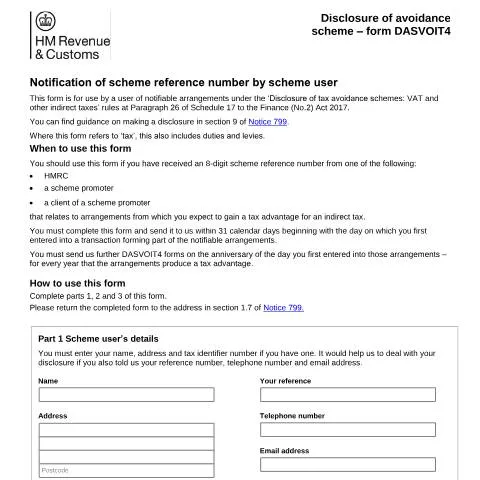
The DASVOIT4 form plays a pivotal role under the ‘Disclosure of tax avoidance schemes: VAT and other indirect taxes’ regulations as outlined in the Finance (No.2) Act 2017. This legislative framework aims to ensure transparency and compliance regarding tax avoidance schemes. Users of notifiable arrangements must complete and submit this form if they possess an 8-digit scheme reference number provided by HMRC, a scheme promoter, or a client of a scheme promoter.
Who Needs to Fill Out the DASVOIT4?
This form is specifically for individuals or entities that engage in arrangements likely to produce tax advantages through indirect taxes. This category includes but is not limited to:
- Small and medium businesses utilizing tax strategies.
- Individuals involved in complex tax planning.
- Tax professionals advising clients on potential tax advantages.
It’s important to note that if you have received a scheme reference number, you are obligated to inform HMRC by submitting this form within 31 calendar days of entering into the relevant transaction.
Understanding the Parts of the DASVOIT4 Form
The DASVOIT4 form is divided into three main sections that require careful attention. Each part serves a purpose and gathers specific information that HMRC needs to process your disclosure efficiently.
Section 1: Scheme User’s Details
In this section, you will provide your personal or company details, including:
- Name
- Address
- Tax Identifier Number
- Contact Information (telephone/email)
Providing accurate details will facilitate HMRC’s ability to manage your disclosure effectively.
Section 2: Scheme Reference Number
This portion is dedicated to the 8-digit scheme reference number. You must enter the details for each scheme you’re engaged with, along with the expected date for tax advantage realization. If the exact date is unknown, you can indicate the end date of the fiscal year when the advantage is expected.
| Scheme Reference Number | Date (DD/MM/YYYY) |
|---|---|
| [Enter scheme number] | [Enter date] |
| [Enter scheme number] | [Enter date] |
Section 3: Declaration
The final section is a declaration where you affirm the accuracy of the information provided. This is a critical step, as false declarations can lead to significant penalties. Ensure to sign and date this section before submission.
Filing the DASVOIT4 Form: Best Practices
Submitting your DASVOIT4 form requires careful consideration of the methods available to ensure compliance and expedite processing:
Preferred Submission Channels
HMRC offers several channels for submitting the DASVOIT4 form:
- Online Submission: The most efficient method, allowing for quicker processing times.
- Paper Submission: If opting for this method, ensure you send it to the correct address as specified in section 1.7 of Notice 799.
- In-Person Submission: While less common, you might choose to deliver documents directly to an HMRC office.
When to Submit
Remember, the deadline for submission is within 31 calendar days of your transaction date. Additionally, you must submit a DASVOIT4 form annually for every year that the arrangements yield a tax advantage. This ongoing obligation ensures that HMRC maintains up-to-date information about your tax arrangements.
Who Should Keep Records?
It is essential for anyone submitting the DASVOIT4 form to maintain comprehensive records. This includes keeping copies of the submitted form, correspondence with HMRC, and any related documents that pertain to the tax avoidance scheme. Relevant parties may include:
- Taxpayers directly engaged in the arrangements.
- Tax advisors and accountants managing client disclosures.
- Company secretaries who oversee compliance matters.
Keeping thorough records can help streamline future dealings with HMRC and defend against potential inquiries or disputes.
Special Circumstances: Navigating Complex Scenarios
There are instances where the procedure may differ, depending on specific user profiles or arrangements:
Foreign Entities and Non-Residents
Foreign companies or individuals engaging in schemes in the UK must also submit the DASVOIT4 form if they have an 8-digit scheme reference number. Non-residents should ensure they have a clear understanding of their obligations under UK tax law.
Minors and Additional Considerations
In cases where the user is a minor or legally incapable of signing the form, a guardian or responsible adult must act on their behalf. Additional documentation may be needed to validate this representation.
Common Misinterpretations: Differentiating DASVOIT4 from Other Forms
The DASVOIT4 form can be confused with other HMRC forms concerning tax disclosures. It is essential to distinguish it from:
- SA100: The Self Assessment tax return, which reports income, not specific tax avoidance schemes.
- CT600: Corporation Tax return, which is designed for corporate tax reporting rather than indirect tax schemes.
- VAT Returns: Specifically for VAT accounting, separate from the broader disclosures required by DASVOIT4.
Understanding these differences is crucial to ensure compliance and avoid errors during submission.
Expanding the Context: The DASVOIT4 in the Broader Tax Landscape
The DASVOIT4 form is not a standalone document; it fits into a larger framework of tax compliance. Users should be aware of how it interacts with other tax obligations and disclosure requirements:
Interlinked Tax Obligations
Engagement in tax avoidance schemes might necessitate simultaneous compliance with various regulations, such as:
- Annual Tax Returns: Ensure your overall tax filing aligns with the disclosures made via DASVOIT4.
- National Insurance Contributions: If applicable, these should be accurately reported to avoid discrepancies.
Potential Consequences of Non-Compliance
Failure to file the DASVOIT4 form accurately and on time can lead to significant repercussions. These could range from penalties imposed by HMRC to possible legal actions. Therefore, understanding your obligations is paramount.
Final Thoughts on Navigating DASVOIT4
The DASVOIT4 form is a vital document for anyone involved in notifiable tax avoidance schemes. By understanding its purpose, the details required, and the broader context of tax obligations, users can navigate the complexities of tax compliance more effectively. Staying informed about updates or changes in legislation regarding tax avoidance disclosures will further empower users to manage their tax affairs responsibly.
Understanding the Indirect Tax Scheme Reference Numbers
The Indirect Tax Scheme Reference Numbers (ITSRNs) are critical for businesses engaging in indirect tax schemes. These references allow HM Revenue and Customs (HMRC) to track the use of various tax avoidance strategies and ensure compliance with tax legislation. When you enter into an indirect tax scheme, such as a VAT or customs duty scheme, it is essential to obtain and report your ITSRN accurately. This identification is crucial as it links your scheme to HMRC's records, facilitating smoother audits and reducing the risk of penalties.
Each ITSRN comprises a unique alphanumeric code that identifies the specific scheme you are utilizing. When you inform HMRC of this reference, you must ensure that the information aligns with the details recorded in your financial statements and tax filings. Failure to do so may trigger inquiries or disputes, which can be time-consuming and costly. Consider consulting a tax advisor or accountant if you are unsure about the appropriate ITSRN for your scheme.
Moreover, it is worth noting that not all indirect tax schemes require an ITSRN. For example, some straightforward mechanisms may not fall under this requirement. Therefore, it is vital to assess whether your chosen scheme necessitates reporting this reference number and to understand the broader implications for your tax obligations.
Consequences of Failing to Report ITSRNs
Failure to report your Indirect Tax Scheme Reference Numbers (ITSRNs) to HMRC can lead to severe repercussions. One of the primary consequences is the possibility of receiving penalties. HMRC has established guidelines to impose fines for non-compliance, which can escalate depending on the severity and frequency of the oversight. Businesses that do not take proactive steps to report their ITSRNs may find themselves in a precarious financial position, facing unexpected costs that could have been avoided with proper adherence to guidelines.
Additionally, not disclosing your ITSRN can lead to prolonged audits. HMRC may flag your account for irregularities, resulting in comprehensive reviews of your financial records. Such investigations can strain resources and divert your focus from core business operations, ultimately affecting profitability and growth.
Furthermore, repeated failures to comply with reporting obligations can lead to more serious ramifications, including criminal investigations in extreme cases. If HMRC perceives that there has been willful tax avoidance or fraudulent activity, they may initiate proceedings that have long-lasting effects on your business reputation and standing within the industry.
In light of these risks, it is imperative for businesses to instill a culture of compliance within their operations. Establishing clear protocols for documenting and reporting ITSRNs can help mitigate risks associated with tax avoidance schemes. Regularly educating your staff about the importance of these references and maintaining open lines of communication with tax professionals are practical steps to ensure adherence to HMRC regulations.
The Role of Professional Advice in Navigating Indirect Tax Schemes
Navigating the complexities of indirect tax schemes and ensuring compliance with reporting requirements can be challenging for many businesses. Engaging with a qualified tax advisor who specializes in indirect tax matters can significantly enhance your understanding of the regulations, including the necessity of reporting ITSRNs. Professional advice can assist you in determining whether your business's specific activities fall under the scope of requiring an ITSRN and how to manage your reporting obligations effectively.
A tax advisor can provide tailored strategies to optimize your tax position while ensuring compliance with HMRC guidelines. They can also offer insights into the latest developments in tax legislation and how they may impact your indirect tax scheme. This proactive approach not only enhances your business's compliance posture but also opens avenues for legitimate tax savings.
Moreover, tax advisors can help you navigate the complexities arising from changes in your business activities or shifts in the regulatory environment. For instance, if your operations expand internationally, you may encounter new indirect tax requirements. In such scenarios, a tax professional can guide you through restructuring your schemes to align with both UK and overseas tax obligations, thus preventing any oversight regarding ITSRNs or other reporting requirements.
Ultimately, investing in professional tax advice is a prudent decision that can save businesses time, resources, and potential legal complications. By working with a knowledgeable advisor, you can create a robust tax strategy that supports your business goals while adhering to the regulations set forth by HMRC.