Understanding the DASVOIT5 Form in Practical Context
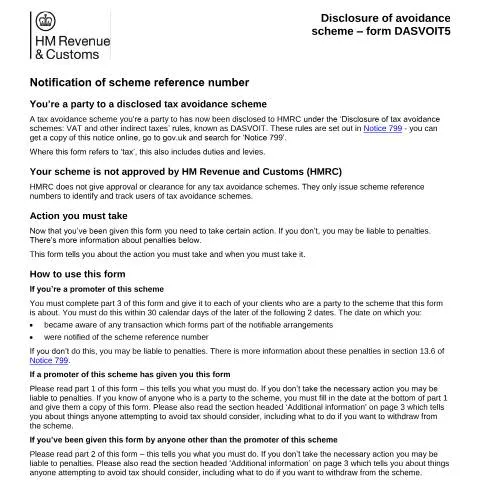
The DASVOIT5 form issued by HM Revenue & Customs (HMRC) serves a critical role in the management of tax avoidance schemes. While tax regulations may seem daunting, the implications of the DASVOIT5 form are far-reaching for individuals and businesses involved in disclosed tax avoidance arrangements. With this context in mind, let’s delve into the details surrounding the responsibilities and actions required when one receives this form.
The Lifecycle of the DASVOIT5 Form
The journey of the DASVOIT5 form begins when a tax avoidance scheme is disclosed to HMRC. Upon such disclosure, individuals and entities who are party to the scheme receive this official notification, which contains essential information they are required to act upon.
Receipt of the Form
When you receive the DASVOIT5, it indicates that you are linked to a scheme that has been reported to HMRC. This is a crucial moment, as non-compliance can lead to severe penalties. Understanding the next steps is essential for mitigating risks.
Key Actions Needed After Receiving the Form
- Identify Your Tax Identifier: You must inform the promoter of the scheme of your tax identifier number, which can be your VAT registration number or any other reference number issued by HMRC. This communication needs to occur within 11 working days of receiving the form or of entering the transaction that forms part of the scheme.
- Disseminate Information: The form requires you to share a copy with anyone else known to be involved in the tax avoidance scheme, within 30 calendar days of becoming aware of your participation.
- File DASVOIT4: Additionally, you are required to send form DASVOIT4 to HMRC within 31 calendar days, beginning when the first transaction under the avoidance scheme took place.
Navigating Penalties and Responsibilities
Understanding the potential consequences of failing to comply with the requirements related to the DASVOIT5 form is paramount. The penalties can be significant and are outlined in the official HMRC guidelines.
Consequences of Non-Compliance
If you neglect to provide the required information or fail to share the form, you may face:
- A penalty of up to £5,000 for not supplying your tax identifier.
- Further penalties of up to £600 for each day the information is not provided.
- Failure to submit DASVOIT4 on time can result in penalties of up to £10,000.
Such financial repercussions underscore the necessity of adhering to the stipulated timelines and requirements outlined in the DASVOIT5 form.
Specific Scenarios Affecting Compliance
Different profiles may encounter unique situations when engaging with the DASVOIT5 form. Below, we explore several cases that could affect the obligations of users and promoters alike.
Promoters of Tax Avoidance Schemes
Promoters have distinct responsibilities outlined explicitly within the DASVOIT5. If you are a promoter, you must complete part 3 of the form and distribute it to each client involved in the scheme. This must happen within 30 calendar days from when you became aware of any transaction related to the scheme.
Individuals Newly Entering a Scheme
For individuals who have recently joined a tax avoidance scheme, understanding your obligations can prevent costly mistakes:
- If you are new to the scheme, ensure you are aware of the disclosure requirements early on and do not hesitate to seek clarification from the promoter.
- Be proactive in obtaining your tax identifier as early as possible to meet the legal obligations outlined in the form.
Documenting Your Participation Effectively
Proper documentation is essential when engaging with the DASVOIT5 form. Ensuring that all relevant information is accurate and complete can help avoid complications later on.
Common Documentation Required
Depending on your situation, you may need to compile various documents. Here are some examples:
- Your tax identification numbers (VAT, PAYE, etc.)
- Correspondence with the scheme promoter confirming your participation
- Evidence of transactions that form part of the scheme
Collecting these documents not only supports your compliance but also prepares you for any inquiries from HMRC.
The Role of Notice 799
Integral to understanding the DASVOIT5 form is the framework provided by Notice 799. This notice outlines the rules governing the disclosure of tax avoidance schemes related to VAT and other indirect taxes.
What Notice 799 Covers
Notice 799 provides comprehensive guidance on:
- The definitions of tax avoidance schemes.
- Procedures for disclosing schemes to HMRC.
- Detailed instructions on filling out related forms, including DASVOIT5 and DASVOIT4.
Familiarising yourself with Notice 799 is not merely helpful but essential for properly navigating your obligations concerning tax avoidance schemes.
Distinguishing the DASVOIT5 From Other Forms
In the landscape of HMRC forms, the DASVOIT5 occupies a specific niche among others, such as the SA100 tax return and various VAT forms. Knowing the differences can help prevent confusion.
Key Differentiators
| Form | Purpose | Users | Filing Deadlines |
|---|---|---|---|
| DASVOIT5 | Notification of participation in a disclosed tax avoidance scheme | Individuals/Businesses involved in tax schemes | Within 30 days - varies by situation |
| SA100 | Self-Assessment Tax Return | Self-employed individuals and others earning income | 31 January |
| DASVOIT4 | Notification to HMRC regarding the relevant scheme reference | Participants of a tax avoidance scheme | Within 31 days of first transaction |
Moving Forward After Submission
Once you have completed and submitted the necessary forms, including the DASVOIT5 and DASVOIT4, the next steps are crucial for maintaining compliance and understanding your responsibilities.
Monitoring Your Status
It is vital to keep track of your participation in the scheme and any communications from HMRC. Regularly monitor for updates that may pertain to your tax obligations.
Seeking Further Guidance
If you are feeling overwhelmed or unsure at any point during the process, do not hesitate to seek advice from professional tax advisors. They can provide tailored insights based on your specific circumstances and help ensure compliance with HMRC requirements.
Conclusion: Embracing Compliance
Engaging with the DASVOIT5 form is an obligation that should be taken seriously, as it carries risks of penalties for non-compliance. Understanding the specifics of what the form entails, the associated responsibilities, and the penalties for inaction is crucial. By being proactive and informed, individuals and businesses can navigate the complexities of tax avoidance schemes while adhering to the legal frameworks in place.
Understanding the Indirect Tax Scheme: DASVOIT5
The DASVOIT5 is an indirect tax scheme specifically designed for certain taxpayers seeking to manage their tax liabilities in a more efficient manner. It is crucial to understand that while tax avoidance is legal, it often operates in a grey area that may lead to significant scrutiny from HM Revenue & Customs (HMRC). This scheme allows users to optimise their tax position, but it must be used with caution and a thorough understanding of the implications involved.
The scheme reference number for DASVOIT5 is essential for any interaction with HMRC regarding this particular scheme. When using DASVOIT5, taxpayers should ensure they provide this reference number on all communications and documentation to avoid delays or complications in their tax affairs. Remember, the misuse or misunderstanding of the scheme can lead to investigations, penalties, or even legal action if HMRC deems the avoidance to be aggressive or outside the intended use of the law.
Key Responsibilities of Taxpayers Using DASVOIT5
Users of the DASVOIT5 scheme have several key responsibilities to ensure compliance with HMRC regulations. Firstly, it is vital that individuals fully understand the mechanics of the scheme and the tax implications associated with it. This means taking the time to read all the relevant guidelines and material provided by HMRC, as well as potentially seeking independent financial advice to clarify any uncertainties.
Furthermore, taxpayers must keep accurate records of all transactions and financial activities related to their participation in the DASVOIT5 scheme. Documentation should include invoices, receipts, and correspondence with HMRC. These records are essential not only for filing purposes but also for defence in the event of an audit or inquiry by HMRC. The obligation to maintain these records typically extends for five years after the end of the tax year in which the scheme was used, as outlined in the Data Protection Act 2018.
Additionally, it's important for users to be aware of the reporting requirements that may arise from using the DASVOIT5 scheme. Some taxpayers may need to submit additional information or disclosures to HMRC regarding their participation, especially if significant changes occur in their circumstances. Keeping abreast of any new developments or updates related to the scheme is essential, as tax laws and regulations can change frequently.
Navigating Potential Risks and Pitfalls of DASVOIT5
While the DASVOIT5 scheme can provide legitimate avenues for tax avoidance, it is not without its risks. One of the most significant pitfalls is the potential for misunderstanding how the scheme operates or overestimating its benefits. Taxpayers must remain vigilant and avoid falling into common traps, such as assuming that all forms of income can be minimised through this scheme. Careful analysis of what is permissible under the scheme, versus what could be seen as aggressive avoidance, is crucial.
Furthermore, tax evasion, which is illegal, can easily be confused with tax avoidance if one is not careful. Taxpayers should be cautious about the strategies they employ, ensuring they are within the law and not straying into territory that could lead to accusations of tax evasion. Engaging with qualified tax professionals can help mitigate this risk by ensuring adherence to legal frameworks and ethical standards.
Lastly, it is worth noting that HMRC is continuously working to increase transparency and combat tax avoidance schemes. This can lead to changes in enforcement practices and the introduction of new legislation that affects how schemes like DASVOIT5 are viewed. Regularly reviewing HMRC publications and updates can be invaluable to staying informed and ensuring compliance with all current tax laws and regulations.