Understanding the Agricultural Relief Claim Process in the UK
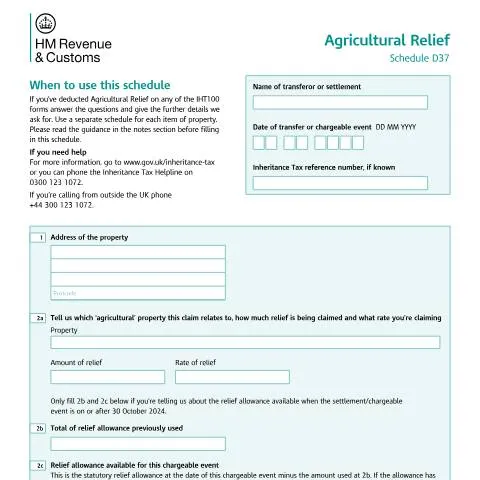
Navigating the complexities of inheritance tax can be daunting, particularly when it comes to understanding the specific reliefs available, such as the Agricultural Relief on assets held in a trust, detailed in the D37 form. This relief plays a crucial role for trustees and beneficiaries of agricultural properties, allowing for substantial financial benefits upon the transfer of such assets. The D37 form is not just a piece of paperwork; it significantly impacts the financial planning and legacy of agricultural families across the UK.
The Historical Framework of Agricultural Relief
The origins of Agricultural Relief can be traced back to the Inheritance Tax Act 1984. This legislation was designed to ease the burden of inheritance tax on agricultural properties, recognising the unique challenges faced by those in the farming sector. The relief acknowledges that agricultural land and buildings are often not liquid assets and may not have sufficient market value to support the tax liabilities that arise upon death or transfer. The D37 form, therefore, is a mechanism through which trustees can articulate their claims for relief, ensuring that agricultural assets can be passed on without crippling tax implications.
Legal Foundations and Regulations
At the heart of the D37 form and its functionality is the Inheritance Tax (IHT) regulation, which stipulates how Agricultural Relief can be claimed. According to the rules governing inheritance tax, properties must meet specific criteria to qualify for relief. These include:
- The property must have been occupied for agricultural purposes.
- The transferor or trustees must have owned the property for a specified period.
- Evidence of the farming operations conducted on the property must be provided.
Understanding these parameters is crucial for effectively completing the D37 form and securing the appropriate relief.
Chronology of Claiming Agricultural Relief
To successfully navigate the claim process via the D37 form, it's essential to understand the timeline involved—from the decision to claim the relief to the final outcomes. Here’s a step-by-step breakdown:
- Identify Eligibility: Ensure that both the property and the claimants meet the criteria set by HM Revenue & Customs (HMRC).
- Gather Documentation: Compile all necessary paperwork, including ownership records, evidence of agricultural use, and any relevant tenancy agreements.
- Complete the D37 Form: Carefully fill out the form, answering all questions thoroughly and accurately.
- Submit the Form: Depending on your preference, submit the D37 form either online through HMRC’s official portal or via postal mail.
- Await Confirmation: After submission, HMRC will process the claim and notify you of their decision.
This structured approach not only simplifies the process but also ensures that no crucial steps are overlooked, which could potentially jeopardise the relief claim.
Who Should File the D37 Form?
The D37 form specifically targets individuals involved with trusts that hold agricultural assets. However, the nuances of this profile can vary significantly:
- Trustees: Individuals or entities managing the trust must submit the form if they believe the trust holds qualifying agricultural properties.
- Beneficiaries: If you are a beneficiary who will inherit agricultural assets, understanding your trustee's actions regarding the D37 form is vital.
- Farmers with Trusts: If you own farmland held in a trust structure, you should examine if the properties qualify for relief under the Agricultural Relief provisions.
It’s important to note that any exceptions or special circumstances surrounding ownership and occupation must also be disclosed in the claim.
Submission Channels for the D37 Form
There are distinctive channels available for submitting the D37 form, each with its own advantages and potential drawbacks. Understanding these can significantly influence the timeliness and efficiency of your claim.
Online Submission
Submitting the D37 form online through the HMRC portal is generally the fastest option. Advantages include:
- Immediate confirmation of receipt.
- Real-time tracking of the claim status.
- Reduction of processing times, as electronic forms are often prioritised.
Postal Submission
For those who prefer traditional methods, submitting via post is another option. However, this method has its challenges:
- Longer processing times due to postal delays.
- The risk of documents getting lost or misplaced.
- Confirmation of receipt may not be immediate, leading to uncertainty.
In both cases, ensuring that the D37 form is completed accurately is paramount to avoid unnecessary delays.
Key Dates and What Lies Ahead
Timeliness is critical in the realm of tax submissions. The D37 form must be submitted within specific timeframes to ensure eligibility for relief:
Important Dates to Note
| Action | Deadline |
|---|---|
| Submit D37 if claiming Agricultural Relief | Within 12 months of the transfer date |
| Notification of HMRC's decision | Typically within 8 weeks of submission |
After submission, if HMRC agrees to provide relief, the next steps will often involve adjusting the estate's tax liability accordingly. However, if relief is denied, trustees may appeal or seek further clarification from HMRC.
Dissecting the D37 Form: A Detailed Rubric
To facilitate your claim, let’s break down the main sections of the D37 form, highlighting what information is necessary and common pitfalls to avoid.
Section 1: Property Address
Accurate property details are critical. Ensure you provide the full address, including the postcode, as any discrepancies can delay processing.
Section 2: Claim Details
This section requires a thorough understanding of the claim you are making. Key components include:
- Type of Property: Clearly specify which agricultural property the relief pertains to.
- Relief Amount: Be precise about the amount and rate of relief you are claiming.
- Occupancy History: Document if the property has been continuously occupied for agricultural use.
Section 8: Binding Contracts
This section assesses whether the property was involved in any contracts that could affect its status. Providing accurate and thorough answers is imperative to avoid claims being dismissed.
Preparing Supporting Documents: What You Need
Supporting evidence is critical in substantiating your claims. Depending on your unique situation, the required documents may vary:
Common Supporting Documents
- Ownership Records: Proof of ownership spanning the required duration.
- Evidence of Agricultural Operations: This can include farming contracts, receipts for services, and other relevant documents demonstrating usage.
- TENANCY Agreements: Any formal leases or rental agreements should be included in your submission.
Each piece of documentation serves to reinforce your claim, so ensure they are organized and clearly referenced in the D37 form.
Insight and Implications of Agricultural Relief
Securing Agricultural Relief through the D37 form can have significant implications for families managing agricultural estates. Beyond immediate tax benefits, it allows for better estate planning and ensures that agricultural lands remain within families. Moreover, navigating this process can help in fostering sustainability within the agricultural sector, ultimately preserving vital agricultural lands for future generations.
Considering the complexities and potential pitfalls involved in the D37 form submission, seeking advice from tax professionals or legal experts who specialize in inheritance tax and agricultural law can be immensely beneficial. This ensures you are well-equipped to handle any challenges that may arise during the process. The D37 form is more than just a tax form; it is a crucial component in the stewardship of agricultural legacies in the UK.