Understanding the Application for a Witness Order: An Essential Guide
When navigating the UK criminal justice system, the application for a witness order is a critical component that can significantly impact the outcome of legal proceedings. Whether you are an appellant seeking to present witness testimony or a legal representative aiding a client, understanding the nuances of the application process is essential. This guide delves into the various elements of the application for a witness order and the permissions required to call a witness, laying a foundation for effective advocacy within the courtroom.
Key Terminology: Deciphering Legal Jargon
Before delving into the procedural aspects of a witness order application, it's crucial to familiarize oneself with specific legal terminology that appears in this domain. Understanding these terms will enhance your grasp of the process and improve your ability to navigate it effectively.
- Witness Order: A court-issued directive that allows a party to summon a witness to provide testimony in a case.
- Permission to Call a Witness: A requirement under certain circumstances that mandates seeking the court's approval before presenting a witness's testimony.
- Fresh Evidence: Evidence that was not available at the time of the original trial, which may affect the case's outcome.
- Form W: The official documentation required to request permission to call a witness or present fresh evidence.
The Interplay Between Witness Orders and Other Legal Documents
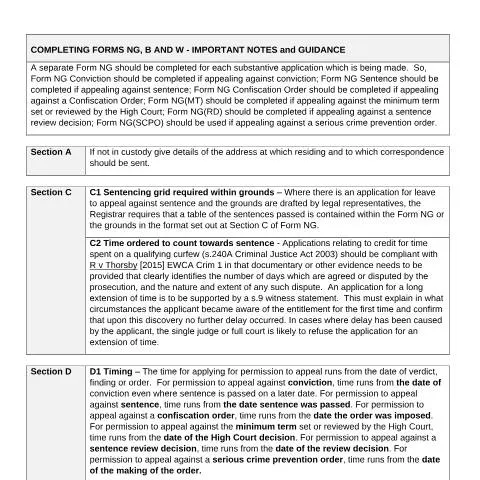
Understanding how witness orders interact with other forms and applications in the criminal justice system is vital. For instance, the application for a witness order must be seen in conjunction with the Notice of Application for Permission to Appeal, commonly referred to as Form NG. This form is essential when appealing a conviction or sentence and can set the stage for additional witness testimony if circumstances warrant.
Moreover, the rules surrounding witness orders can be affected by previous court decisions and procedural guidelines. For example, the Criminal Procedure Rules dictate the necessary steps and standards for obtaining permission to present new witnesses or evidence. Therefore, ensuring compliance with both the formal application process and the overarching legal framework is crucial.
Common Pitfalls in Witness Order Applications
Even seasoned legal practitioners can stumble upon common pitfalls when applying for a witness order. Awareness of these issues can save time and enhance the chances of a successful application.
- Insufficient grounds for the witness’s relevance: The court must be convinced that the witness's testimony could provide credible evidence that might impact the appeal's outcome. Failing to adequately demonstrate this connection can lead to an outright denial.
- Inadequate explanation for not presenting the evidence at the original trial: If a witness was not called during the initial proceedings, a compelling reason must be given to justify this omission. Courts require a reasonable explanation for the failure to adduce evidence earlier.
- Neglecting to file supporting documents: Alongside Form W, it's essential to submit a witness statement in the prescribed format as outlined in the Criminal Justice Act 1967. Missing documentation can lead to delays or rejections.
Step-by-Step: Executing the Witness Order Application
To facilitate a seamless application for a witness order, adhering to a structured approach is beneficial. Here’s a step-by-step guide:
- Preparation: Gather all necessary documentation, including any previous trial transcripts, Form NG, and preliminary grounds for appeal.
- Complete Form W: Fill out the application form, ensuring all fields are accurately completed and that it reflects the specific witness you intend to call.
- Witness Statement: Prepare a statement from the proposed witness, which should describe their potential testimony and its relevance to the case.
- Filing the Application: Submit the completed Form W and the accompanying witness statement to the Criminal Appeal Office. Ensure any additional required forms, such as the Notice of Application for Permission to Appeal, are filed simultaneously.
- Awaiting Response: After submission, monitor for any communication from the court regarding the status of your application or any requests for additional information.
The Court’s Considerations: Factors Influencing Approval
When assessing an application for a witness order, the court evaluates several key factors:
| Factor | Description |
|---|---|
| Relevance of Evidence | The court examines whether the witness's testimony would provide substantial grounds for allowing the appeal. |
| Credibility of the Witness | The witness's reliability and possible bias may influence the court’s decision to permit their testimony. |
| Reason for Non-Disclosure | The applicant must provide a satisfactory explanation for why the witness was not called during the original trial. |
| Impact on Justice | The court considers whether allowing the new evidence would further the interests of justice. |
Addressing Fresh Evidence: A Special Case in Witness Orders
In situations where fresh evidence is being introduced, the application process takes on an additional layer of complexity. A witness order can be particularly pivotal in these circumstances, as new testimonies may significantly alter the case's landscape. It is essential to follow the same procedural guidelines as outlined for standard witness applications but with a heightened focus on justifying the necessity of the new evidence.
Fill in your form directly online
No printing: type your details into the boxes of the official form, tick, then download the PDF ready to send.
- 1Type into the form boxes
- 2Tick in one click
- 3Save and download the PDF
Additionally, when filing for fresh evidence, ensure that the new information is compelling enough to warrant the court's attention and that any related documentation clearly supports its significance. This may involve providing detailed affidavits or additional proof to substantiate the claim that the fresh evidence could have impacted the trial's outcome.
Final Thoughts: The Importance of Diligence and Precision
The application for a witness order and the associated permissions is a complex yet indispensable part of the criminal appeals process. A thorough understanding of the requirements, potential pitfalls, and the procedural steps will bolster your efforts in advocating for the inclusion of significant witness testimony.
By following the guidelines outlined in this article and remaining meticulous in your approach, you can navigate the complexities of the application process with greater confidence. Remember, the integrity of the judicial process depends on the diligent presentation of all relevant evidence, and as such, every effort to include critical witness testimony can make a meaningful difference in the pursuit of justice.