Understanding the Official Application Form for Appeals from the First-tier Tribunal (Social Entitlement Chamber)
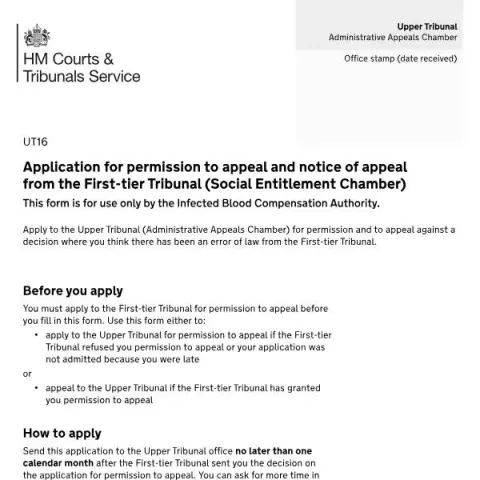
This official form, designated as UT16, is a crucial document used within the UK legal system, specifically for individuals and representatives seeking to challenge decisions made by the First-tier Tribunal (Social Entitlement Chamber). It is issued by the Upper Tribunal (Administrative Appeals Chamber) and serves two primary purposes: requesting permission to appeal a tribunal decision and submitting a formal notice of appeal.
Scope and Eligibility of the UT16 Form
The UT16 form is exclusively designed for cases involving social entitlement decisions, such as benefits, pensions, or other social support rulings. Notably, it is intended solely for use by the Infected Blood Compensation Authority, highlighting its specialized application. Before completing this form, applicants must have first sought permission to appeal from the First-tier Tribunal itself. This step aligns with the legal process, ensuring that appeals are only pursued when the tribunal has either refused permission or granted it, allowing for a formal challenge at the Upper Tribunal level.
When and How to Submit the Form
Applicants must send the completed UT16 form to the Upper Tribunal's office within one calendar month of receiving the tribunal’s decision on their application for permission to appeal. If additional time is needed, Section 5 of the form allows for a request for an extension, which must be justified clearly. Timely submission is essential to ensure that the appeal process remains valid and that the case is considered without procedural delays.
Key Sections of the UT16 Form
Section 1: Appellant’s Information
This section requires details about the appellant, including the First-tier Tribunal reference number and the date of the decision. The reference number, found on the tribunal decision letter, uniquely identifies the case. Applicants should also specify where the tribunal made its decision, which is indicated on the decision notice.
Section 2: Appellant’s Representative Details
If the appellant has legal representation or a designated agent, this section gathers their information, such as name, organisation, address, and contact details. It is important to note that all correspondence from the Upper Tribunal will be directed to the representative unless otherwise specified.
Section 3: Respondent’s Details
This section captures information about the respondent, typically the government department or agency involved in the original decision, including their name, address, and contact details. If the respondent is unable to act (due to age, incapacity, or death), details of the appointed representative or person acting on their behalf should be provided.
Fill in your form directly online
No printing: type your details into the boxes of the official form, tick, then download the PDF ready to send.
- 1Type into the form boxes
- 2Tick in one click
- 3Save and download the PDF
Points of Attention and Practical Advice
- Timing is critical: Ensure the application is submitted within one month of the tribunal decision to avoid invalidation of the appeal.
- Accurate information: Filling out the form correctly, especially the tribunal reference number and decision date, is vital for proper case processing.
- Use of capital letters: When completing the form by hand, it is recommended to write in CAPITAL LETTERS for clarity and legibility.
- Additional sheets: If space is insufficient, use extra sheets, clearly indicating the appellant's name and reference number at the top.
- Legal advice: Given the complexity of tribunal appeals, consulting a legal advisor or representative can help ensure that the form is correctly completed and that all procedural requirements are met.
Conclusion
The UT16 form plays a vital role in the UK social entitlement appeal process, providing a structured way for appellants to challenge tribunal decisions at a higher judicial level. Understanding its purpose, completing it accurately, and adhering to deadlines are essential steps for anyone wishing to pursue an appeal within this legal framework. For further guidance, applicants should refer to the official instructions accompanying the form or seek advice from qualified professionals involved in tribunal and appeal procedures.