Understanding the Notice and Grounds of Appeal under Section 58 of the Criminal Justice Act 2003
The Criminal Procedure Rule Committee of the United Kingdom, under the auspices of the Ministry of Justice, provides essential guidance for individuals and legal professionals involved in criminal appeals. This guidance specifically addresses the procedures for lodging a notice and grounds of appeal, or an application for permission to appeal, under section 58 of the Criminal Justice Act 2003. It aims to clarify the process, applicable forms, and relevant deadlines to ensure appeals are lodged correctly and within the prescribed timeframes.
Scope and Purpose of the Guidance
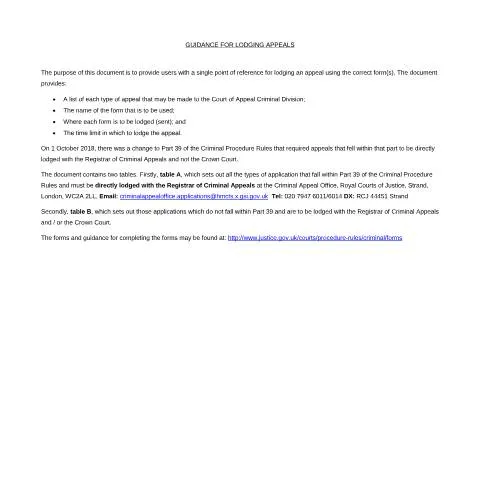
This official document serves as a comprehensive reference point for anyone wishing to challenge a criminal conviction or sentence through an appeal. It consolidates information about:
- The types of applications that fall within the scope of section 58 of the Criminal Justice Act 2003.
- The specific forms required for different types of appeals.
- The correct procedures for submitting these forms to the appropriate authorities.
- The deadlines by which appeals must be lodged.
The guidance emphasizes the importance of adhering to the rules introduced on 1 October 2018, which mandated that appeals falling within Part 39 of the Criminal Procedure Rules be directly lodged with the Registrar of Criminal Appeals at the Royal Courts of Justice, Strand, London.
Who Is Affected by These Procedures?
This guidance is relevant for:
- Defendants seeking to appeal against a conviction or sentence.
- Legal representatives acting on behalf of defendants.
- Prosecutors or other parties involved in criminal proceedings who wish to challenge certain decisions or orders.
It is crucial for these parties to understand the specific forms to use and the proper channels for submission to ensure their appeals are considered valid and processed promptly.
Types of Appeals and Relevant Forms
Appeals Against Convictions
Appeals against conviction (referred to as NG (Conviction)) include challenges to findings such as contempt of court, findings of unfitness to plead, or not guilty by reason of insanity. These appeals must be lodged within 28 days from the date of the order or decision being appealed.
Appeals Against Sentences
Appeals against sentences (NG (Sentence)) cover various scenarios, including challenges to mandatory minimum sentences, sexual harm prevention orders, or declarations of relevance relating to offences with terrorist connections. These must also be lodged within 28 days of the sentence or order.
Other Specific Applications
Additional applications, such as appeals against confiscation orders, review decisions, or serious crime prevention orders, follow similar deadlines. In some cases, such as appeals by third parties or legal representatives against costs orders, the deadline is 21 days after the order is made.
Procedural Requirements and Lodgement Locations
All appeals falling within Part 39 of the Criminal Procedure Rules must be directly lodged with the Registrar of Criminal Appeals at the Criminal Appeal Office, Royal Courts of Justice, Strand, London. The preferred method is via postal submission or email, with the address and contact details specified in the official guidance.
Fill in your form directly online
No printing: type your details into the boxes of the official form, tick, then download the PDF ready to send.
- 1Type into the form boxes
- 2Tick in one click
- 3Save and download the PDF
For appeals that do not fall within Part 39, the lodgement process may vary, including applications made in writing or through other specified procedures. It is essential to consult the relevant sections of the guidance for precise instructions.
Legal References and Further Information
This guidance references key legal provisions, including sections of the Criminal Justice Act 2003 and the Criminal Procedure Rules. For detailed forms and instructions on completing appeals, individuals are directed to the official government website dedicated to the criminal procedure forms and related guidance.
Understanding and following these procedures ensures that appeals are properly submitted, timely, and in accordance with UK legal standards, thereby safeguarding the rights of individuals involved in criminal proceedings.