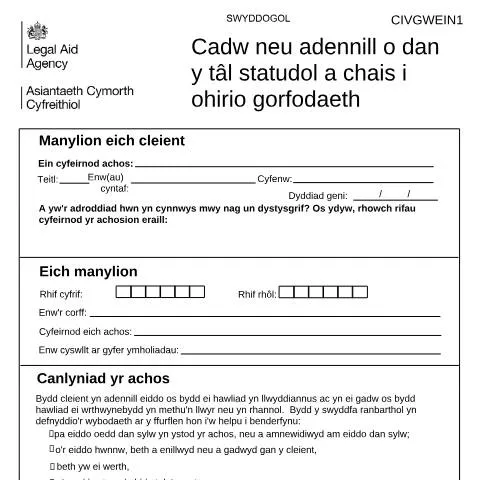
Navigating the Legal Labyrinth: Understanding the Asiantaeth Cymorth Cyfreithiol Welsh Forms
Filing a legal aid application can often feel like traversing a complex maze, especially when it involves the Asiantaeth Cymorth Cyfreithiol forms in Welsh. This document is not just a piece of paper; it is a crucial component that can influence the outcome of legal proceedings, especially for those who may not have the financial means to access legal representation. Whether you're a solicitor aiding a client, or an individual navigating the legal system, understanding the nuances of this form is imperative.
Who is Required to Submit the Welsh Forms?
Individuals seeking legal assistance in Wales under the legal aid scheme must submit the Welsh forms. This demographic often includes:
- Low-income individuals: Those who meet the criteria set by the Legal Aid Agency (LAA).
- Minors: Legal representatives may need to act on behalf of minors in certain situations.
- Non-residents: Individuals temporarily residing in the UK requiring legal aid.
Understanding the specific circumstances of each client is critical, as this form must be filled out accurately to determine eligibility and potential funding for legal representation.
Diving into the Specifics: Breaking Down the Form
Key Sections Explained
The Asiantaeth Cymorth Cyfreithiol form is structured to capture essential details about the legal matter at hand. Below are the main sections you might encounter, along with some common pitfalls:
| Section | Description | Common Mistakes |
|---|---|---|
| Client Details | Name, address, date of birth, and contact information. | Omitting a middle name or incorrect date of birth. |
| Case Reference | Unique reference number for tracking purposes. | Failing to input this number, leading to processing delays. |
| Details of the Case | Summary of the legal issue and any outcomes. | Overly vague descriptions or lack of necessary details. |
| Asset Declaration | Information on any assets involved. | Not declaring all assets or misvaluing them. |
Each section serves a specific purpose in establishing the client’s situation and eligibility, and skipping or misfilling any part can significantly impact the application process.
The Role of the Form in the Broader Legal Framework
Filing the Welsh form is not an isolated act; it is part of a larger legal aid process governed by the Legal Aid, Sentencing and Punishment of Offenders Act 2012. This framework sets the stage for how legal aid is allocated and the responsibilities of the applicants. Understanding how this form fits into that framework is vital for safeguarding your rights.
- Establishing eligibility: The form is pivotal in establishing whether an applicant qualifies for legal aid.
- Documenting financial circumstances: Applicants must provide detailed financial information which plays a key role in determining the level of support available.
- Facilitating legal representation: A successful application can open doors to professional legal assistance that may otherwise be inaccessible to vulnerable populations.
Consequences of Inaccuracies: What’s at Stake?
Submitting the Asiantaeth Cymorth Cyfreithiol form accurately is not just a bureaucratic necessity; it has real consequences. Failing to provide correct or complete information can lead to:
- Delayed applications: Missing information can stall the entire process.
- Denial of legal aid: Inaccuracies can result in outright rejection of the application.
- Legal repercussions: Incorrect declarations may lead to further legal challenges or issues down the line.
Thus, it is essential for applicants and their representatives to double-check all details before submission.
The Timeline: Submission and Follow-Up
When to Submit the Form
Timing is crucial in the legal aid application process. Applicants should be aware of specific timelines:
- Ongoing Legal Matters: It’s advisable to submit the form as soon as possible when legal issues arise.
- Post-Submission: Applicants can expect an acknowledgment of receipt from the LAA.
- Processing Time: While times can vary, applicants should be prepared for a waiting period of several weeks before receiving a decision.
After submission, the LAA will evaluate the information provided, and applicants will be informed of the outcome through official correspondence.
Exceptions and Special Cases: Handling Unique Circumstances
Not every situation fits neatly within standard parameters. There are instances where exceptions may apply, such as:
- Urgent Cases: Applicants facing imminent legal proceedings may be eligible for expedited processing.
- Minors: Additional considerations may be necessary for legal representatives acting on behalf of minors.
- Non-residents: Provisions are in place for individuals temporarily in the UK seeking legal assistance.
Each of these scenarios may necessitate additional documentation or details on the form, so it’s essential to be aware of the specific requirements that apply to special cases.
Navigating the Journey Ahead: What Comes Next?
Once the application is submitted and approved, the next steps involve:
- Engaging Legal Representation: Approved applicants will receive information on how to engage a solicitor.
- Monitoring Case Progress: It’s essential for applicants to stay informed about their case status and any developments.
- Potential Appeals: If the application is denied, there are avenues for appeal that applicants can pursue.
Having clarity on these processes empowers applicants and ensures they remain informed participants in their legal journey.
Understanding the Importance of Welsh Language Forms in Legal Aid
As part of the UK's commitment to promoting bilingualism, the Legal Aid Agency (LAA) recognises the importance of providing forms in both English and Welsh. This is not just a matter of convenience; it's a legal requirement under the Welsh Language Act 1993 and the More Than Just Words strategy. These forms help ensure that Welsh-speaking individuals have equal access to legal services, which is crucial in a country with a significant Welsh-speaking population. By supporting Welsh language forms, the LAA contributes to the preservation of the Welsh language and culture, fostering inclusivity and accessibility in legal proceedings.
Moreover, the availability of Welsh forms is essential for ensuring that individuals can fully understand their rights and responsibilities when applying for legal aid. The complexity of legal terminology can pose significant barriers, and having access to forms in one's native language can facilitate better comprehension and engagement. This is particularly relevant for vulnerable individuals who may already be facing challenges in navigating the legal system.
How to Access and Complete Welsh Language Legal Aid Forms
Accessing Welsh language forms from the Legal Aid Agency is a straightforward process. The LAA website offers a dedicated section for Welsh speakers, where you can find a range of legal aid application forms translated into Welsh. These include essential documents such as the form for Legal Aid and guidance notes tailored for Welsh speakers. Users can also contact the LAA directly to request specific forms or assistance in Welsh, ensuring effective communication throughout the application process.
When completing these forms, it is crucial to pay close attention to the specific language used, as legal terminology may differ between English and Welsh. The LAA provides bilingual guidance notes to assist applicants in navigating the forms accurately. If you're unsure about specific terms or phrases, consider consulting a Welsh-speaking solicitor or a community organisation that offers support in legal matters. This extra step can help prevent misunderstandings and ensure your application is correctly submitted.
Challenges and Solutions for Welsh Speakers Navigating Legal Aid
Despite the availability of Welsh language forms, many individuals still face challenges when applying for legal aid. One prominent issue is the lack of widespread awareness about the availability of these resources. Many Welsh speakers may not realise that they can access legal aid forms in Welsh, leading to potential language barriers and misunderstandings in the legal process. To combat this, community outreach initiatives are essential. Local organisations can play a vital role in informing Welsh speakers about their rights and the resources available to them in their language.
Additionally, another challenge is the translation of legal jargon that may not have direct equivalents in Welsh. While the LAA strives to provide accurate translations, nuances in legal language can lead to confusion. To address this, it is advisable to seek professional legal advice when interpreting complex terms. Bilingual solicitors with expertise in Welsh law can provide invaluable assistance, ensuring that individuals fully comprehend their legal standing and options.
In conclusion, enhancing the support and resources available for Welsh speakers in the context of legal aid not only empowers individuals but also strengthens the legal system as a whole. By recognising and addressing these challenges, we can move towards a more inclusive and equitable legal environment for all.